Cleanroom entrances
Points where personnel, trolleys or light wheels move from support spaces towards areas with stricter particle expectations.

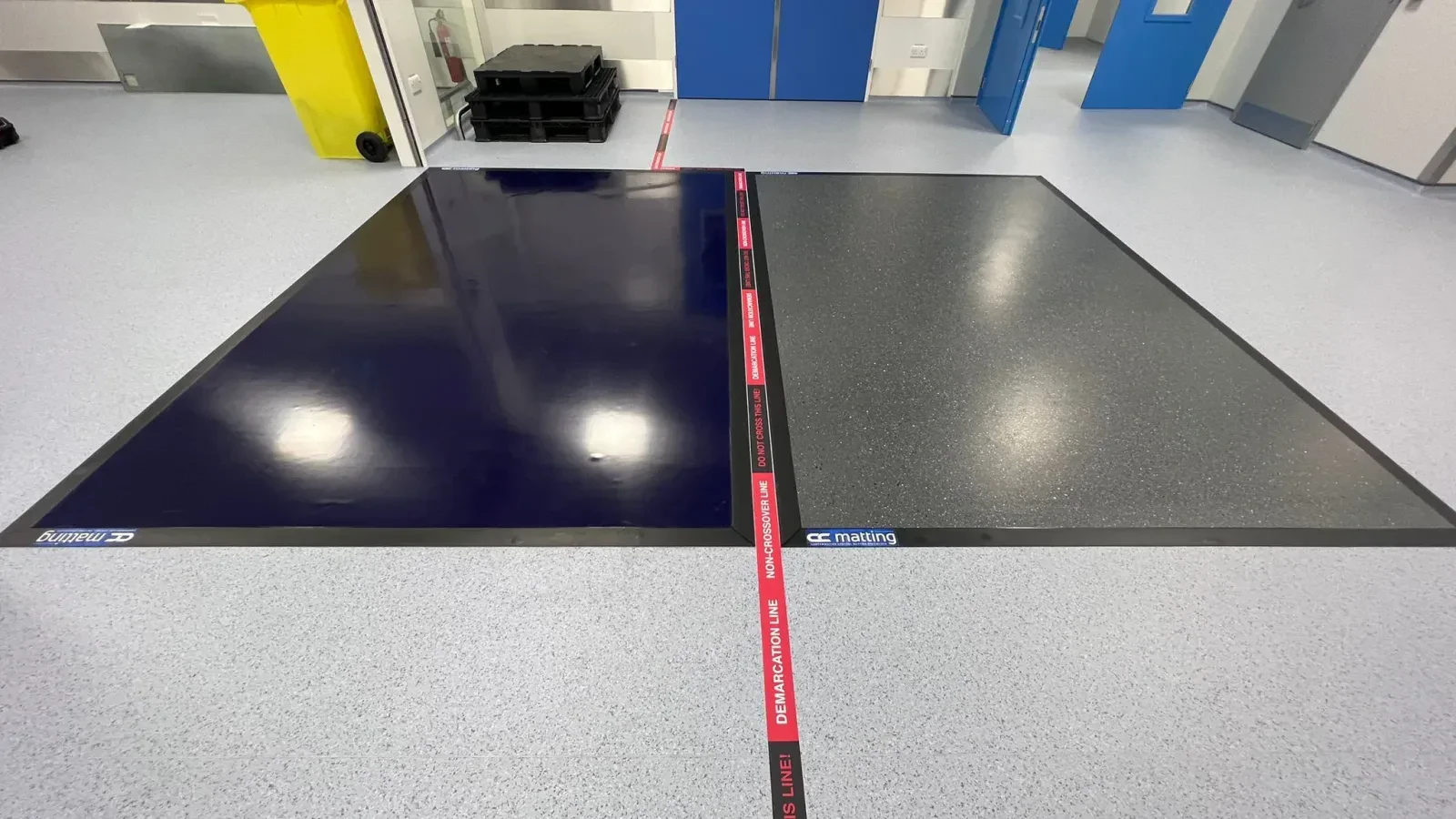

CC Matting is an Irish brand specialising in polymer contamination-control mats for floor-level critical environments and controlled transfer points. CCM Heavy Duty combines material validated for ISO Class 5 contexts, CE/DoP documentation and particle-capture testing in a heavy-duty mat for pedestrian traffic, light wheels and trolleys. Through SEVENSEAS, the technology is selected locally from route, traffic, installation, cleaning, documentation and the goal of the controlled area.
CC Matting makes sense where particles enter the route on footwear, light wheels or trolleys, and a peel-off adhesive mat becomes too small, too costly, hard to manage or insufficient for the real flow.
Instead of stopping traffic, the system works inside the normal crossing. Repeated contact with the polymeric surface helps reduce particle transfer, while cleaning brings the surface back into operation.
A polymer mat is not selected only by size or colour. The fit depends on whether traffic actually crosses it, how many contacts occur, what wheels enter the zone, what load presses on the surface and who cleans the mat.
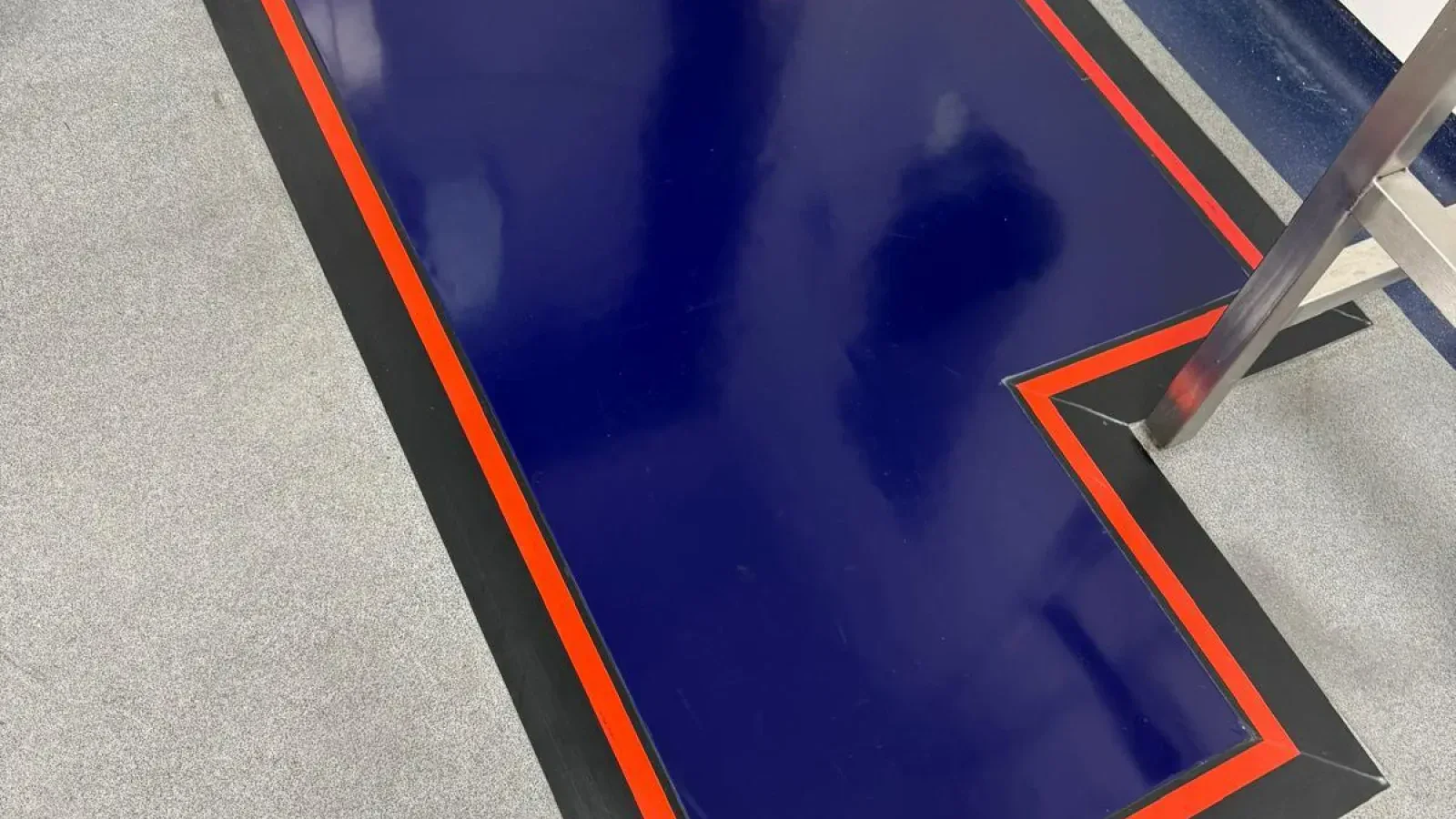
CC Matting works well when traffic naturally crosses the mat before entering the controlled area. If people or trolleys can easily bypass the point, performance drops regardless of material quality.
Active length is reviewed through footfalls, wheel rotations, available width, traffic direction and the position of doors or access points.
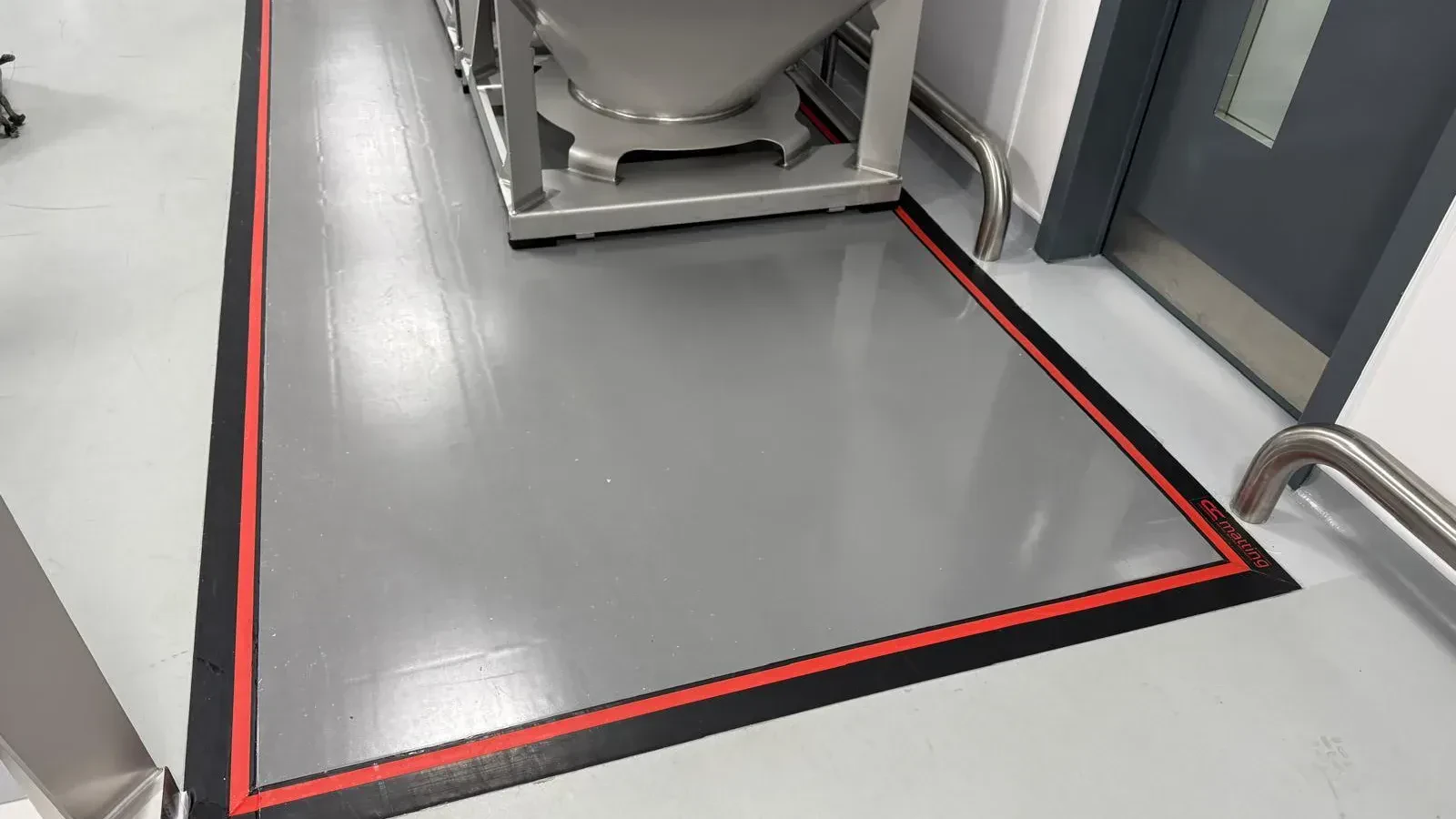
CCM Heavy Duty has a heavy-duty positioning and strong technical data, but vertical load is not the full story. Tight turns, braking, acceleration, pivoting or pallet dragging can affect any polymeric surface.
For trolleys, light wheels and straight traffic, selection can move quickly. For forklifts, powered pallet trucks or aggressive traffic, the application should be reviewed instead of relying on a broad promise.
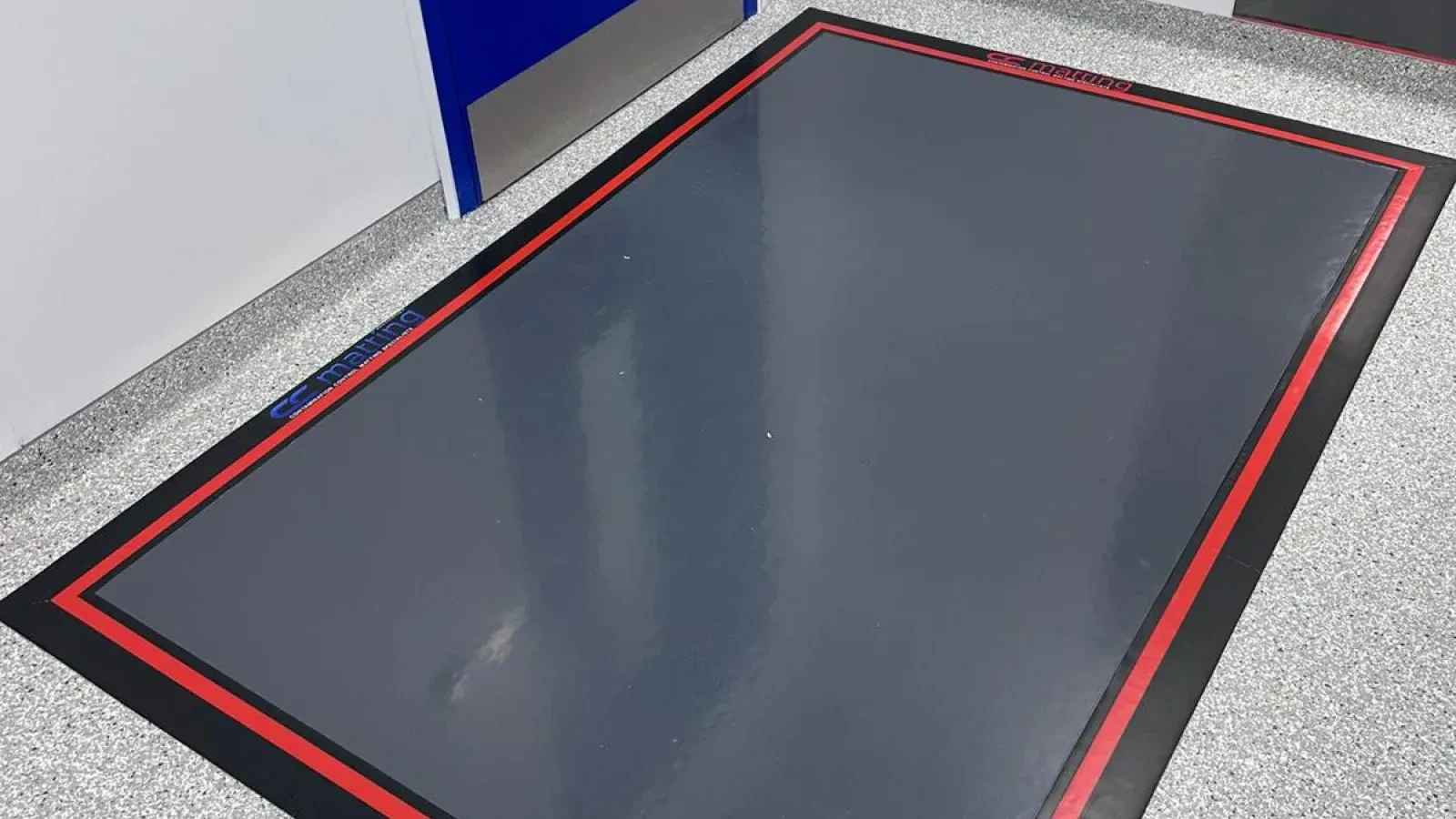
The tacky surface needs to be cleaned, not just installed. In controlled areas, the routine should define owner, frequency, residue removal and when the mat is ready for traffic again.
This is the advantage over peel-off consumables only when the process is owned: fewer sheet changes, less waste and a surface that can be returned to service through cleaning.
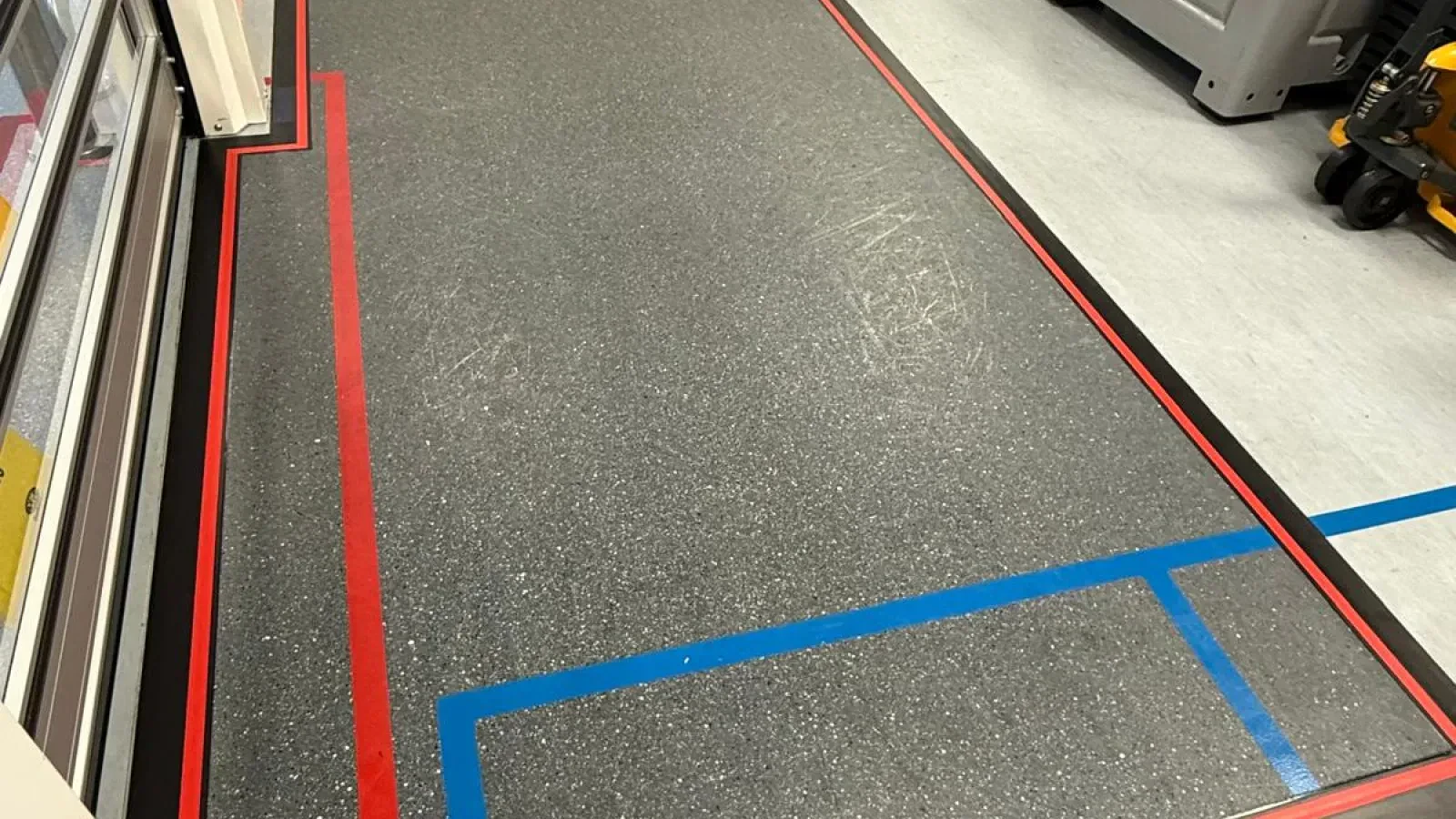
A mat placed in the wrong point can look good on day one and perform poorly after the first weeks. Floor condition, edges, seams, initial cleaning and edge protection should be clarified before quotation.
In cleanrooms and controlled environments, product documentation is reviewed together with the operator procedure: target class, internal audit, personnel flow and how the area is monitored.













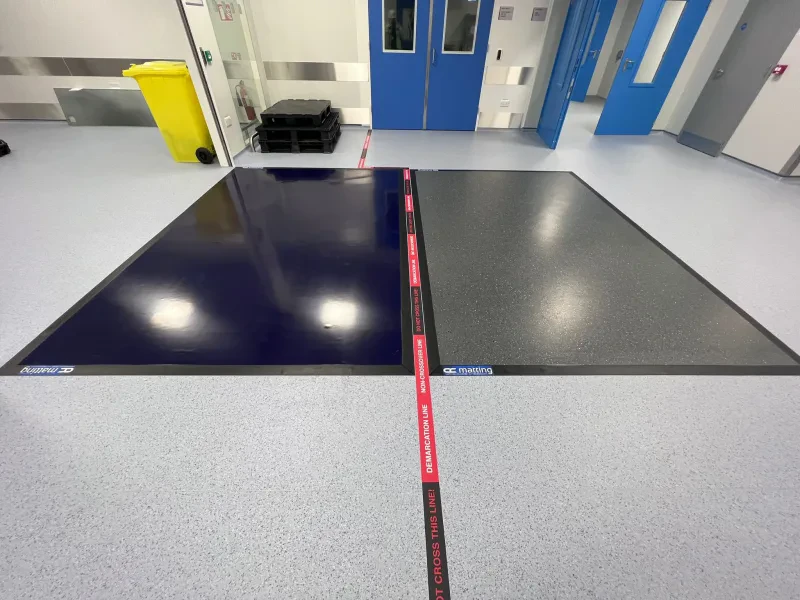
Do you have a point where particles travel further than they should?

A peel-off mat is a consumable sheet system. CC Matting is a washable polymer contamination-control mat designed to stay in the transfer point and return to service through cleaning.
For low-traffic or temporary points, peel-off may still be enough. For permanent controlled points with high sheet usage, CC Matting should be reviewed.
CC Matting fits controlled points with footwear, light wheels, trolleys and traffic that can cross straight over a polymer contamination-control mat. ProfilGate is stronger when the route needs active mechanical brushing, heavier industrial traffic or gross wheel contamination.
Trolleys and light wheels are natural applications when the wheels cross straight over the mat with enough contact. Heavier traffic needs a closer review because vertical load, wheel type, turning, braking and shear can change the outcome.
When forklifts or powered pallet trucks are involved, Heavy Duty is not treated as universal approval. We review the application and use a pilot where needed.
In CC Matting technical documentation, ISO Class 5 is a material/test context for CCM Heavy Duty. For a project, this helps material selection, the quality discussion and validation of the transfer point.
Polymeric matting needs a real cleaning routine: clean the surface, remove residue and return the area to traffic only when the surface is ready.
Without a cleaning owner, the advantage over peel-off mats fades quickly. That is why cleaning is part of the commercial review.
Send the exact area and a few practical details. A full technical file is not needed to start.
With this, we can say whether to move to quotation, pilot or comparison with ProfilGate.