


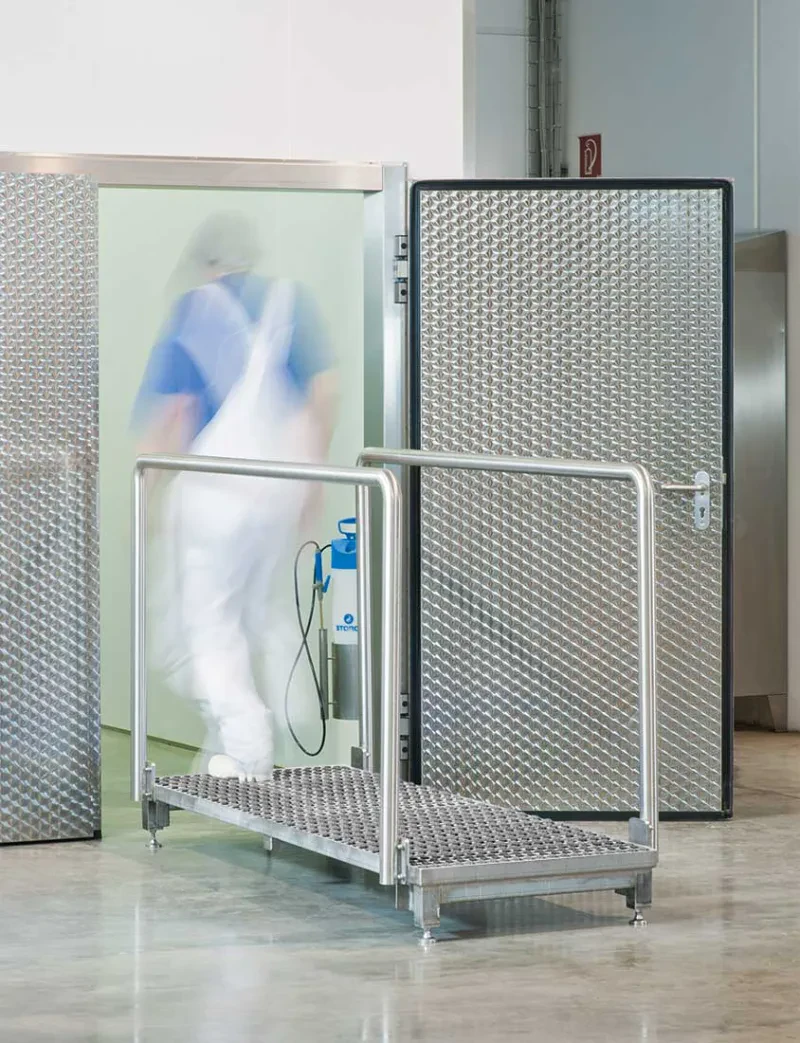
Personnel, footwear and entry direction
Check that everyone entering the sensitive area follows this route through the required cleaning and access steps.

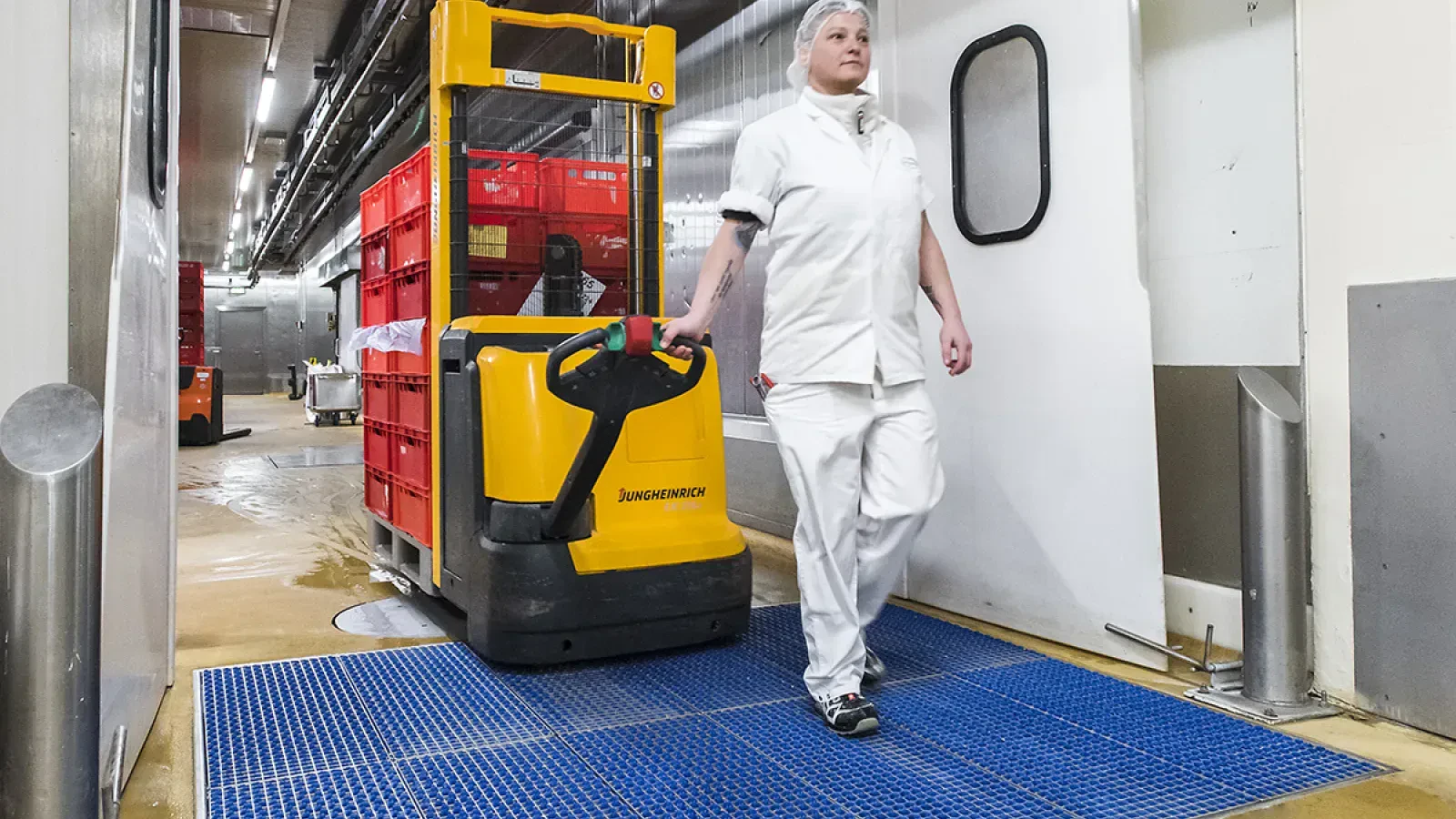
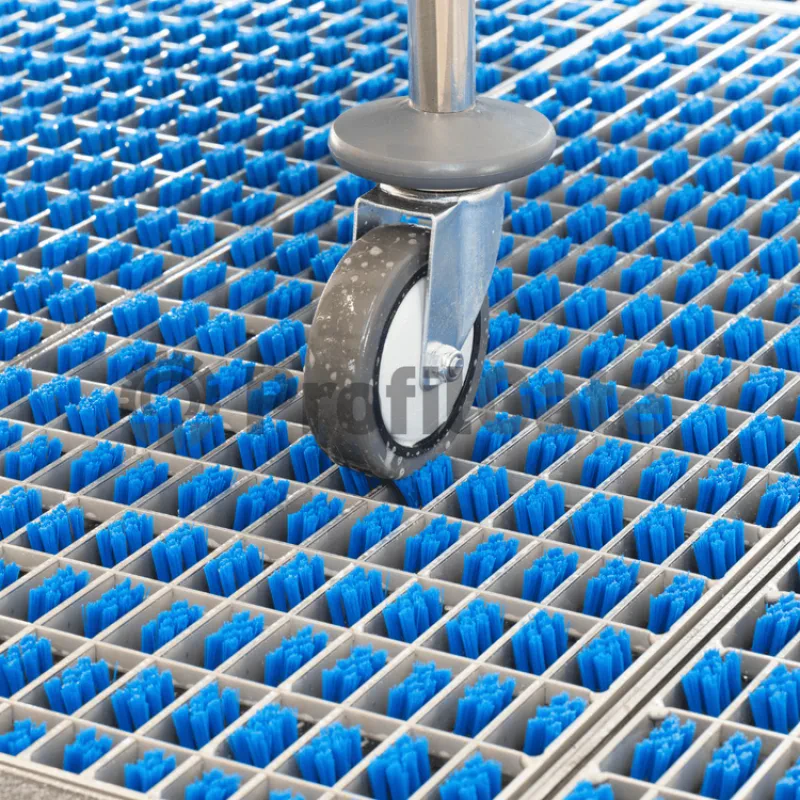
Personnel and mobile equipment can carry flour, dust, residues or moisture into production on soles and wheels. The entrance should guide every relevant crossing across the cleaning surface.
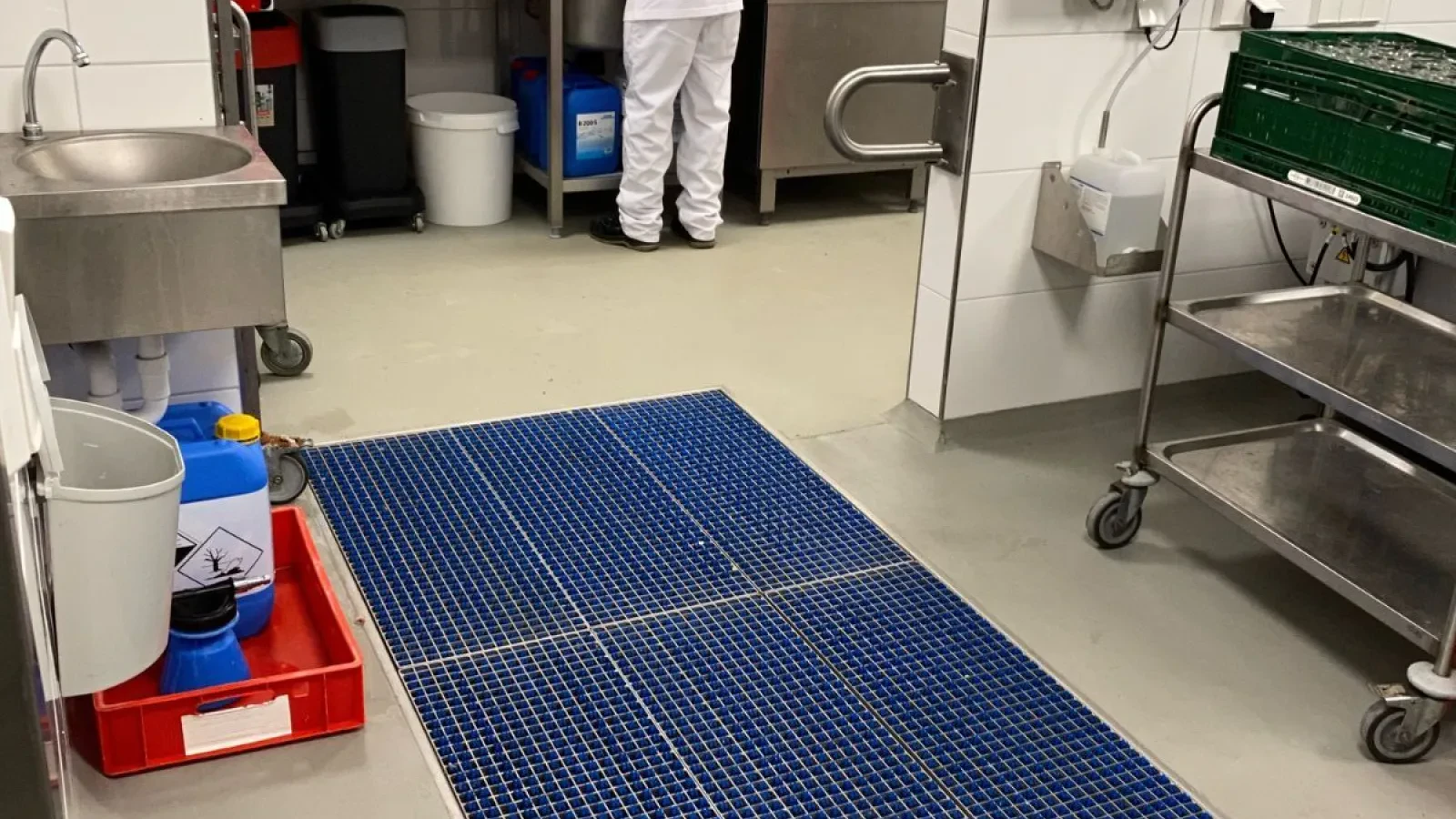
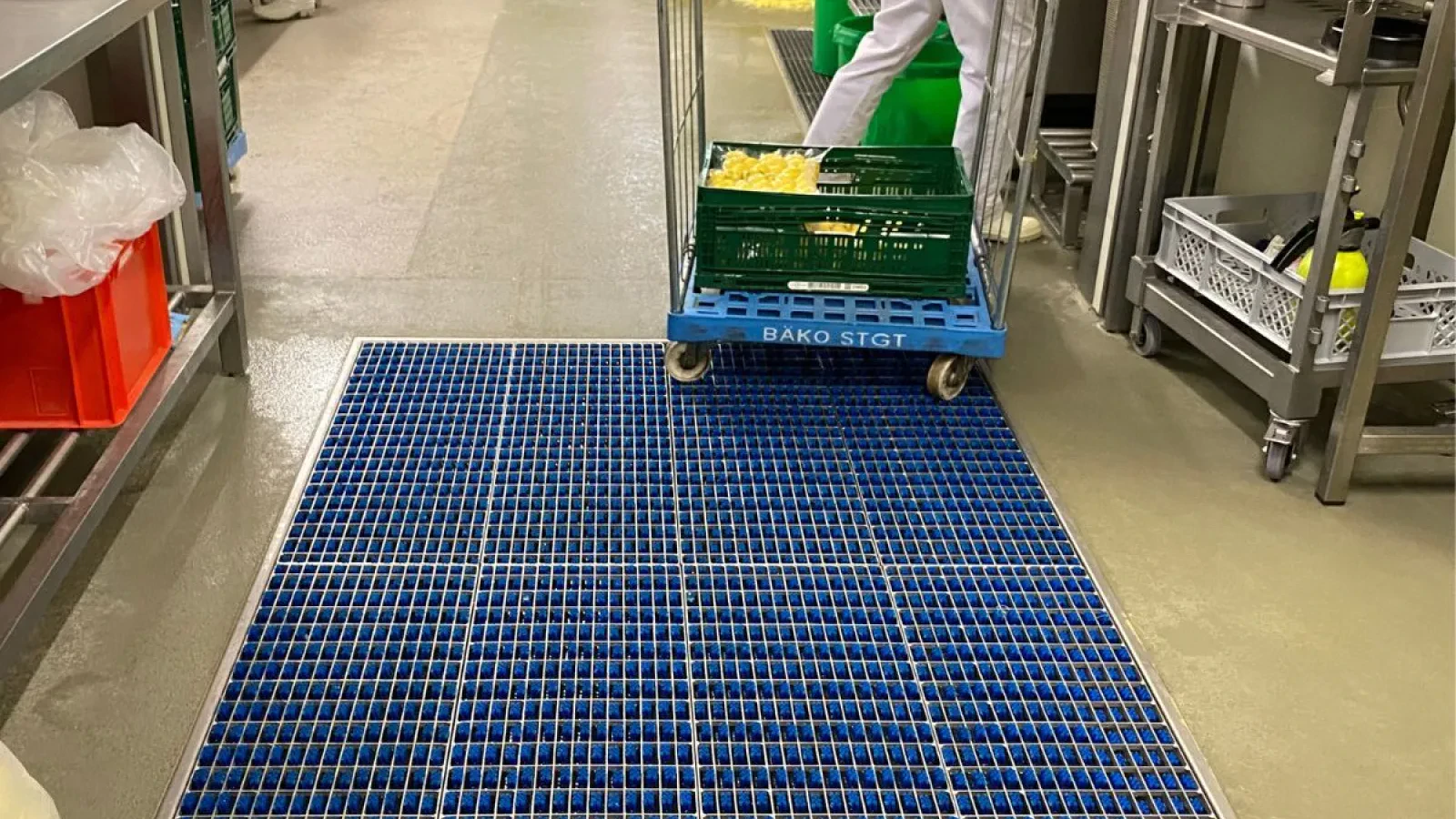
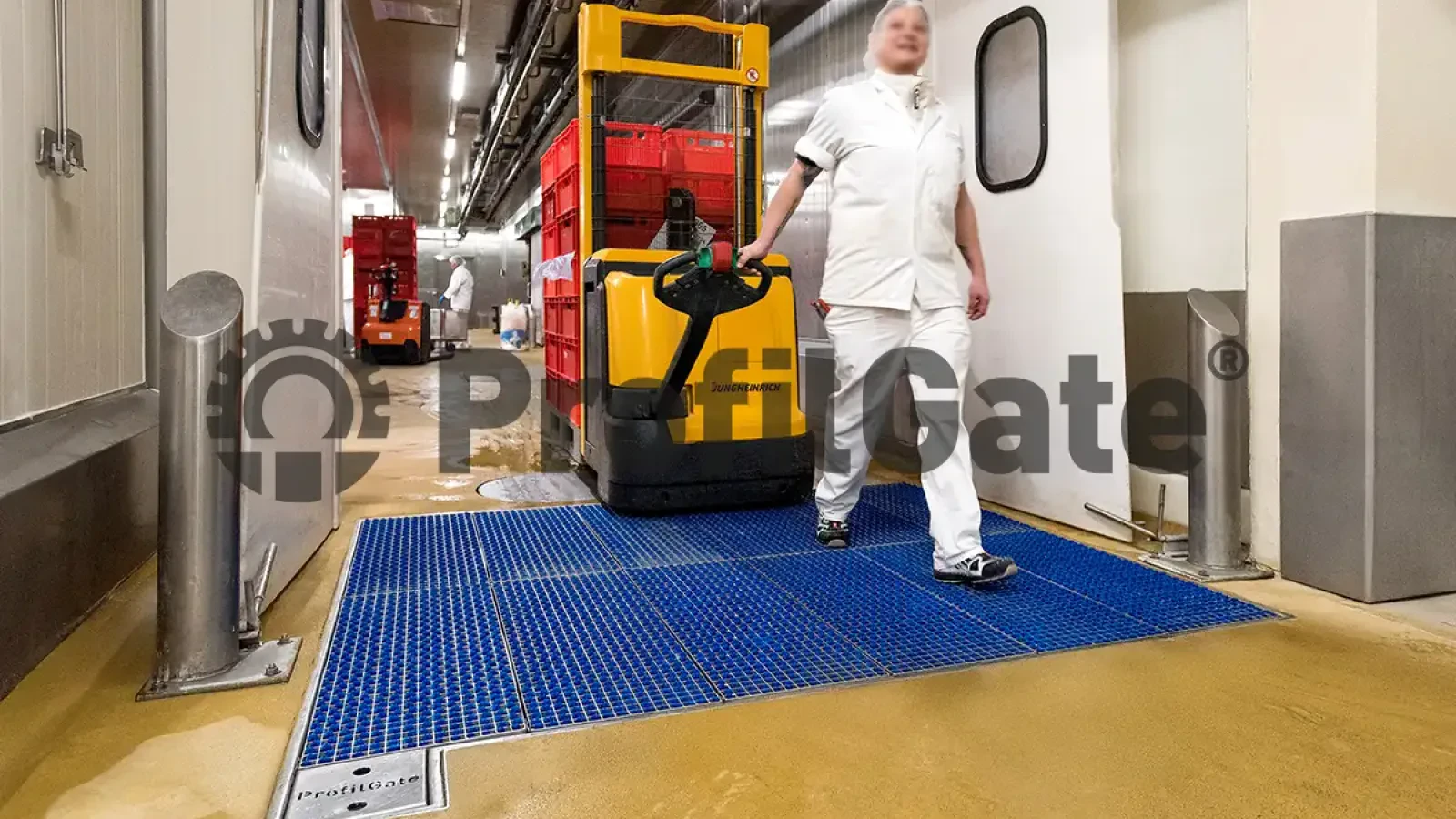
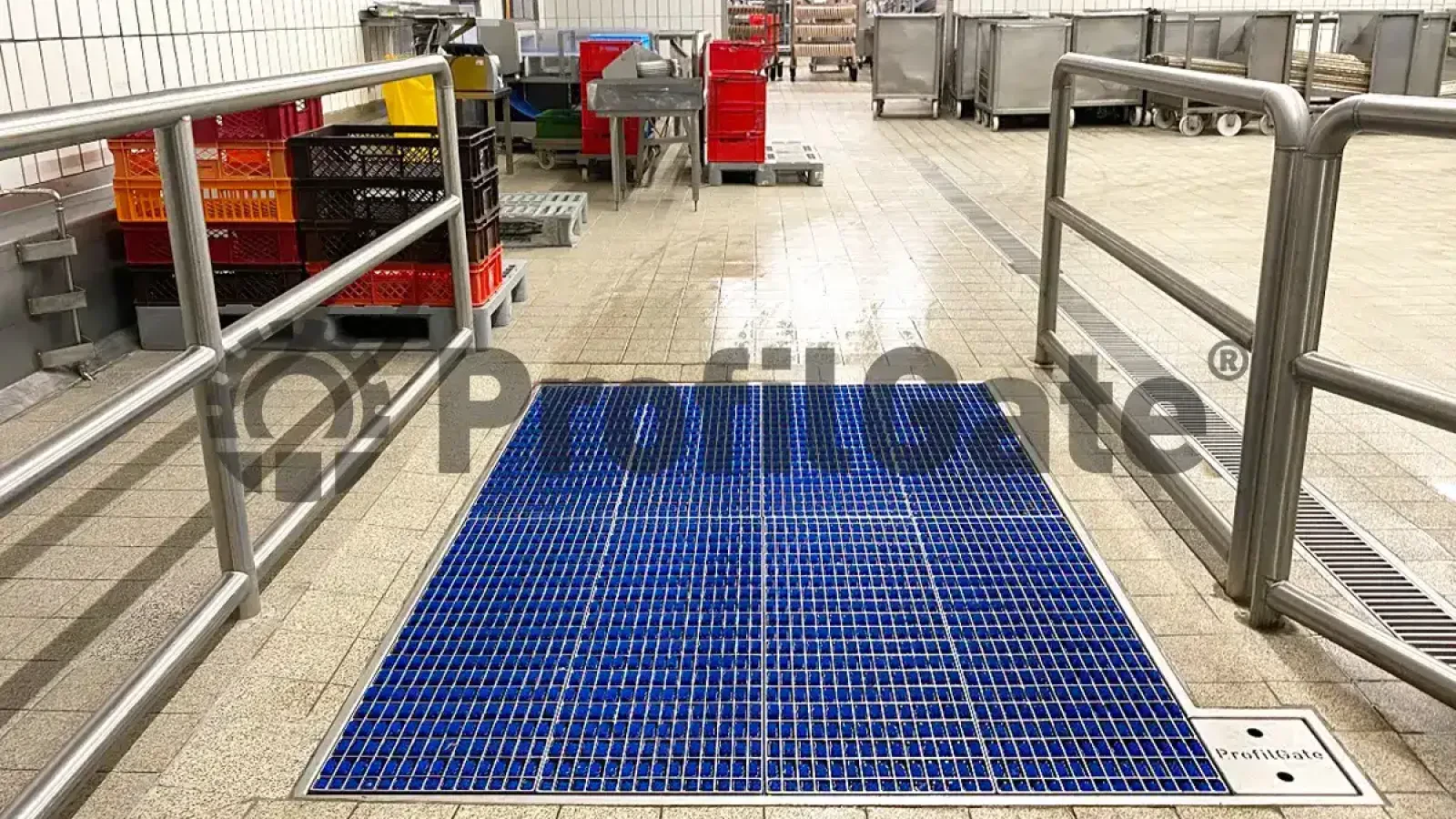
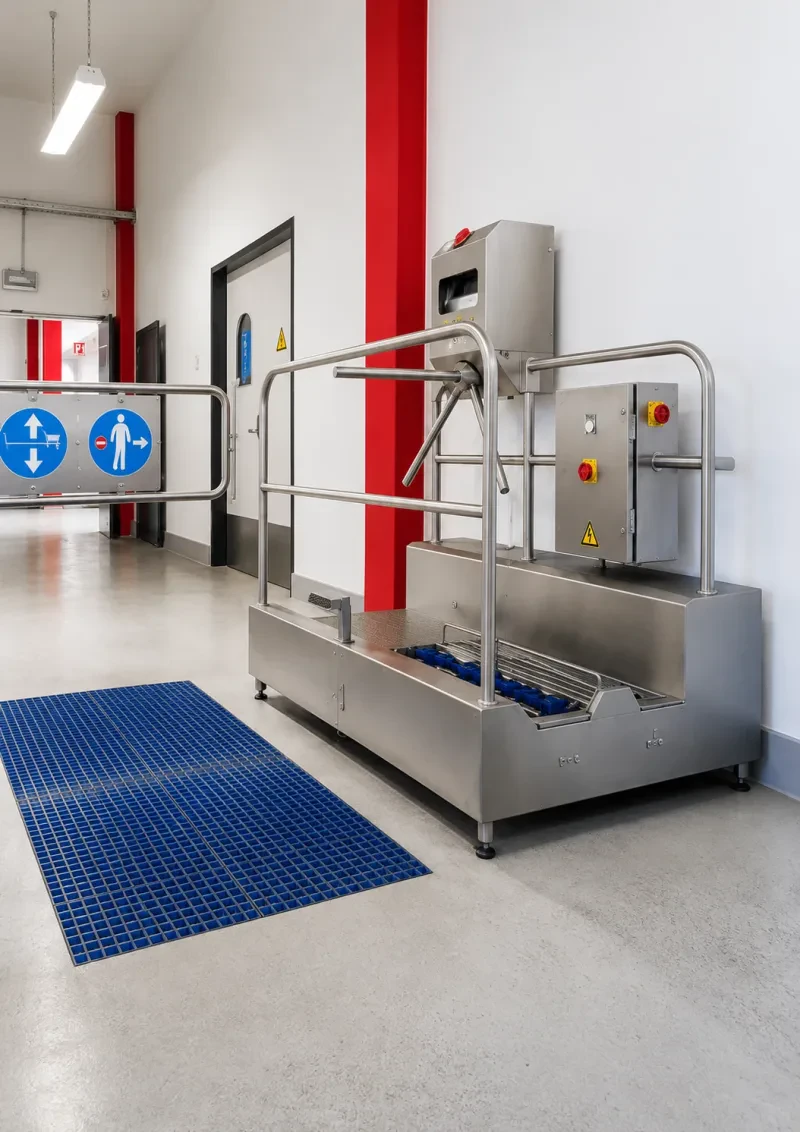
The hygiene station should sit on the route people and equipment actually use. Personnel, trolleys, pallet trucks and vehicles need to cross the active surface during normal movement, with no route around it.
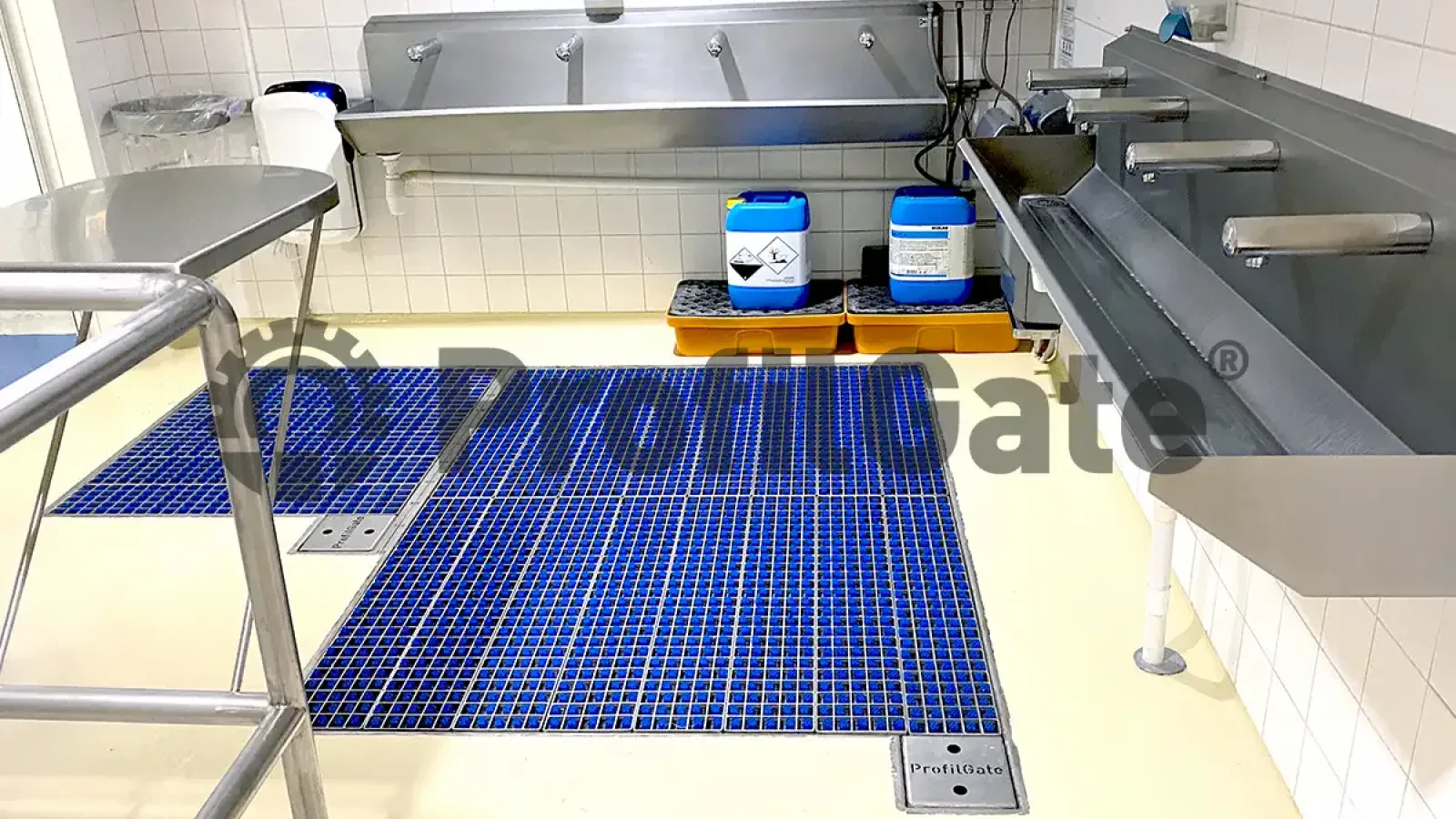
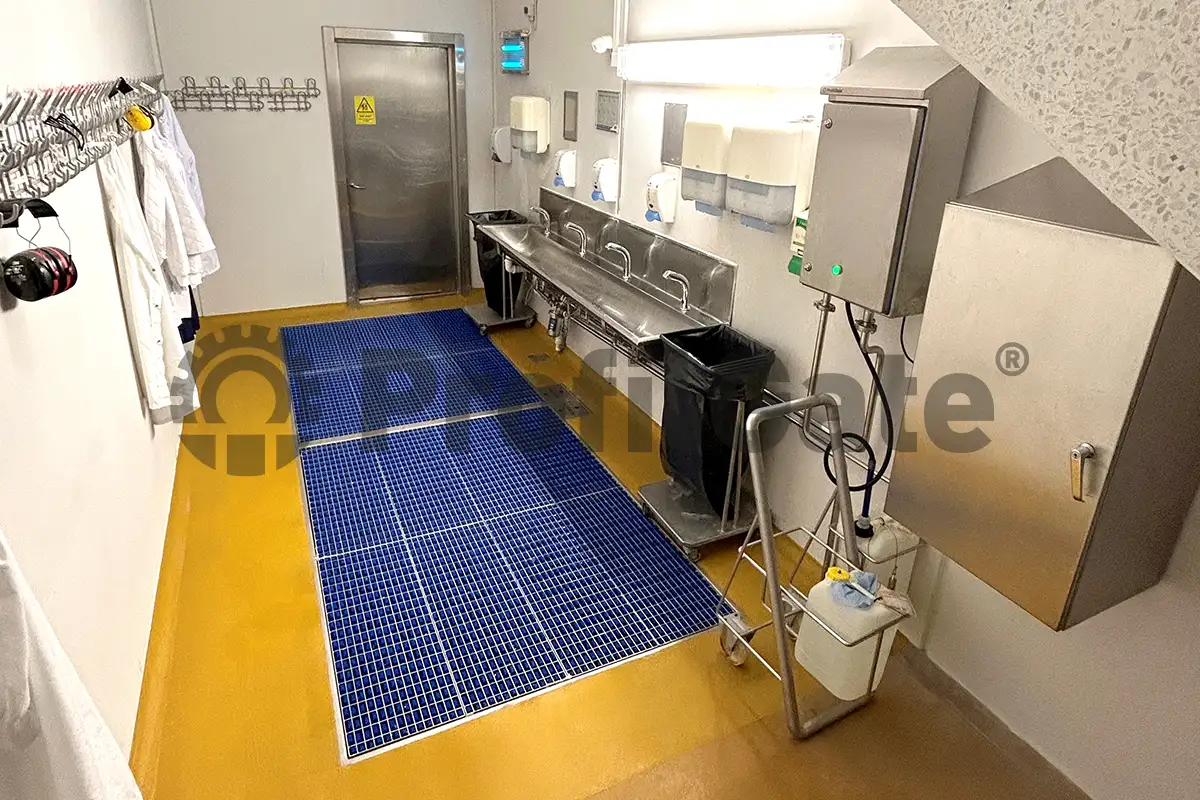
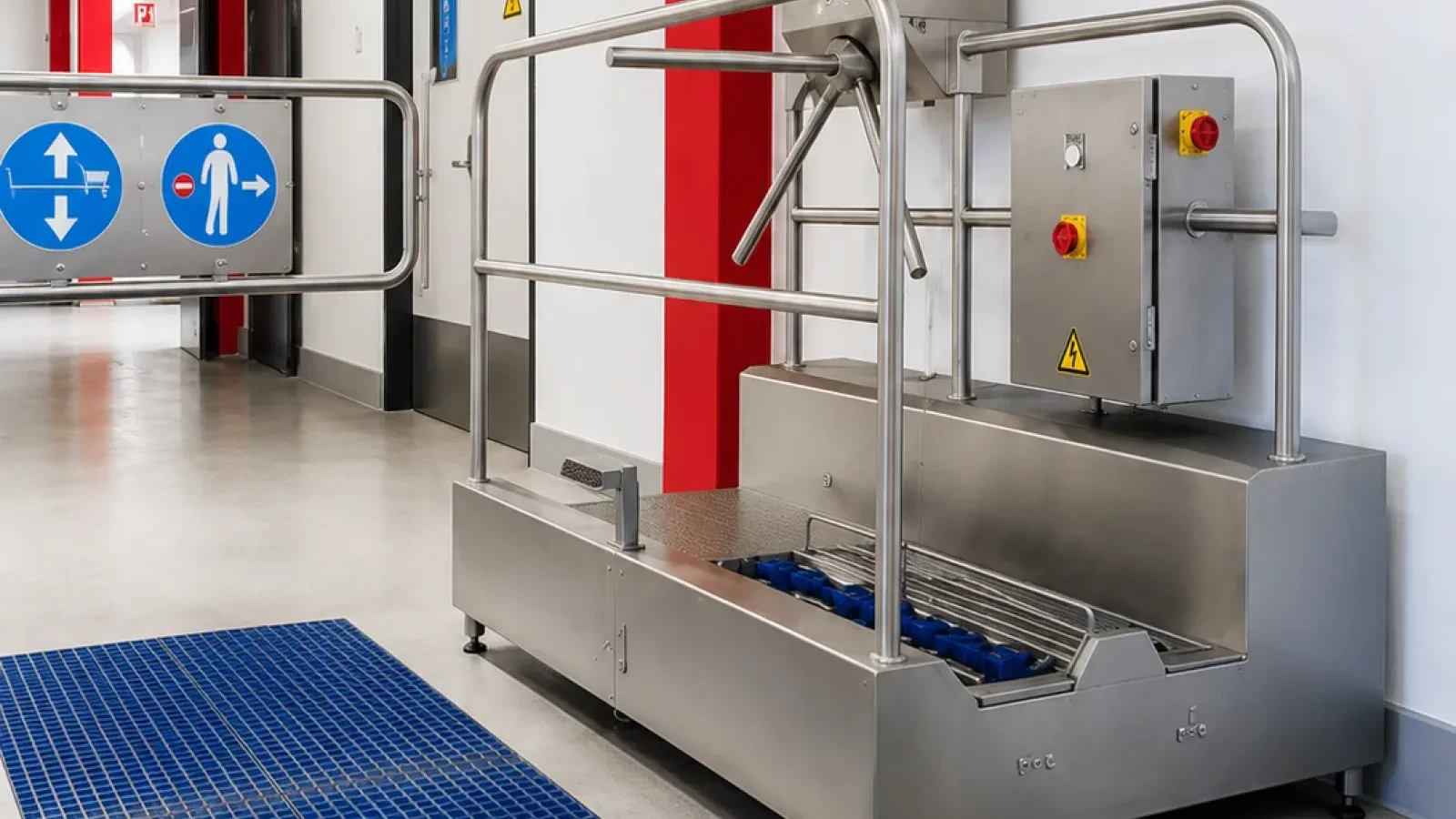
A hygiene entrance describes the complete controlled transition between areas and may include handwashing, footwear cleaning and access control. The hygiene station is the equipment within that sequence. Its configuration must align with the site procedure, approved disinfectant, drainage, cleaning, maintenance and internal monitoring.
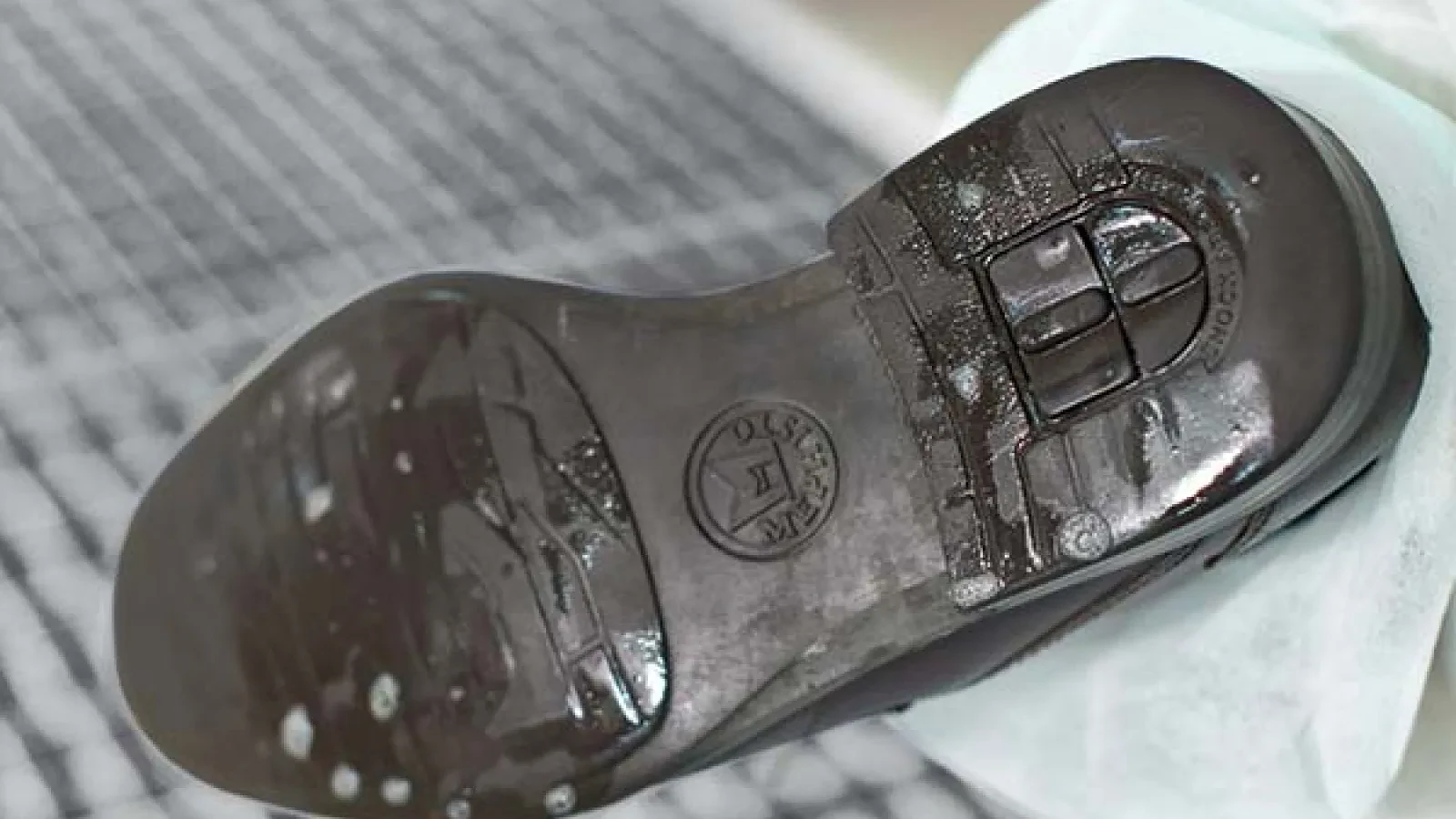
If soles, rollers or wheels carry flour, dust, sand, residues or moisture, contact with a disinfectant does not by itself remove the soil left on the surface. The first step is to define how mechanical cleaning will remove it.
For a wet hygiene station using disinfectant, the daily tasks should be clear from the start: manual refill or automatic dosing, concentration checks, drainage, area cleaning and documented checks. Without that routine, the disinfection process cannot be verified consistently.
The station supports the site procedure when every relevant person and vehicle uses it and daily tasks have clear owners.
Soles and wheels are cleaned before dirt and particles travel further along the route.
Personnel and mobile equipment follow the designated route without bypassing the station.
Cleaning, concentration checks, maintenance and ownership become part of the site procedure.
The route, traffic and hygiene requirements of the area determine the right setup. Footwear and the wheels fitted to trolleys or pallet trucks need different contact lengths and operating routines. Entrances to microbiologically sensitive areas also require a separately defined disinfection and monitoring procedure.
Check that everyone entering the sensitive area follows this route through the required cleaning and access steps.
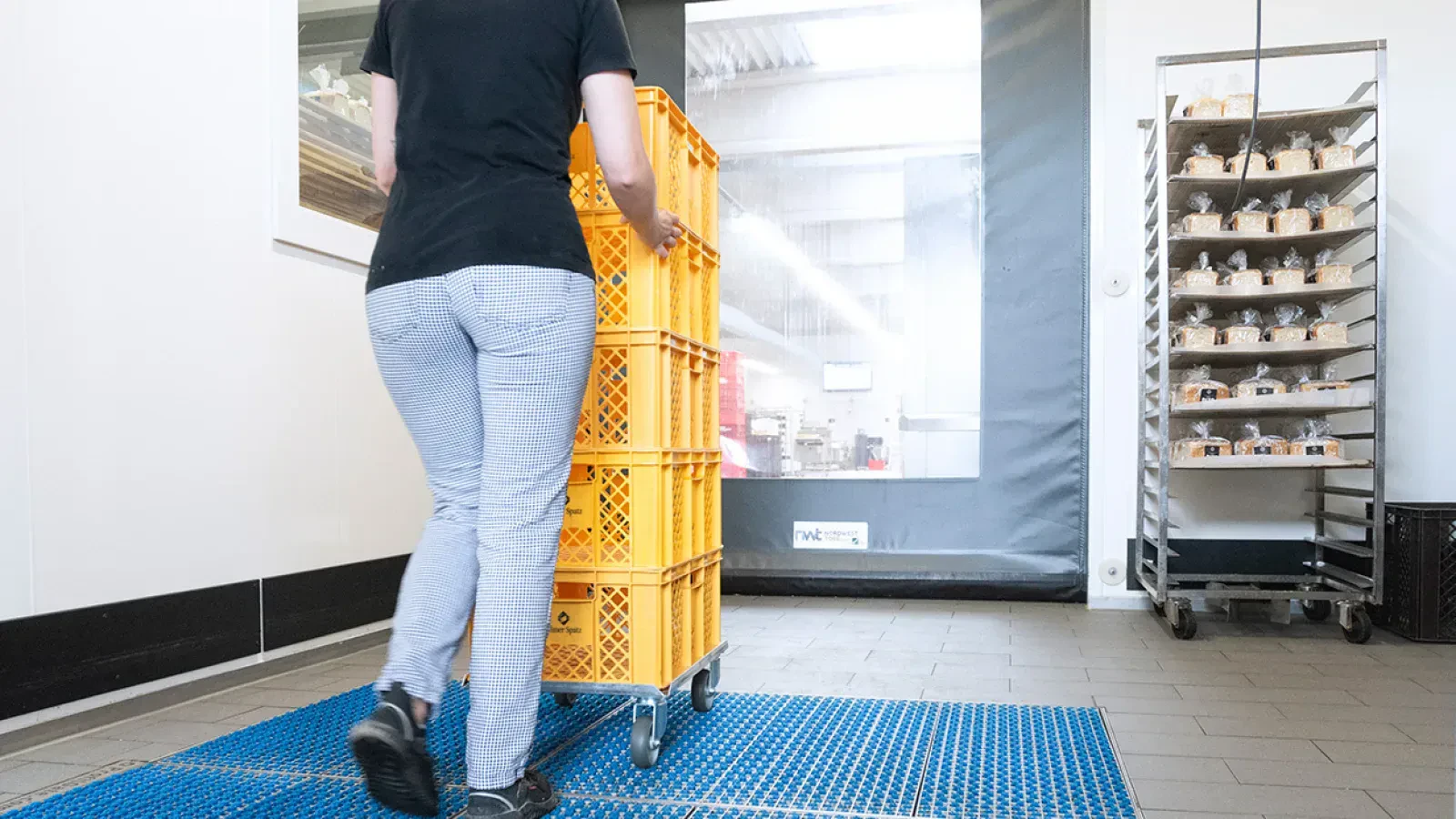
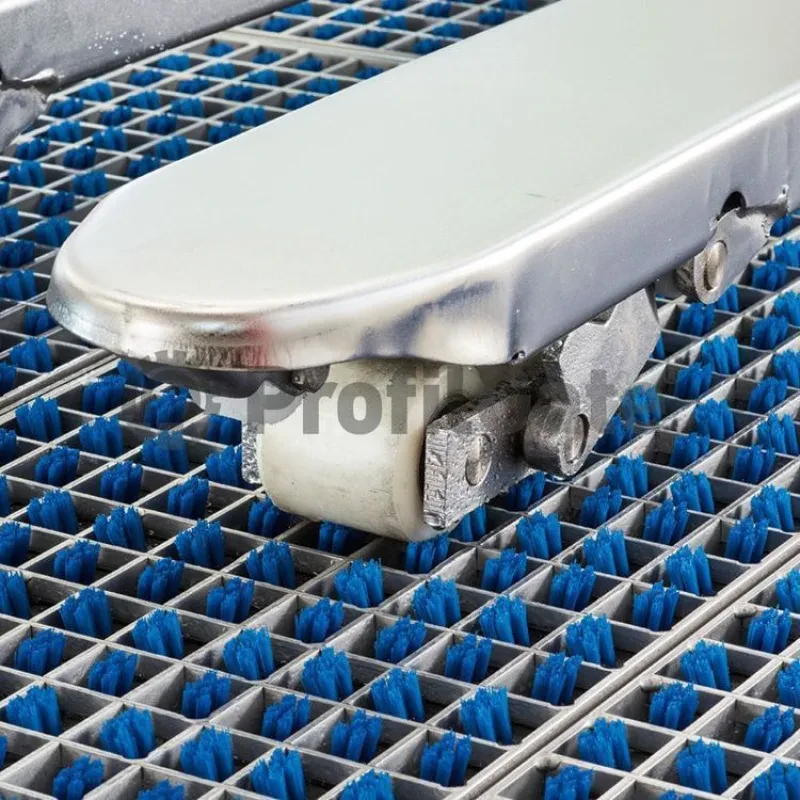
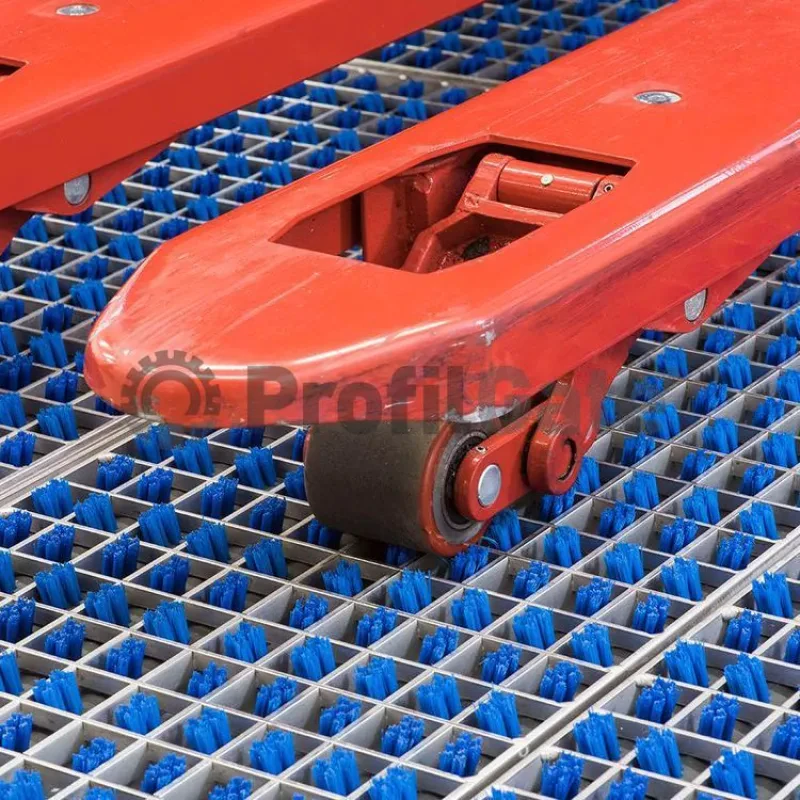
If trolleys, pallet trucks or other vehicles use the same point, a footwear-only station may allow contamination carried on wheels to continue into the area.
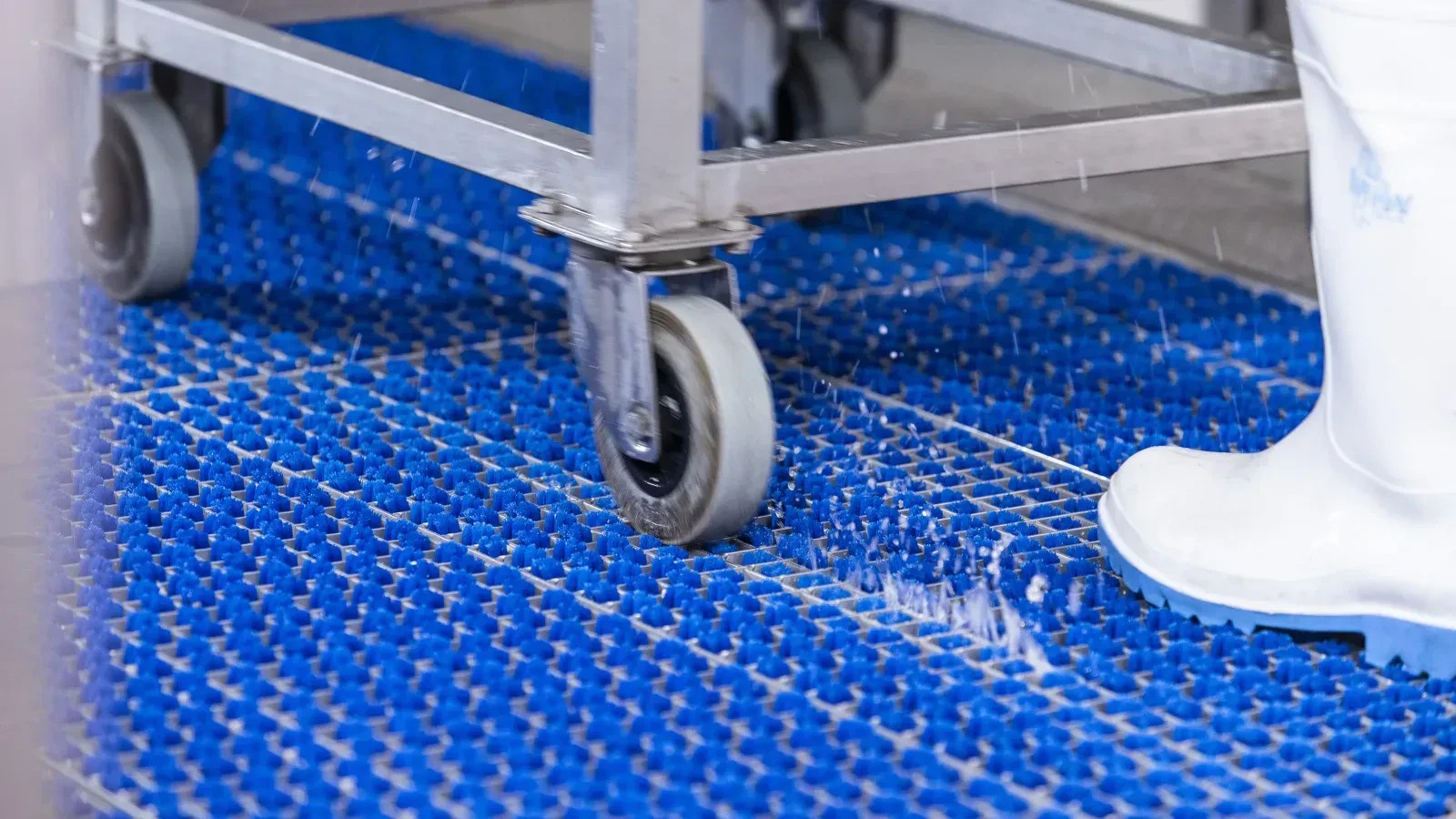
Dust, dry residues, moisture, grease and microbiological risks require different cleaning and verification methods. One entry setup will not suit every situation.
For a wet hygiene station, clarify the approved disinfectant and concentration, manual refill or automatic dosing, drainage, area compatibility and the monitoring method.
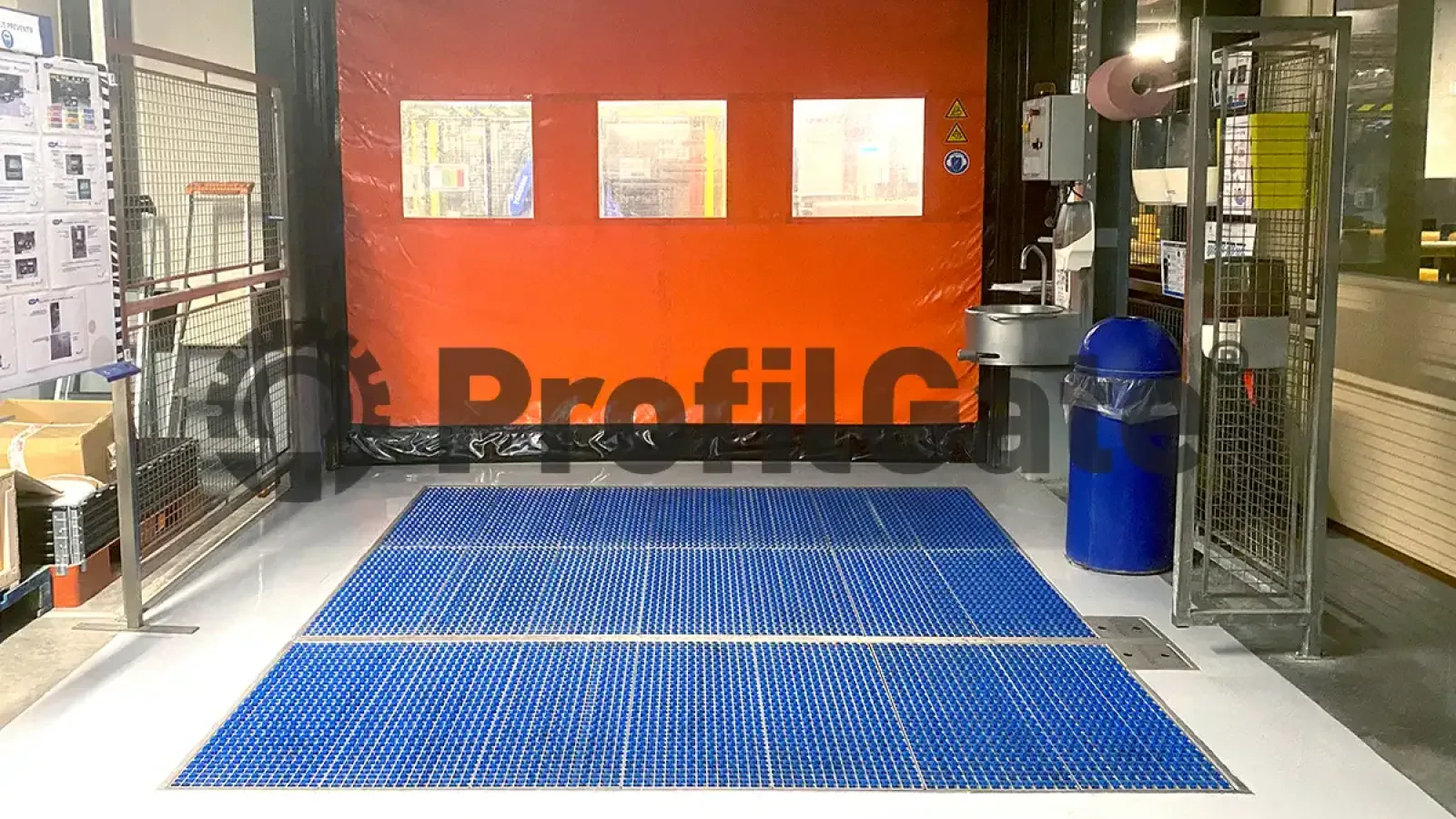
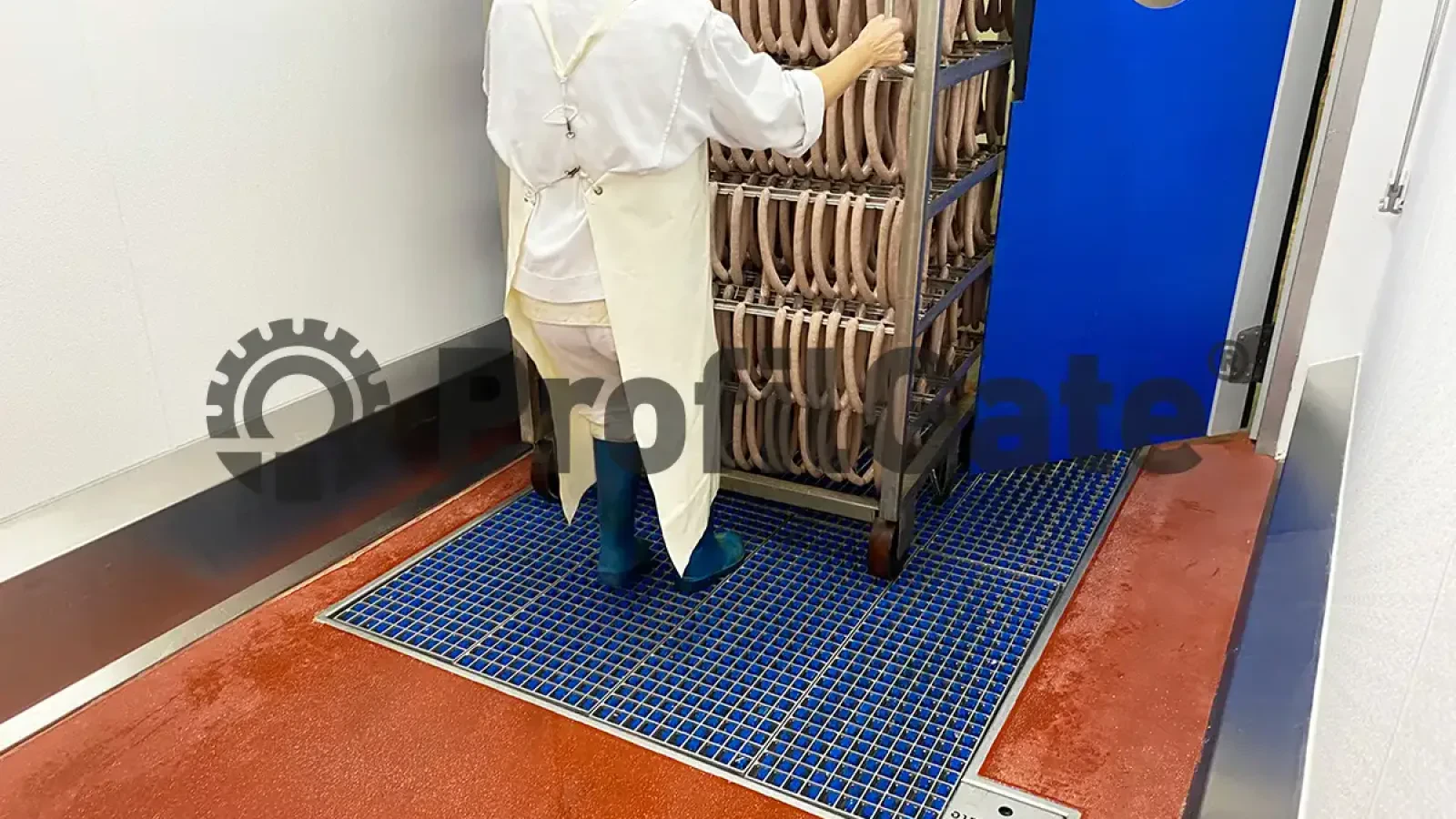
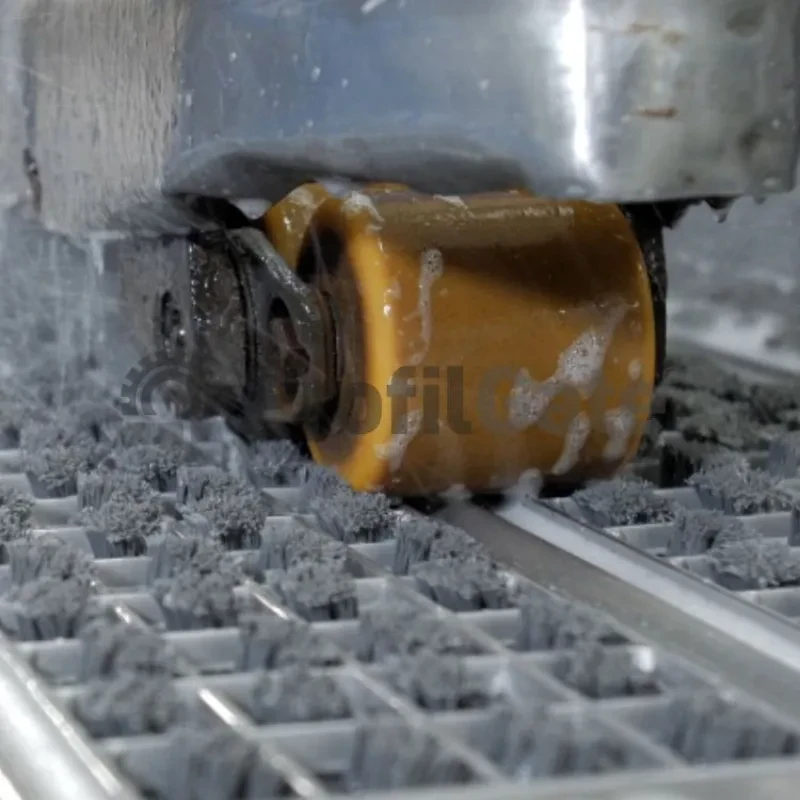
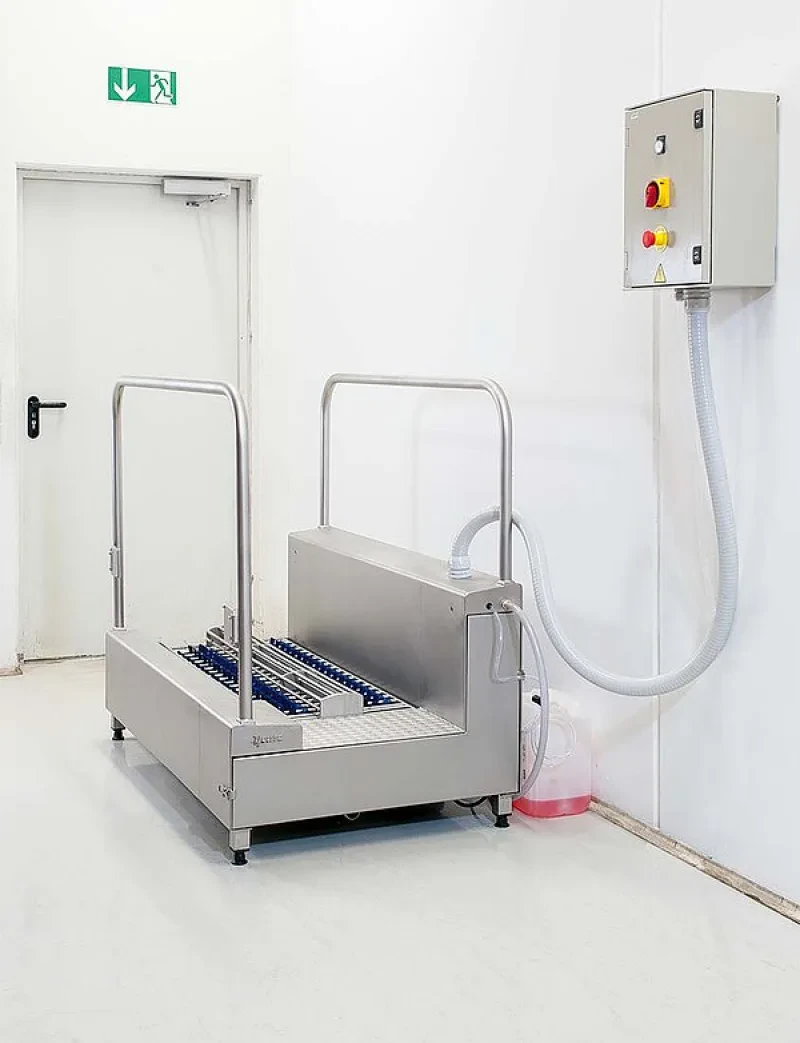
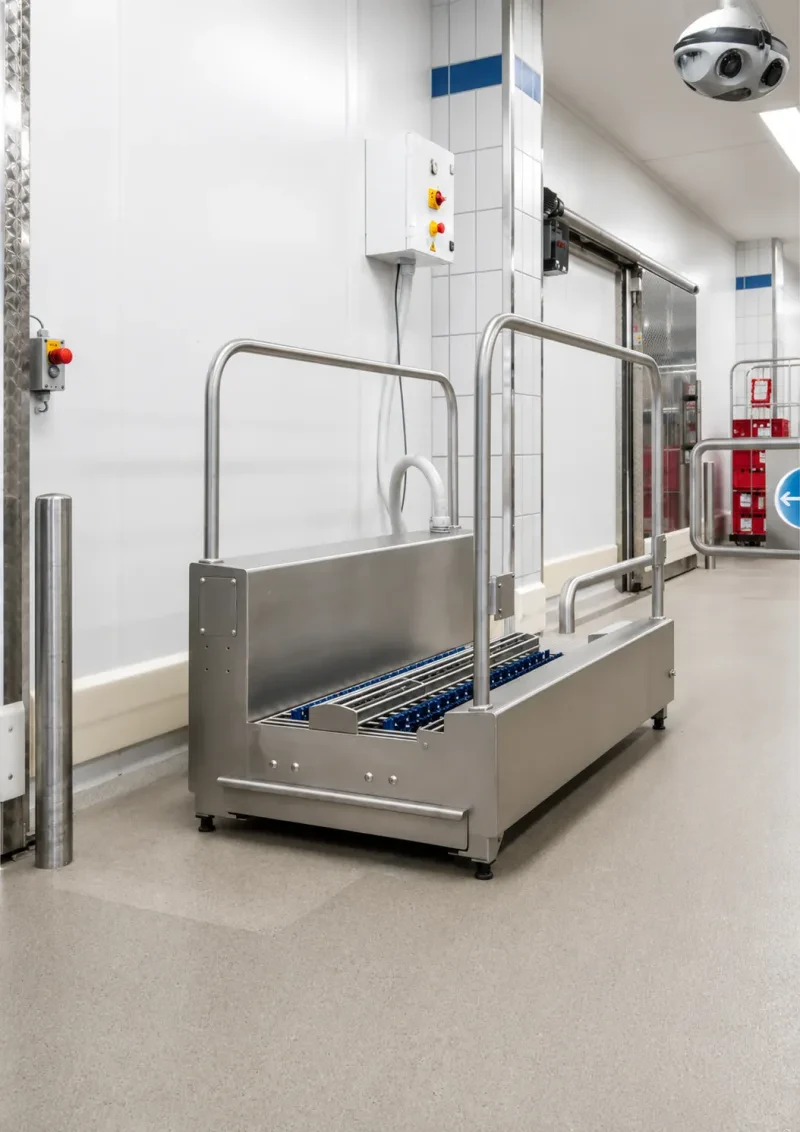
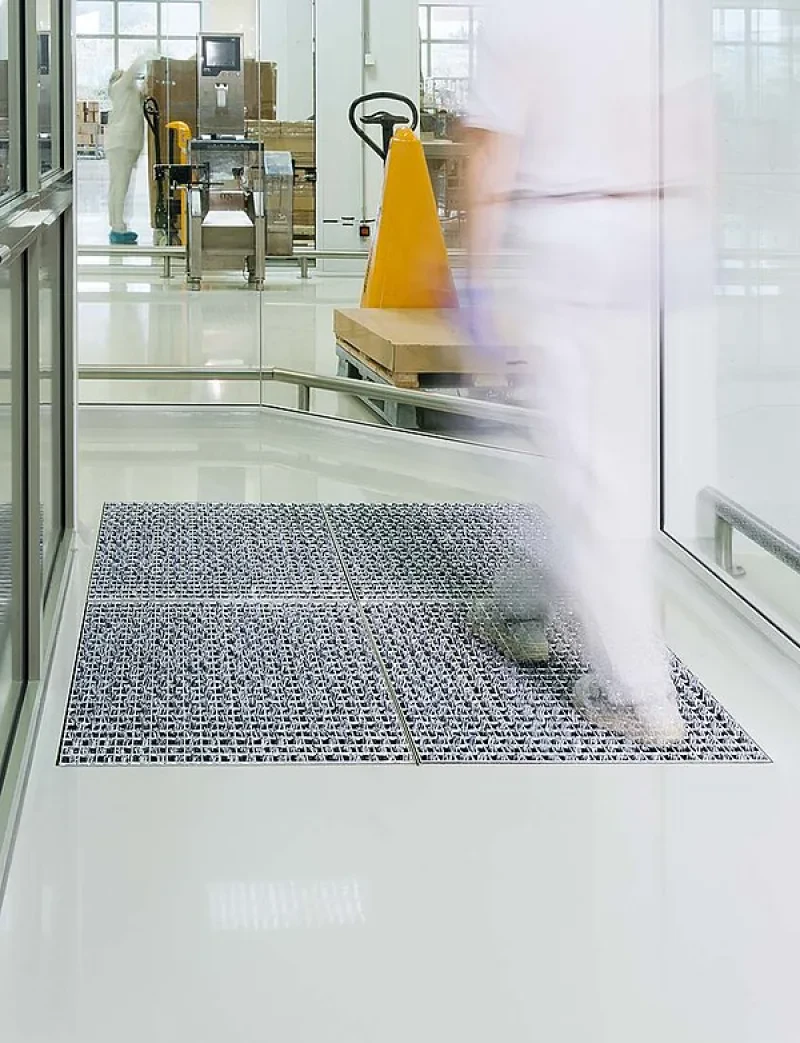
The film shows a ProfilGate aqua configuration integrated into a food-production route. It provides visual context for placement and passage; the site procedure must still define the approved disinfectant, concentration, drainage, achievable contact time and daily checks.
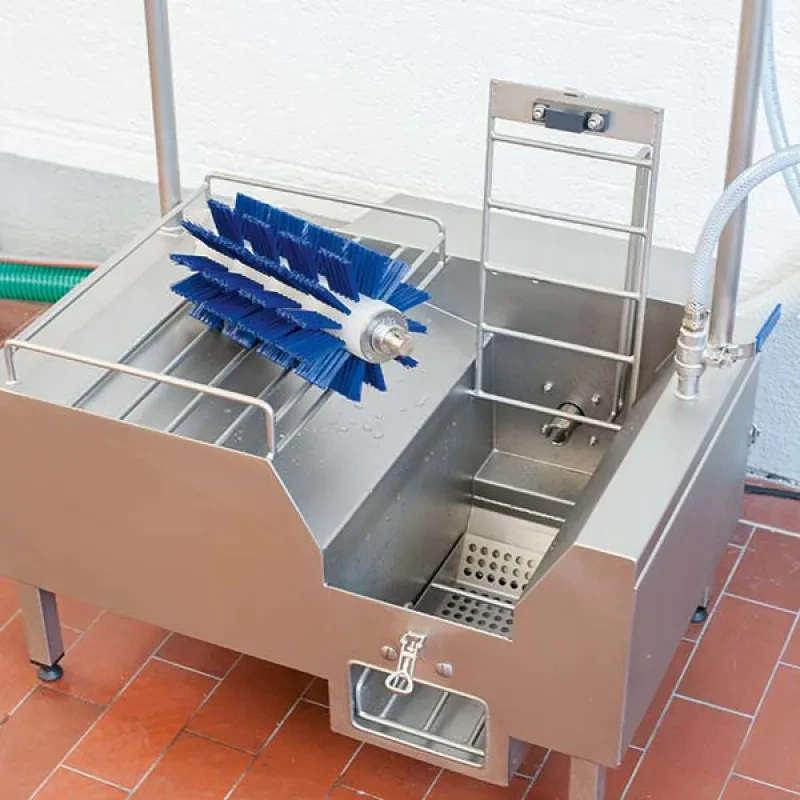
The station can fulfil its role when cleaning and maintenance follow a defined schedule, checks are recorded and an owner is assigned. Daily organisation matters as much as the equipment.
Personnel traffic, small wheels, wet hygiene stations and routes from warehouse areas require different layouts. The post-installation cleaning routine is a selection criterion in every case.
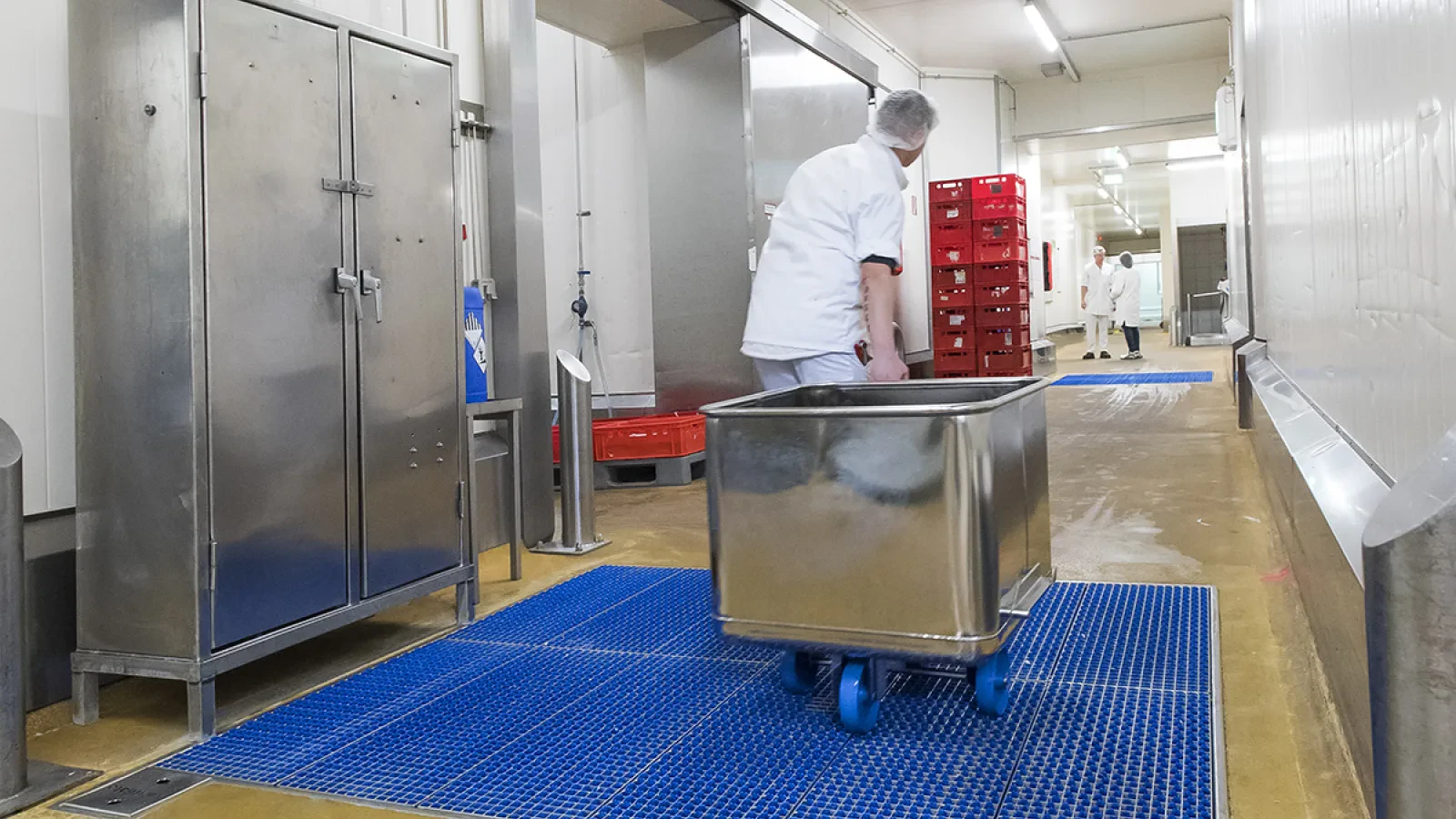
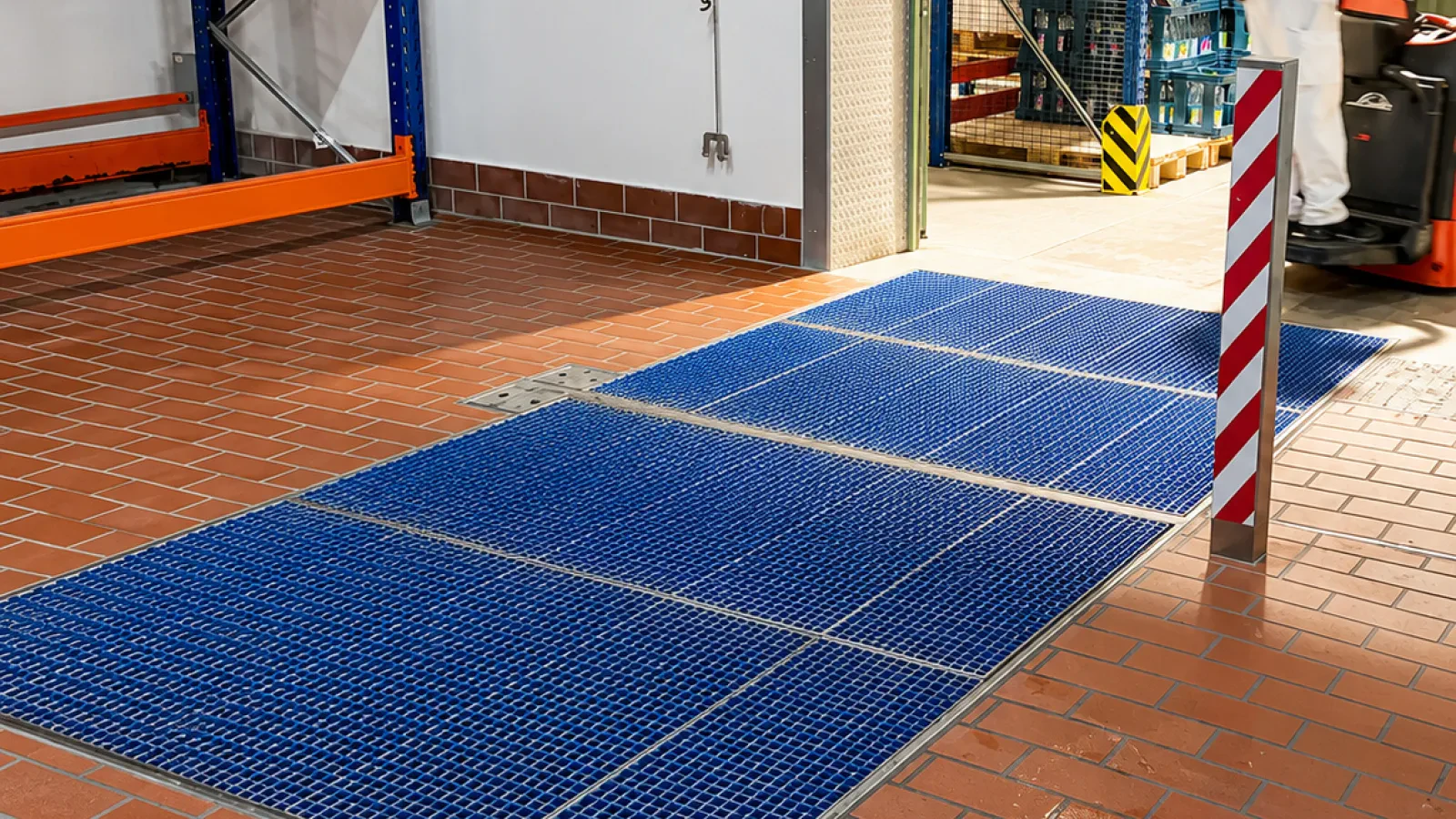
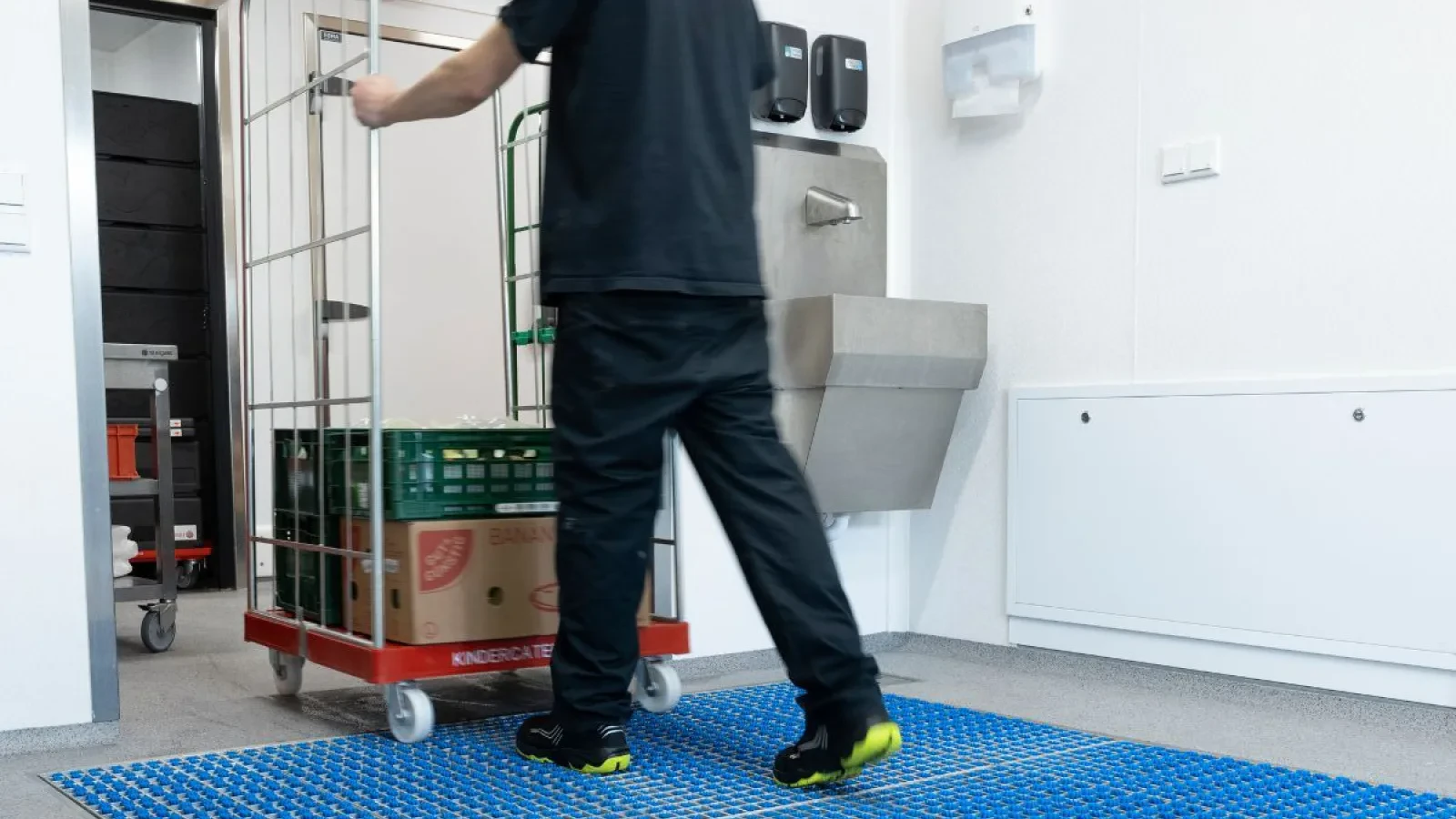
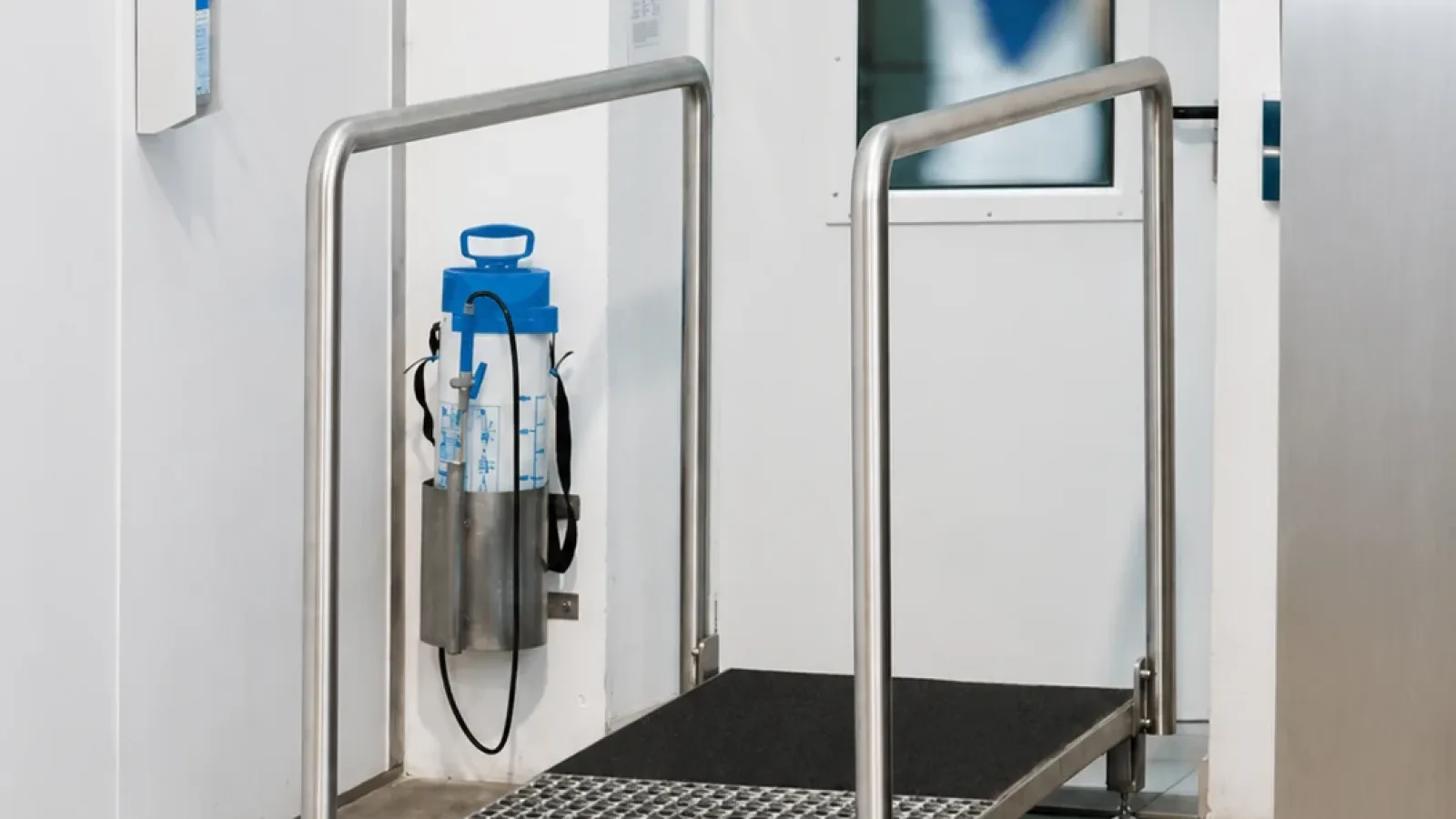
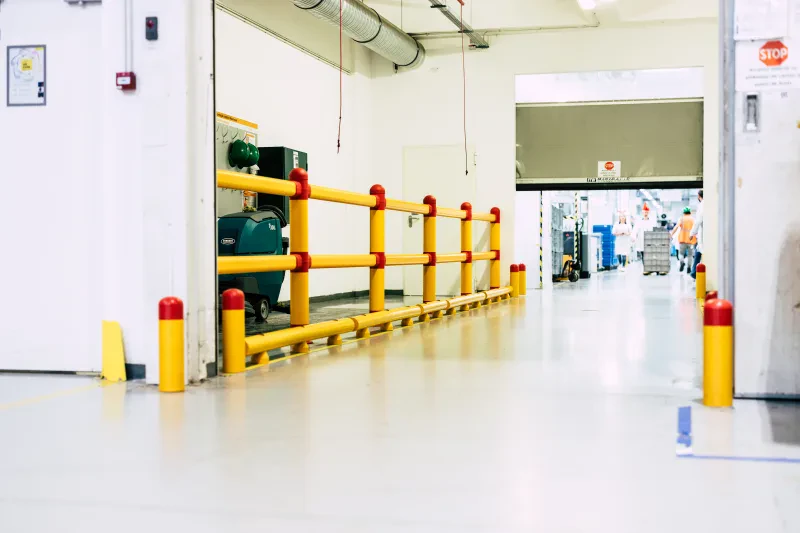
A guide to integrating wheel cleaning before doors, floors, drainage and routes are fixed.
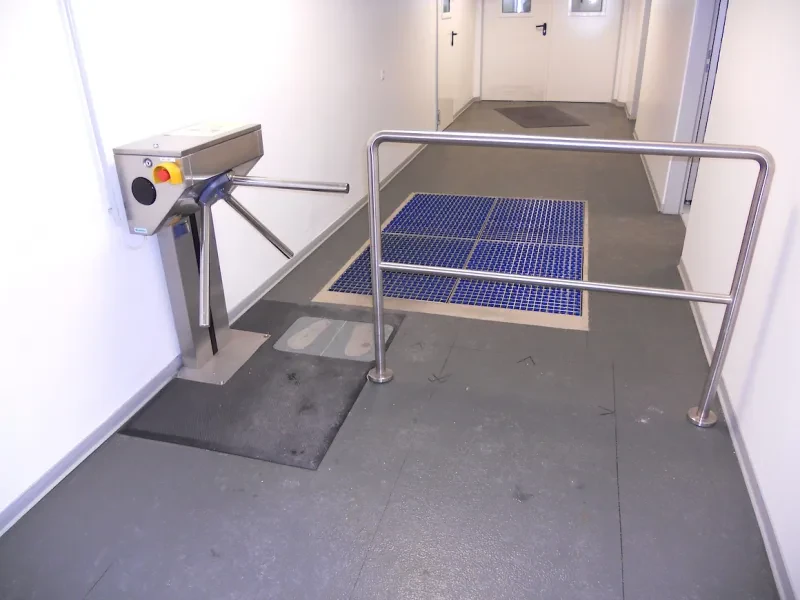
How to connect dirt on soles with access into an EPA area without confusing mechanical sole cleaning with validation of the ESD programme.
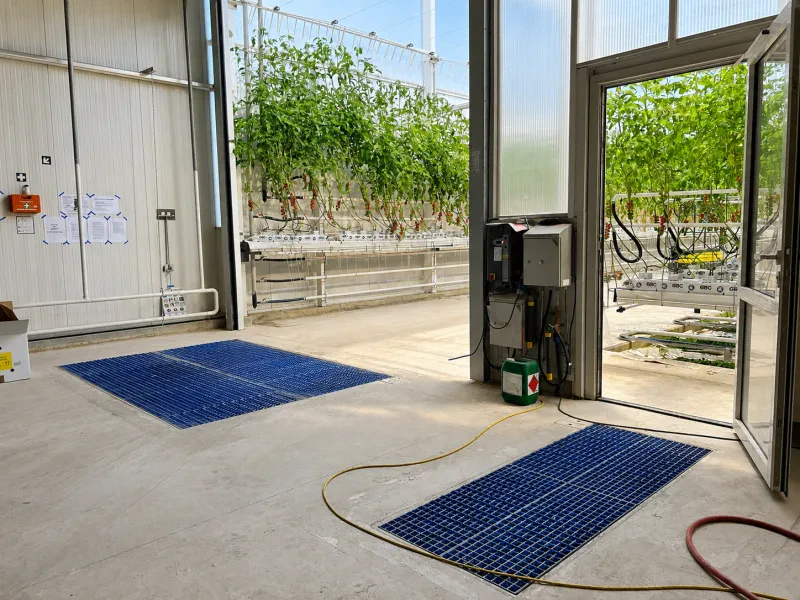
How to include wheels, carts and soles in a greenhouse hygiene concept, using the ProfilGate and MENNO Florades ToBRFV study as a practical reference.









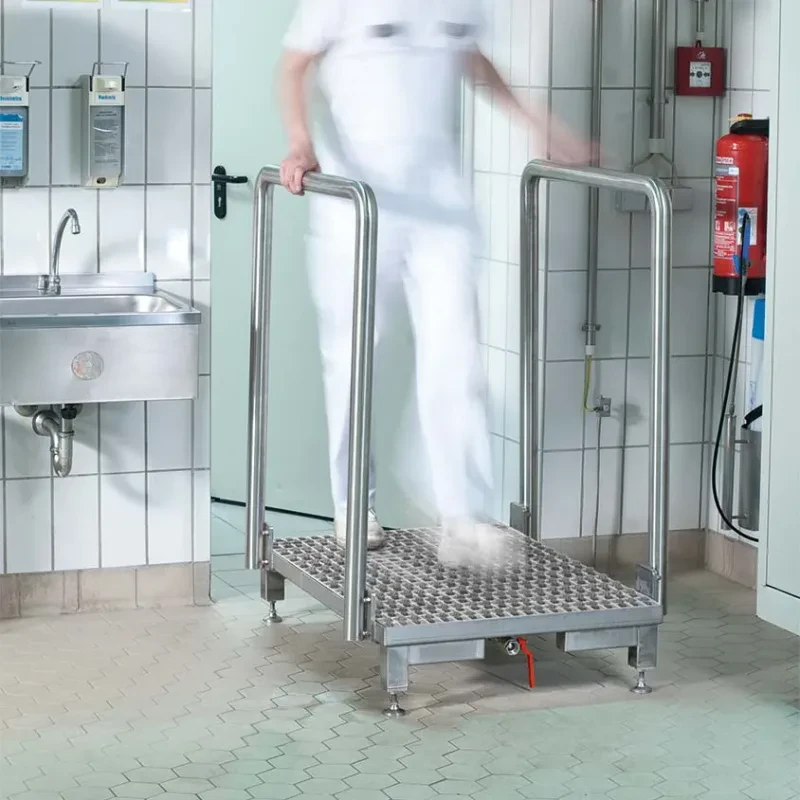
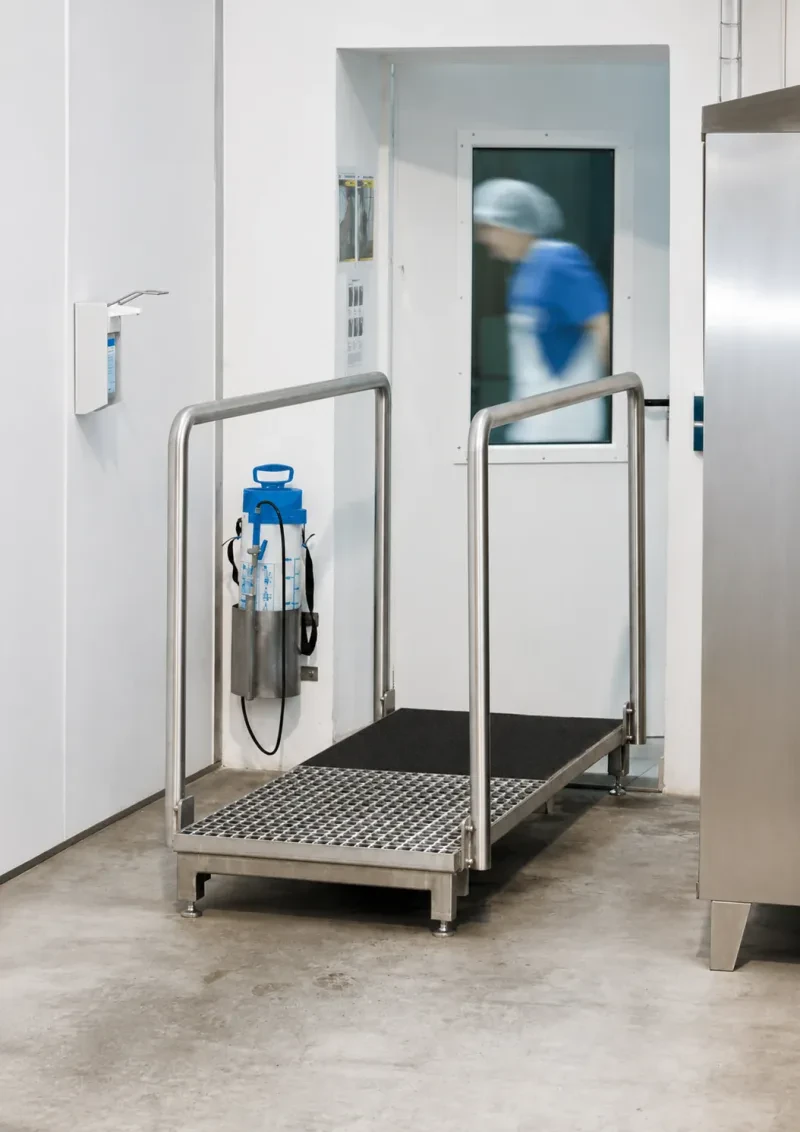
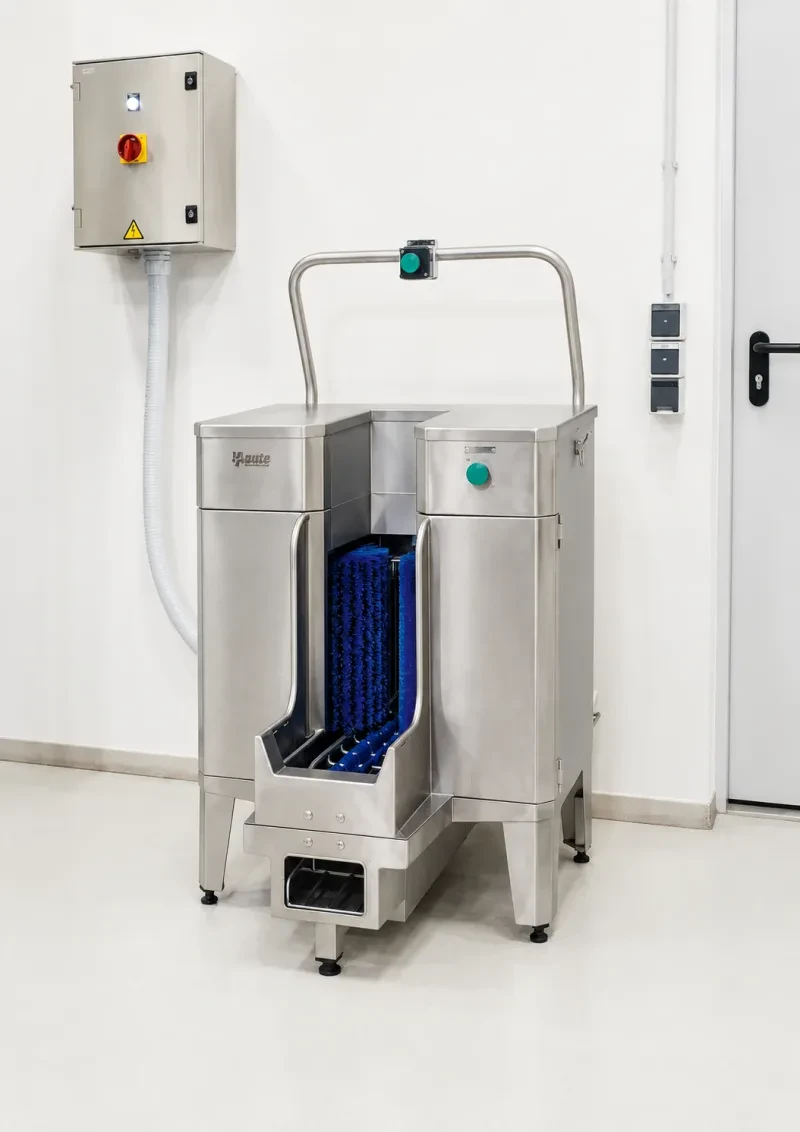
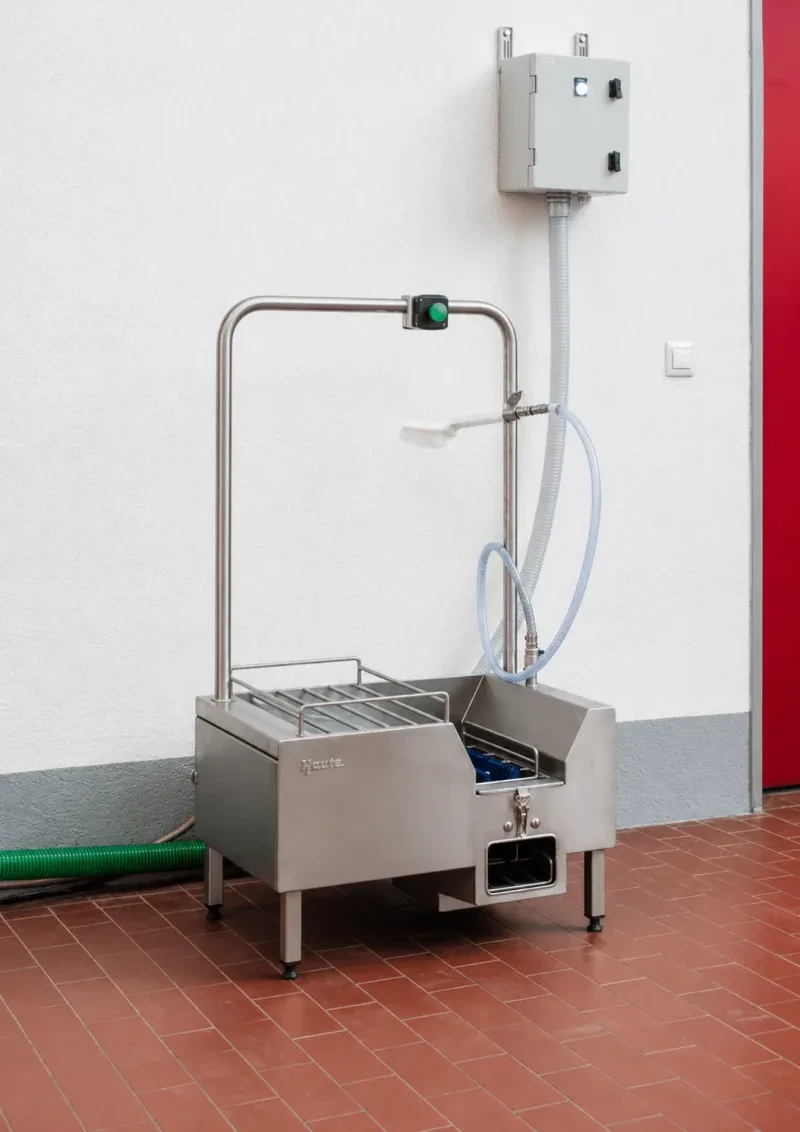
Do you need to control what soles and wheels carry into production?

Use “hygiene entrance” for the complete controlled transition into an area with stricter requirements. Use “hygiene station” for the installed cleaning equipment. Reserve “airlock” for an enclosed transition and “hygiene gate” for a physical access gate that enforces the sequence.
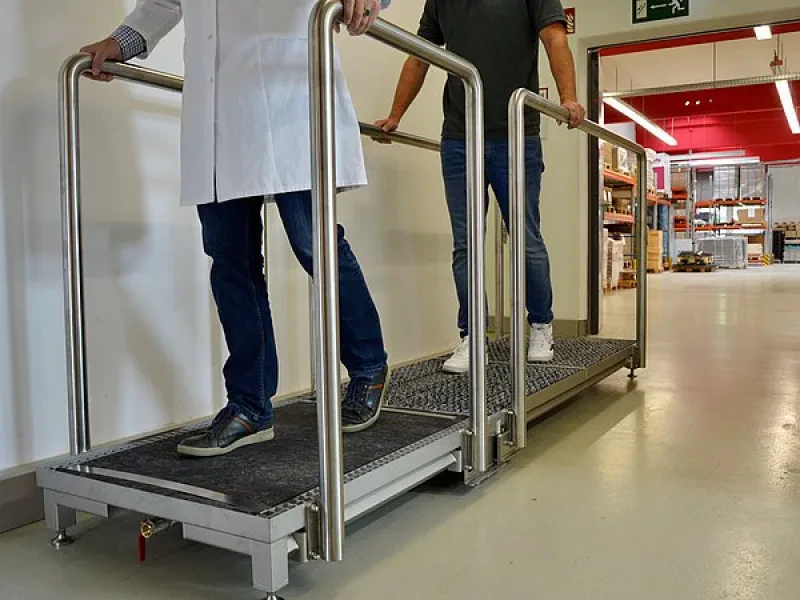
The setup depends on what crosses the boundary. For personnel, footwear cleaning comes first. If trolleys, rollers or pallet trucks use the same entrance, small-wheel cleaning must also be considered. When liquid disinfectant is used, dosing, drainage, cleaning and monitoring become part of the daily routine.
A hygiene station becomes relevant when there is a clear boundary between areas and people or mobile equipment can carry dirt, particles, moisture or contaminants into a more sensitive zone. In food production, this is common between warehouse and production, between zones with different hygiene expectations, or at entrances to packaging areas with stricter requirements.
The station has to fit the actual route, cleaning schedule, assigned responsibilities and the site’s daily monitoring. If it can be bypassed or is not maintained, it cannot perform consistently.
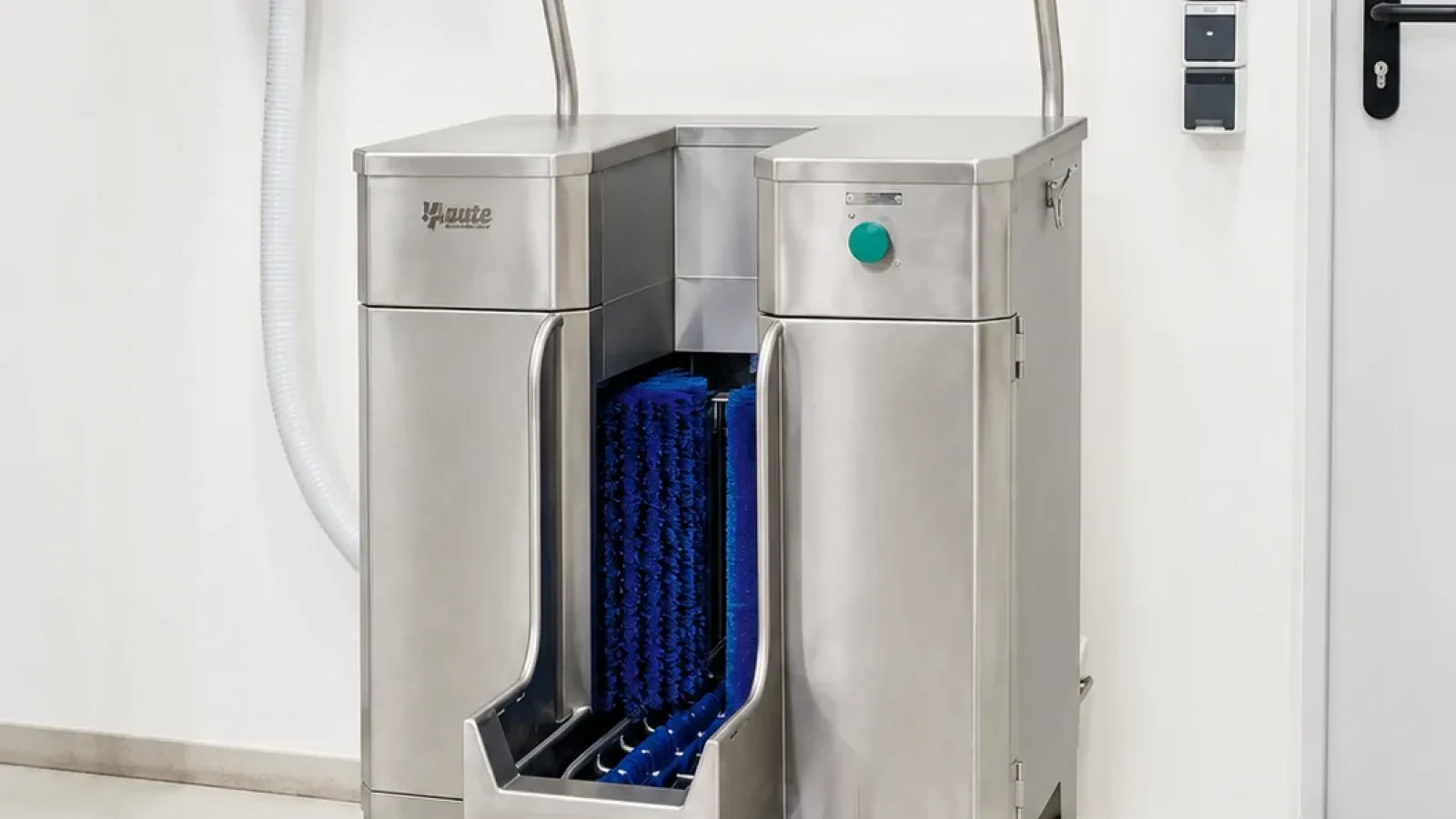
Sole cleaning may be the primary measure when personnel use the entrance almost exclusively and footwear is the likely contamination source.
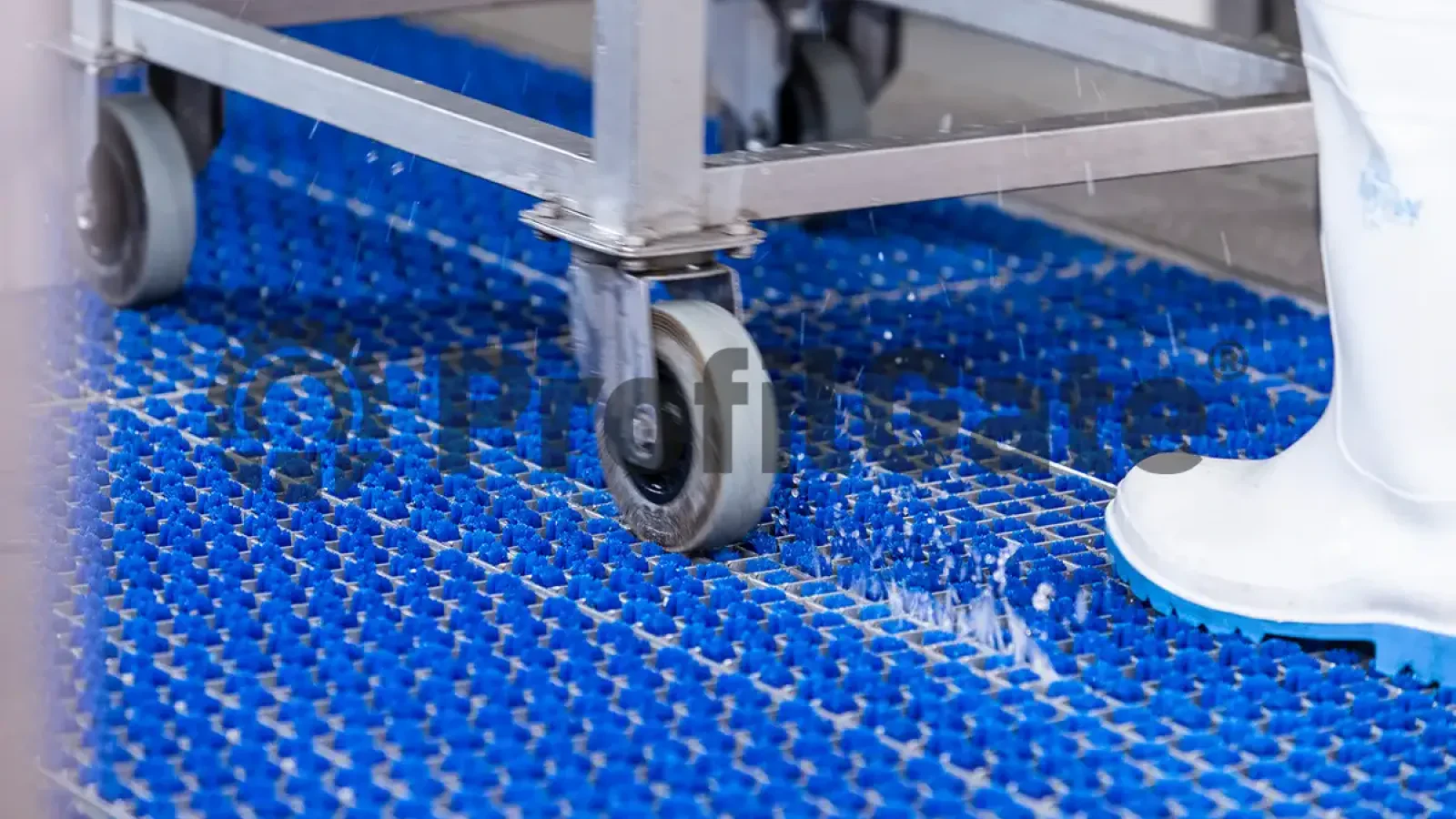
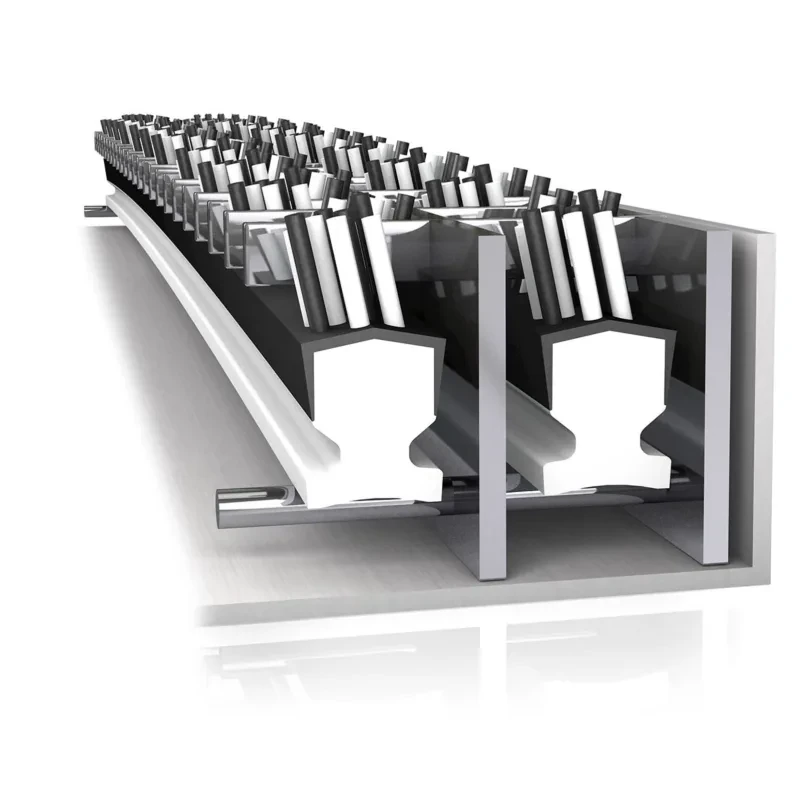
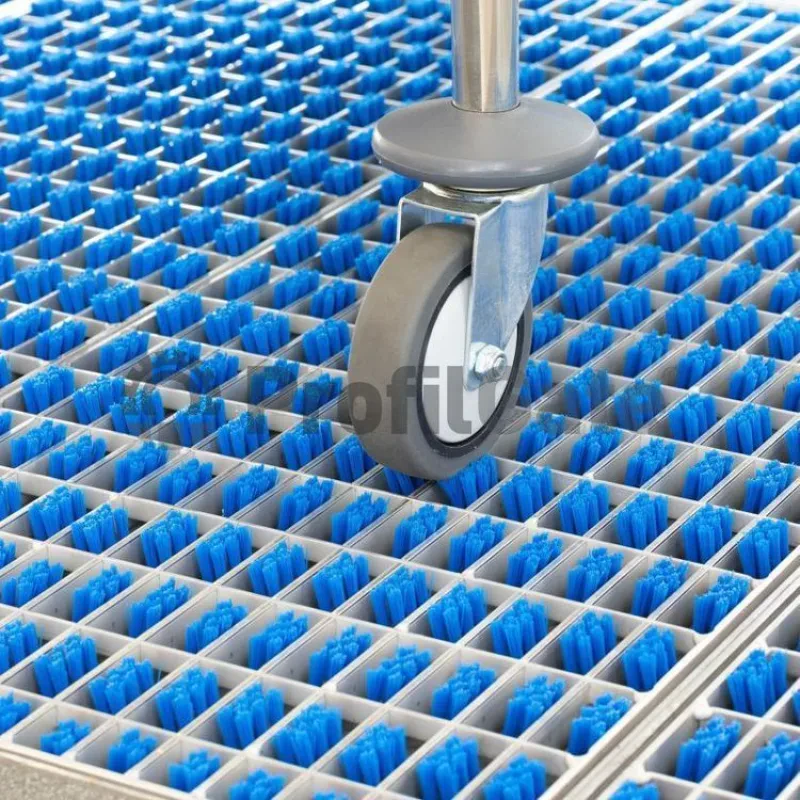
In many plants, the same entrance is also used by trolleys, pallet trucks or mobile bins. The layout must keep each wheel in contact with the cleaning surface for long enough.
For small wheels, diameter, load, direction of travel and available space matter. For personnel, the designated route must remain simple enough to follow throughout a normal shift.
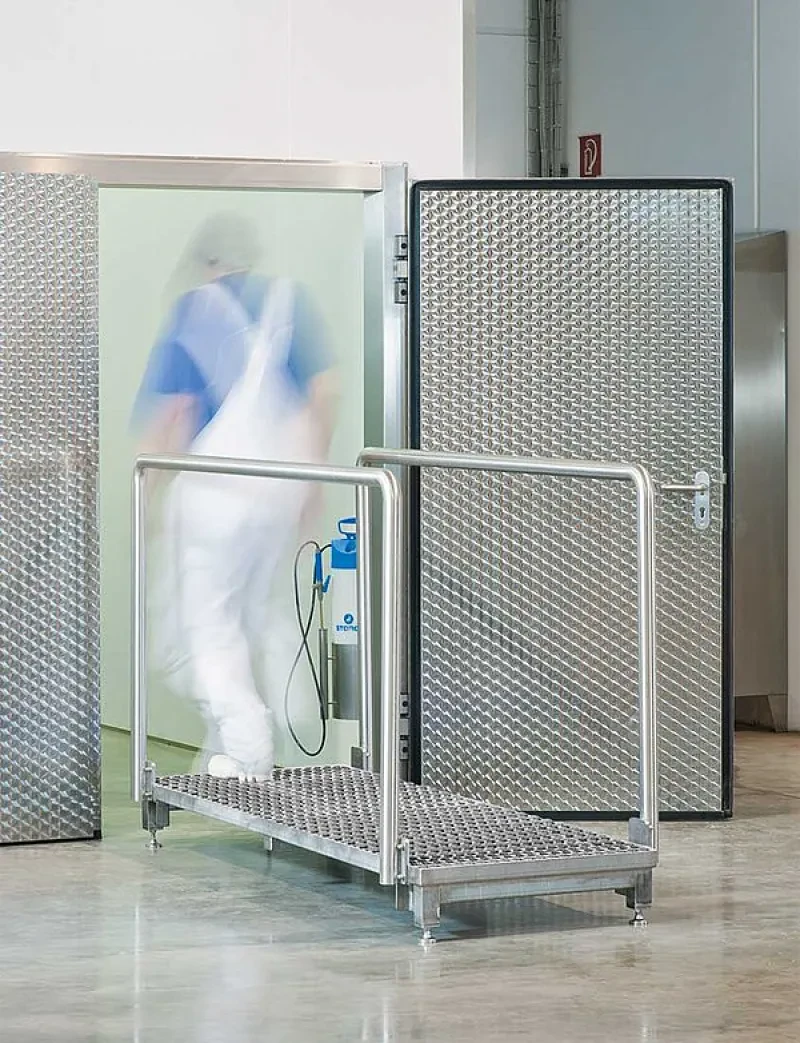
Dry mechanical cleaning is mainly relevant for visible soil: dust, sand, flour, dry residues or particles carried by soles and wheels.
A wet hygiene station becomes relevant when the site has a defined hygiene requirement and can monitor the process each day.
A wet station is not simply a stronger version. Without these elements, the process becomes difficult to monitor in day-to-day operation.
These frameworks do not prescribe a specific station. They require the site to assess risk, process flow and physical, chemical and microbiological contamination, then implement, check and document suitable measures.
At an entrance, that means clarifying the routes of personnel, packaging materials, raw materials, waste and mobile equipment. A hygiene station can reduce transfer at the boundary, but it must fit the factory’s wider hygiene system.
Disinfectant should be treated as part of the site procedure, not as a generic add-on. Otherwise the station may be installed correctly while the process remains difficult to verify in daily use.
Microbiological tests are useful when the application is defined: the equipment, approved disinfectant, concentration, test method and site procedure need to be clear. Without that context, test results are harder to use when choosing the station and its configuration.
The route should be redesigned before choosing equipment. If personnel, trolleys or pallet trucks can bypass the station, change its position, guide access and organise traffic so that the required cleaning or disinfection step cannot be missed.
That may mean relocating the station, guiding the route, controlling access or separating flows. The equipment can fulfil its role only when every relevant person and vehicle crosses it during normal operation.
The most useful details are the ones that show the real route and the routine that must be maintained after installation.
A complete technical file is not needed at the start. Two or three good photos and an accurate description of the flow can shorten the selection stage significantly.