Wheels and carts between areas
When harvesting, internal transport or maintenance moves carts, containers or pallet trucks between compartments, wheels belong on the hygiene map.

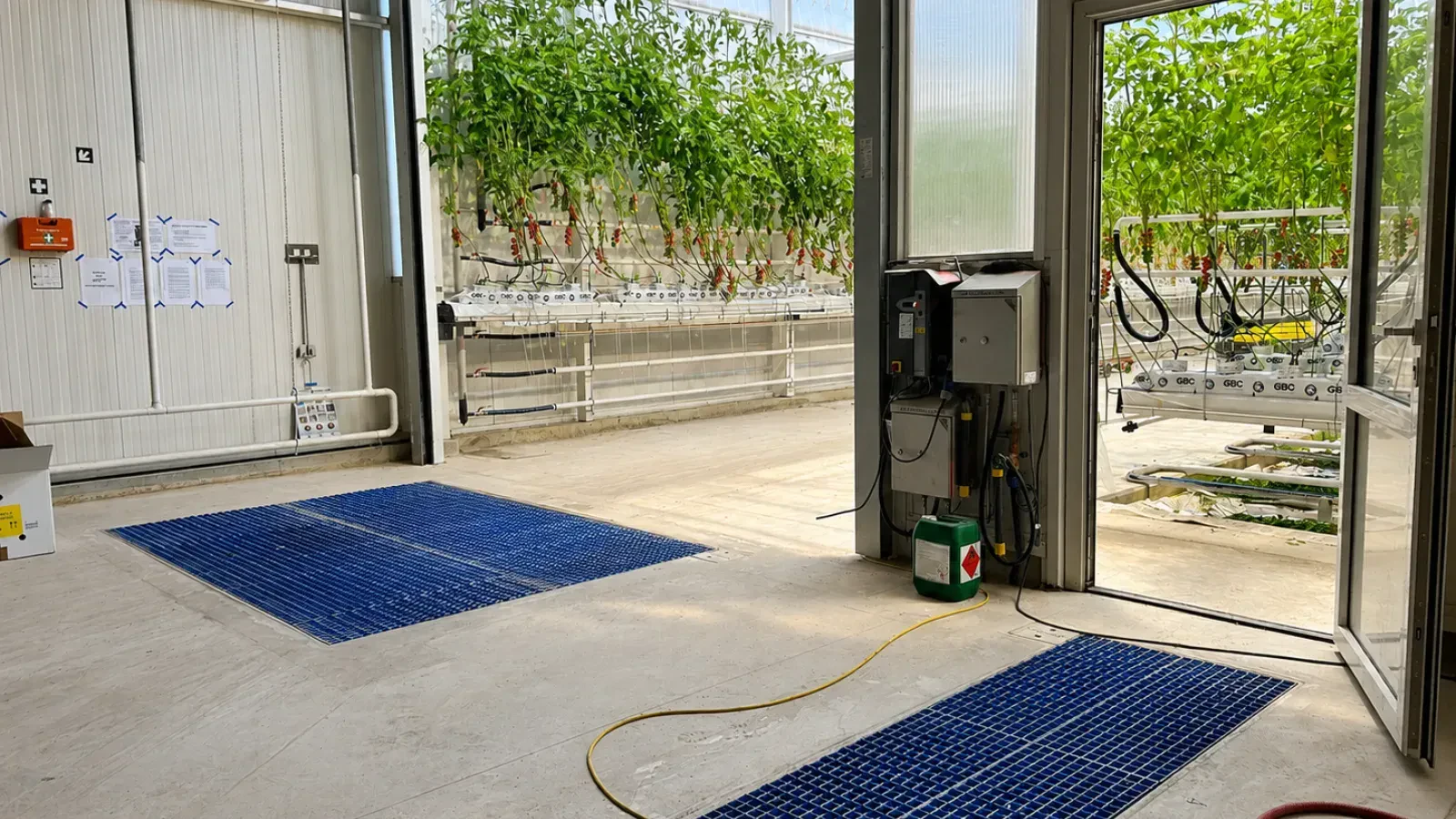
In a greenhouse or horticultural production area, hygiene does not stop at hands, tools and crates. Cart wheels, soles, pallet trucks and mobile equipment can connect compartments that look separate on a drawing.
For production, quality, plant-health and maintenance teams, the practical question is simple: what crosses between areas every day and what touches the floor? If people use the entrance correctly but carts or wheels take another route, the concept remains incomplete.
ProfilGate aqua becomes relevant when the crossing can combine mechanical cleaning of wheels, rollers and soles with a disinfectant solution validated by the operator. MENNO Florades is relevant in this horticulture context because the 2024 study examined exactly the ProfilGate + MENNO Florades combination on ToBRFV-contaminated wheels.
The right choice follows the real route: wheel types, available length, organic soiling, number of rotations, refilling routine and the internal verification required by the site procedure.
Plant-health sources describe ToBRFV as stable and easily transmitted by contact. In practice, a contaminated surface can become relevant for several routes, not only the area where it first appeared.
In greenhouses, pressure does not come from a single event only. It comes from repeated contact: handling, harvesting, crates, tools, carts, wheels, soles and mobile equipment working near plants or packing areas.
Many hygiene concepts control personnel entry well but leave wheels and carts in a grey area. This is where the difference appears between a well-written procedure and a route that works in every shift.
A good crossing point must be used naturally. If operators can bypass it, if the length is too short or if the solution is not maintained, the real result drops even when the product choice is correct.
A horticulture crossing point should connect the real flow, hygiene and maintenance routine. The product discussion comes after these three things are clear.
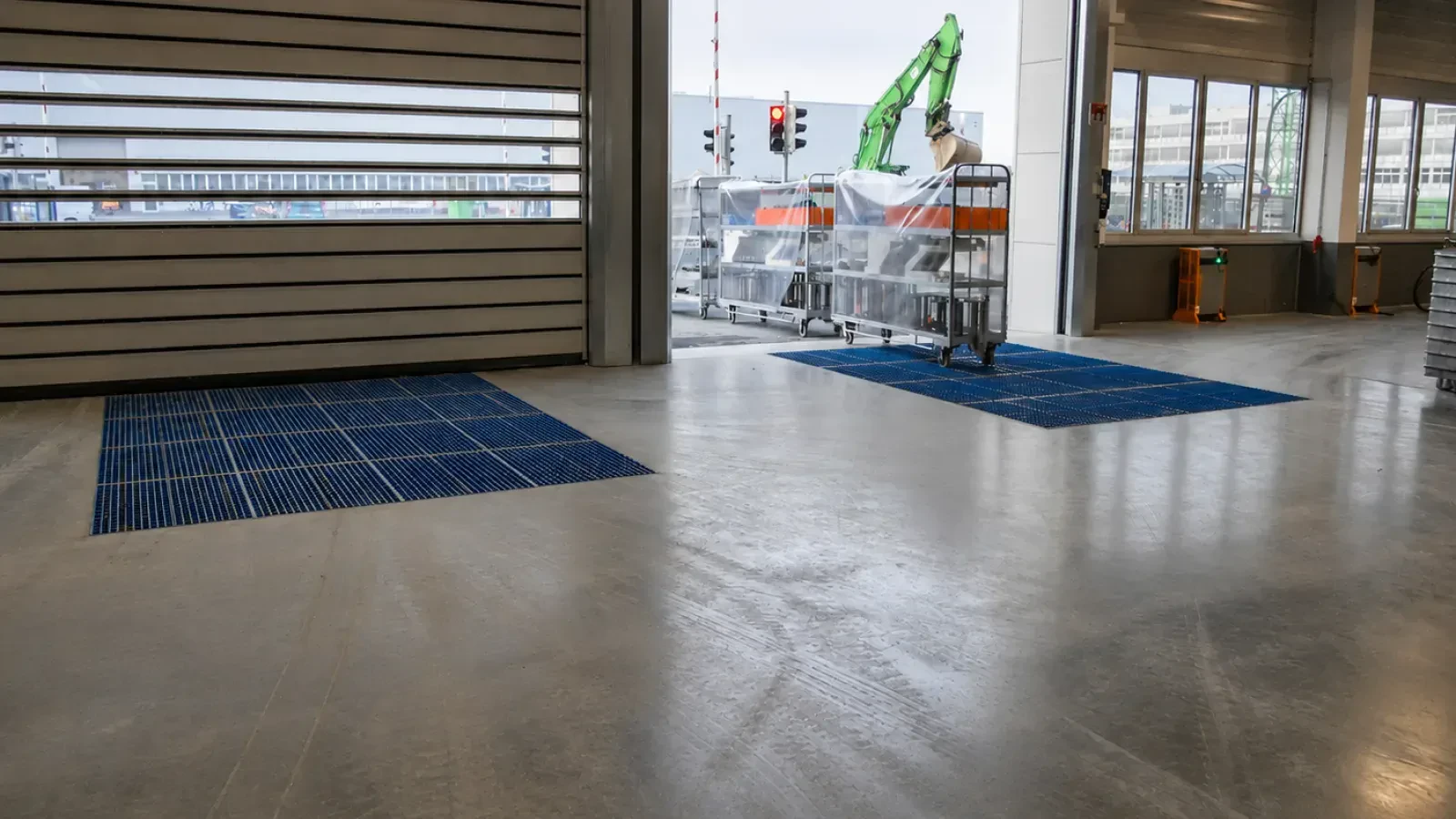
For a first review, photos and a simple sketch help more than a general description. What enters, what exits, where the cart turns, where cleaning happens and who owns the area all matter.
If wheels already pass through a fixed point, integration is easier. If traffic spreads across several doors or can bypass the point easily, the route should be stabilized before system selection.
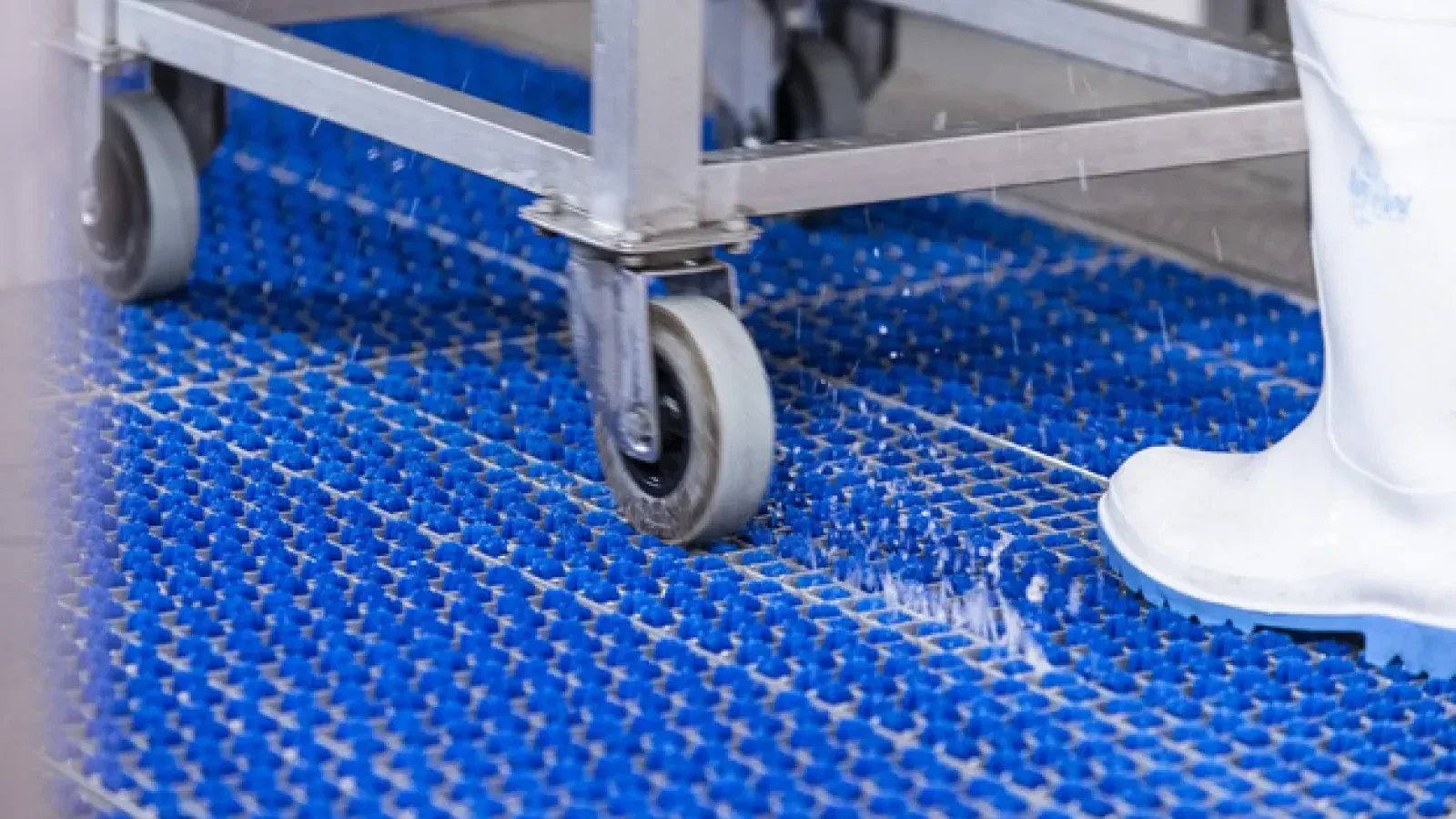
The 2024 study is useful because it does not treat disinfection as an isolated gesture. ProfilGate provided mechanical wheel contact, and MENNO Florades was the disinfectant solution tested in the clean-off zone.
For a buyer, the practical message is this: when organic or mineral soiling is present, physical cleaning and disinfection should be designed together, then checked against the operator procedure.
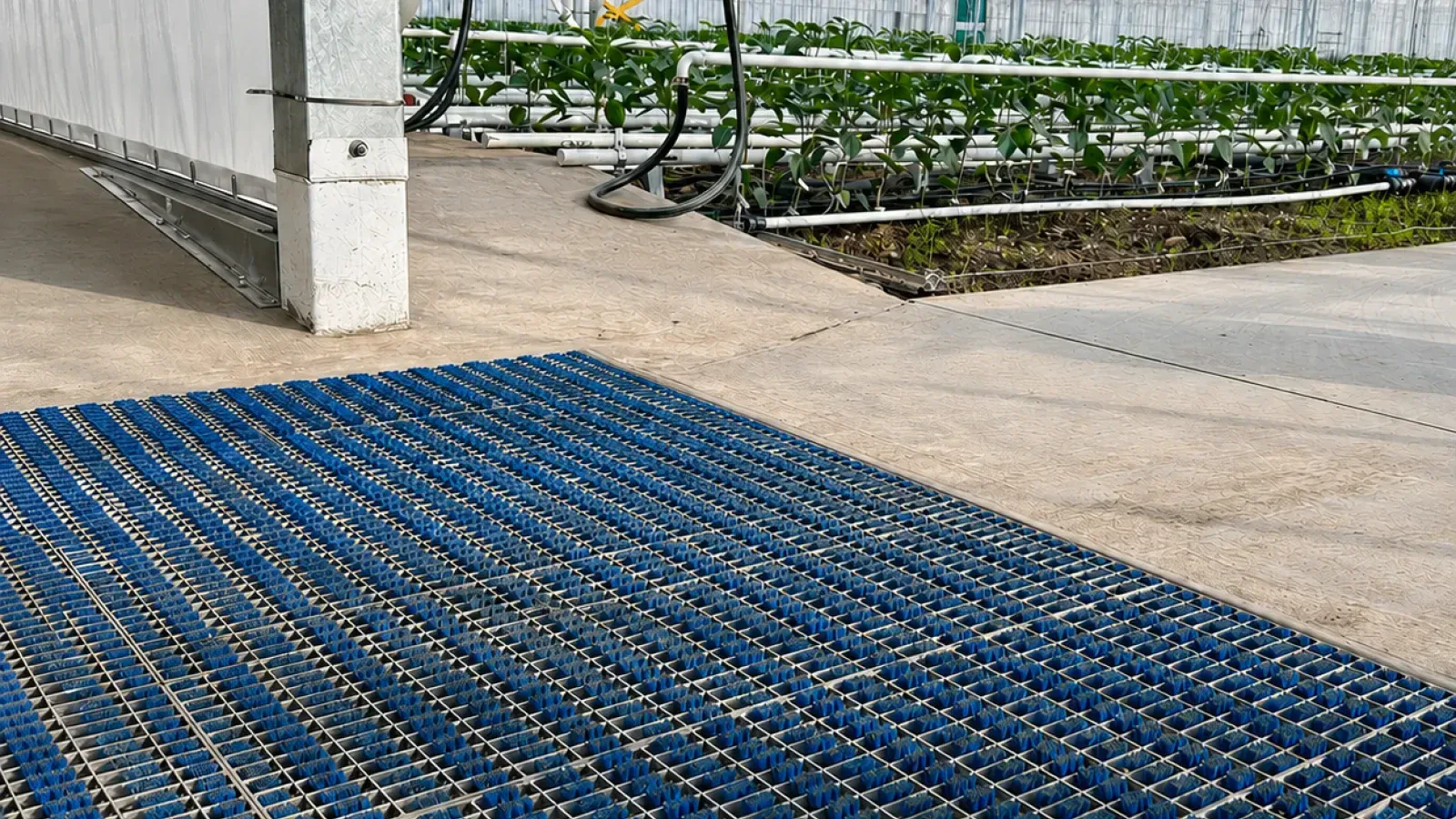
A correctly installed system should be supported by the area routine. Who checks the solution? Who lifts the gratings? When is it cleaned? What is recorded for quality or plant-health review?
The study numbers help the discussion by showing what should be checked locally: wheels, soiling, length, rotations and solution maintenance.
The images show how the hygiene point sits inside the route: greenhouse entry, cart wheels, active field, mobile equipment and positioning between areas.
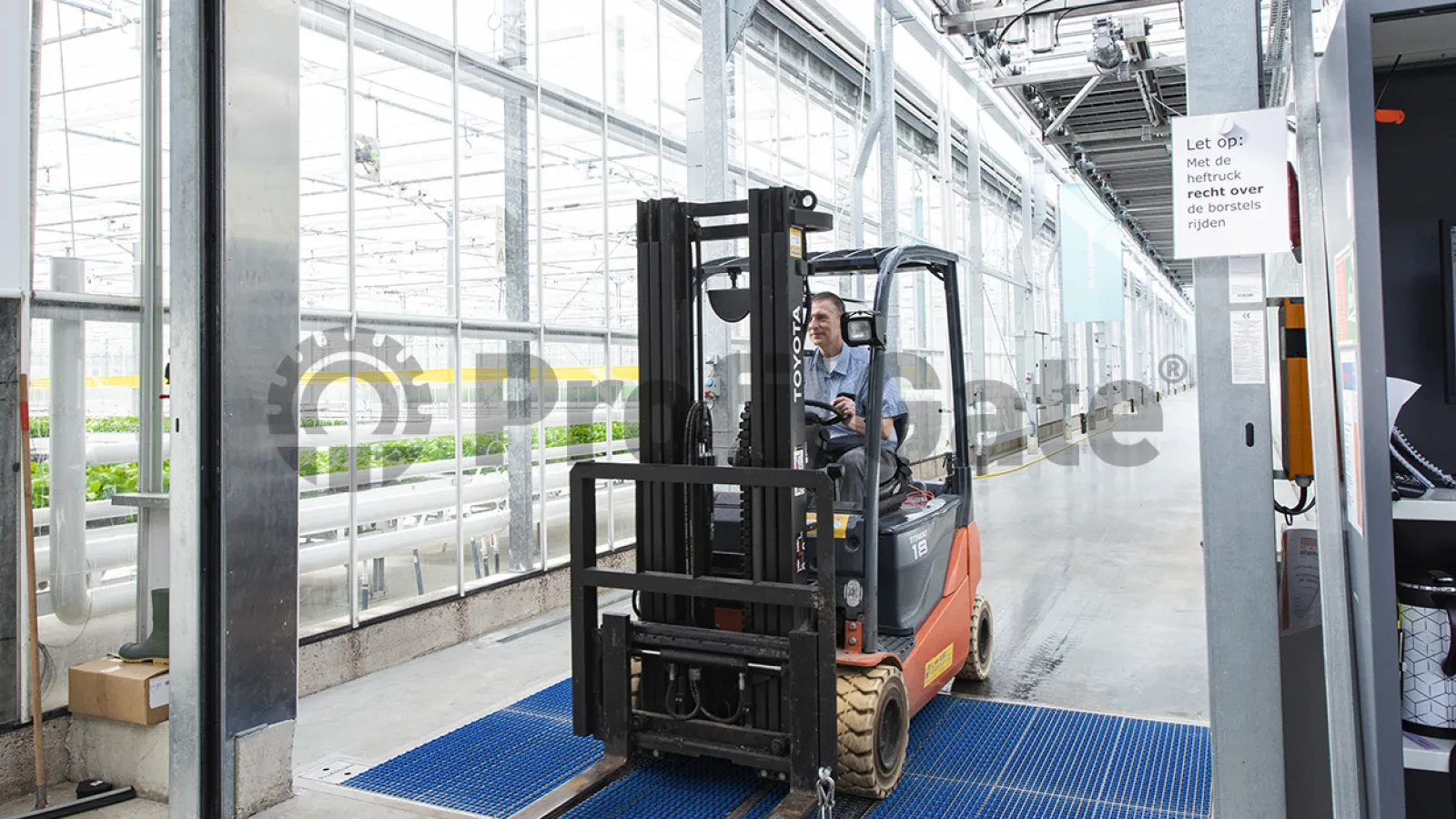
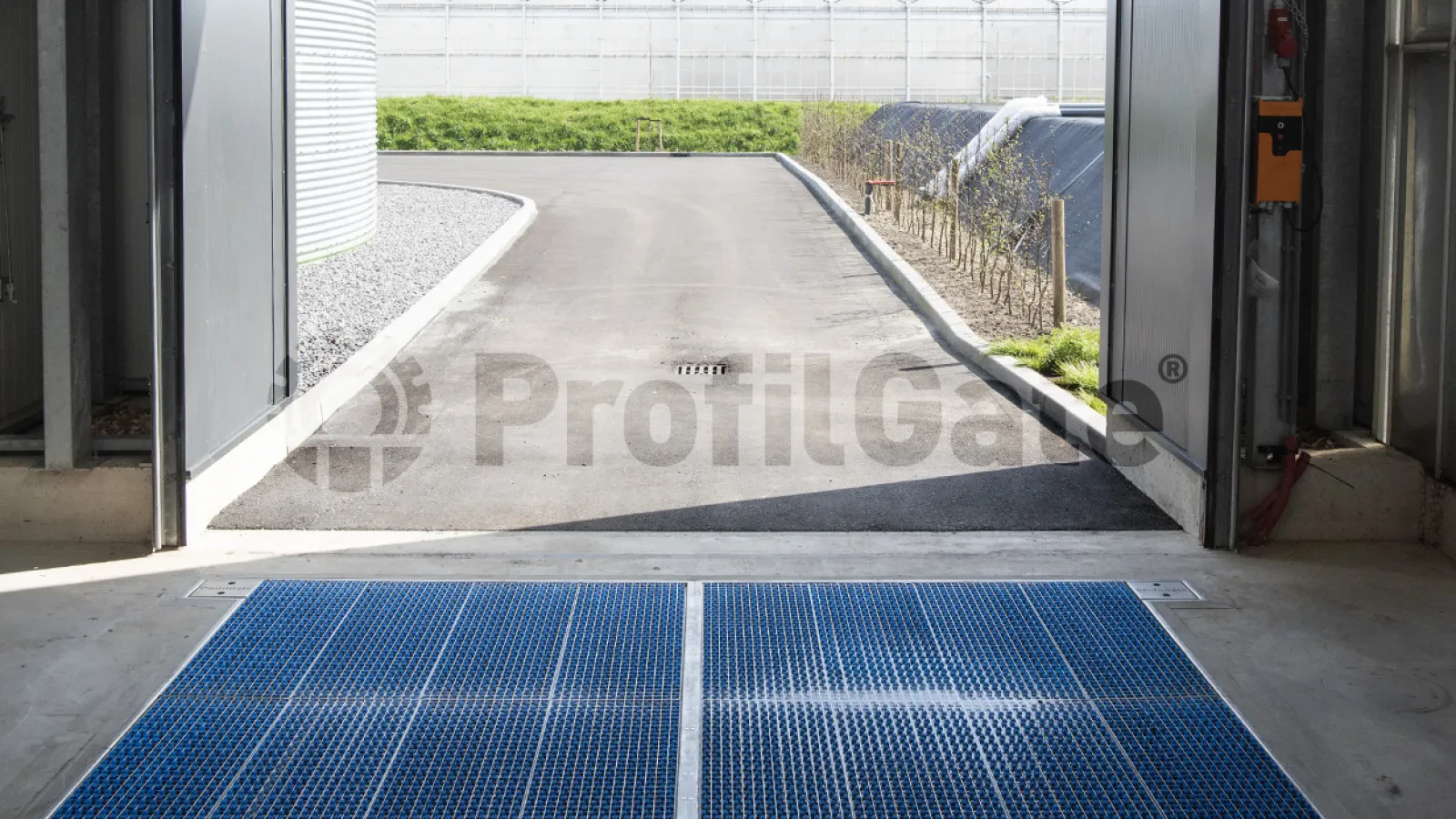
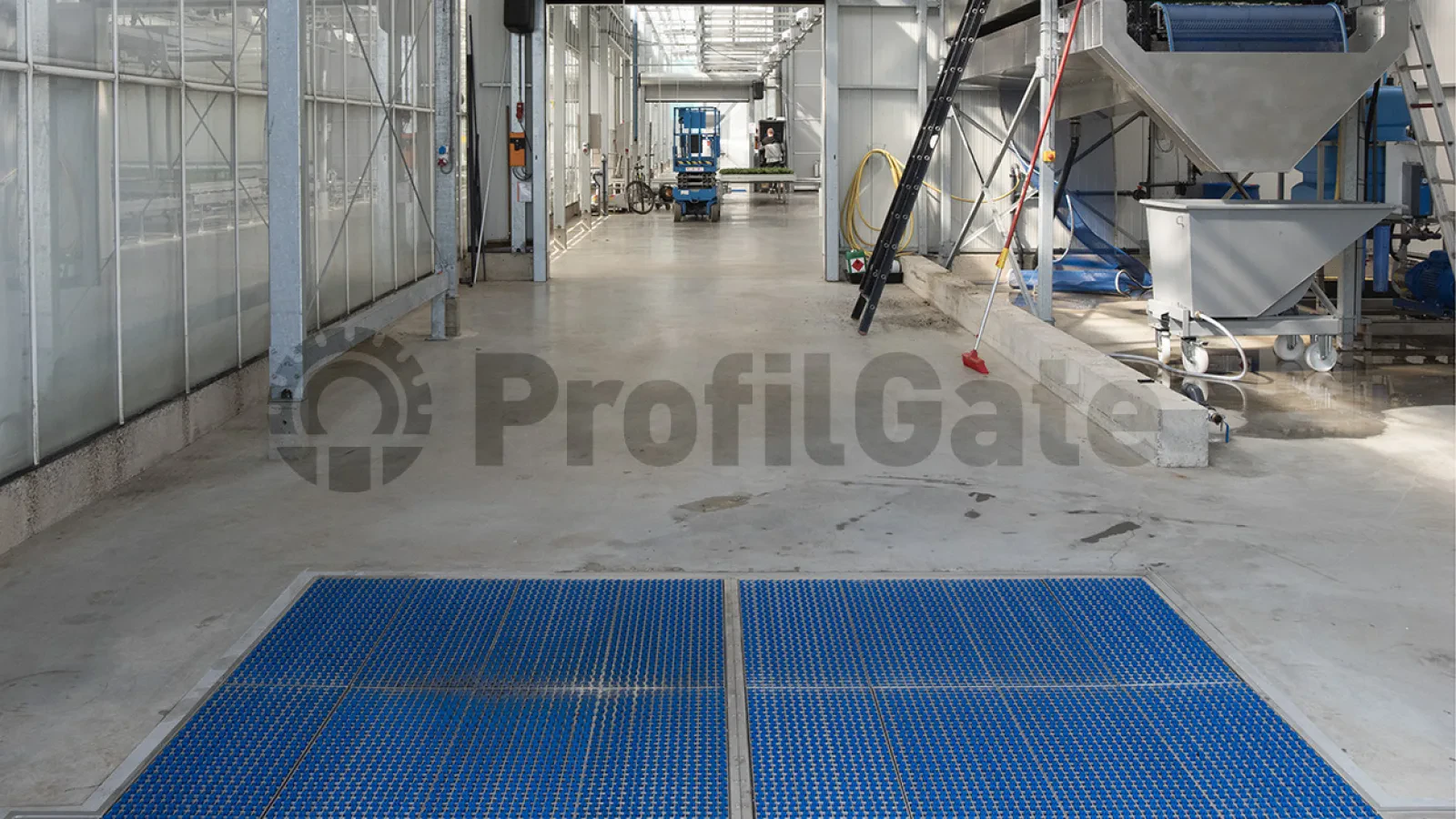
The test analysed 478 wheel segments. Results included 91.9% to 97.6% reductions in lesions on indicator plants under the defined study conditions.
For polyamide and rubber wheels, the study reported 97.4% and 97.6% after 16 rotations. For larger wheels with polyurethane tread, the reduction was at least 91% after 8 rotations.
For a grower discussion, the figures help prioritize route checks. The site procedure still determines the pathogen scope, disinfectant, contact conditions and internal acceptance criteria.
The data become useful when placed next to your route: wheels, material, contamination, length, liquid, frequency, cleaning and the internal verification required.
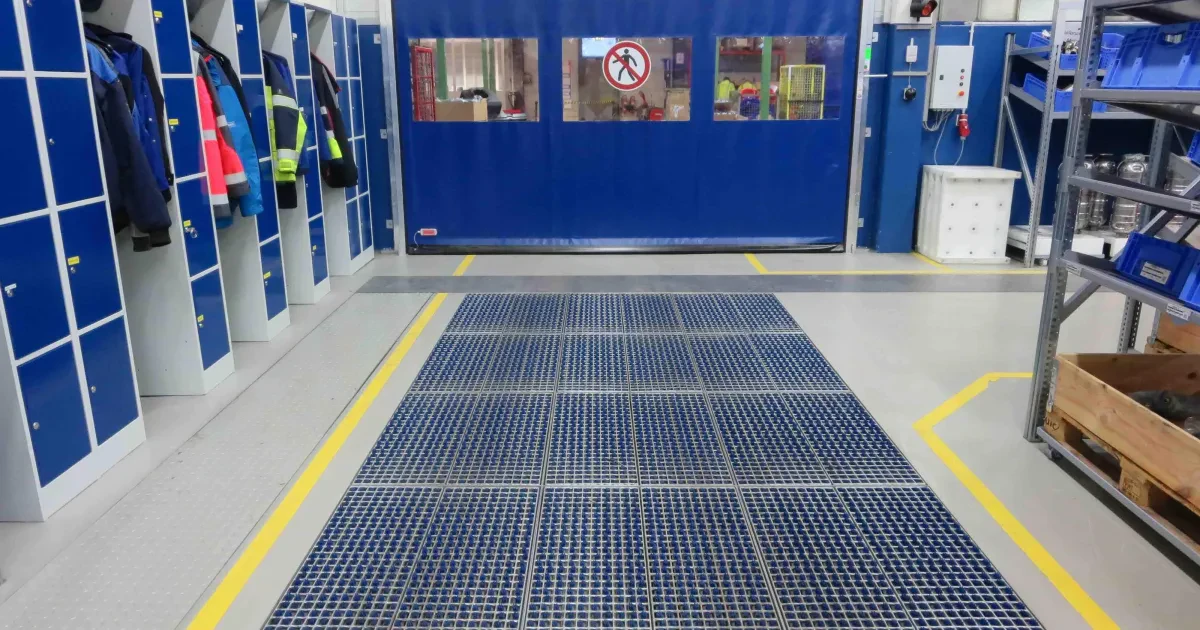
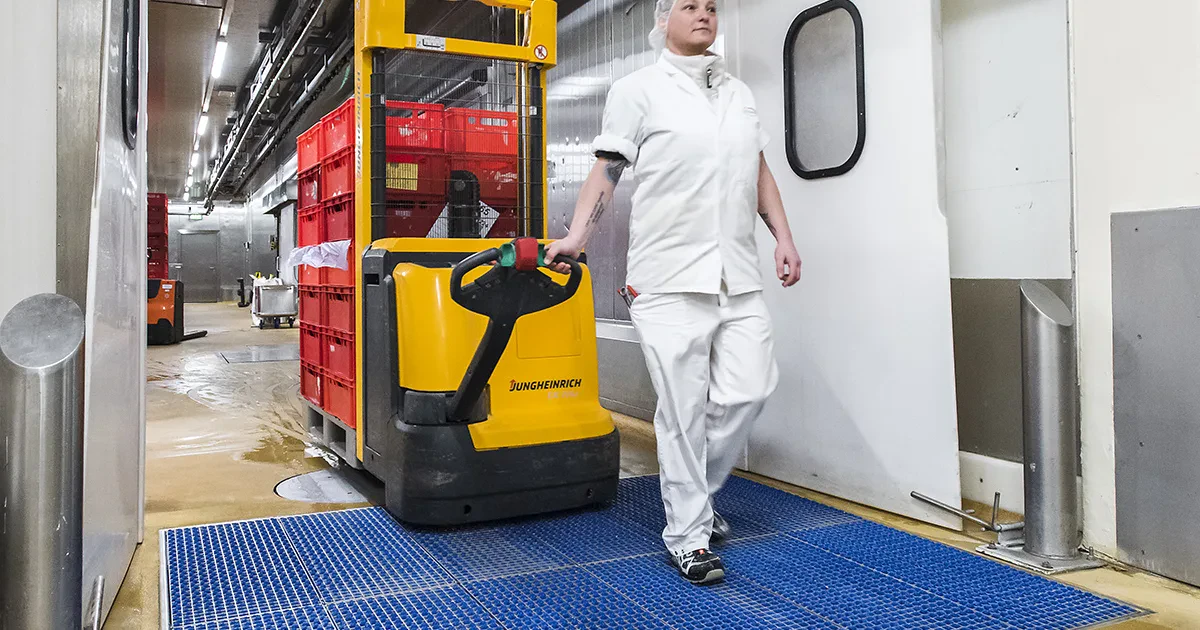
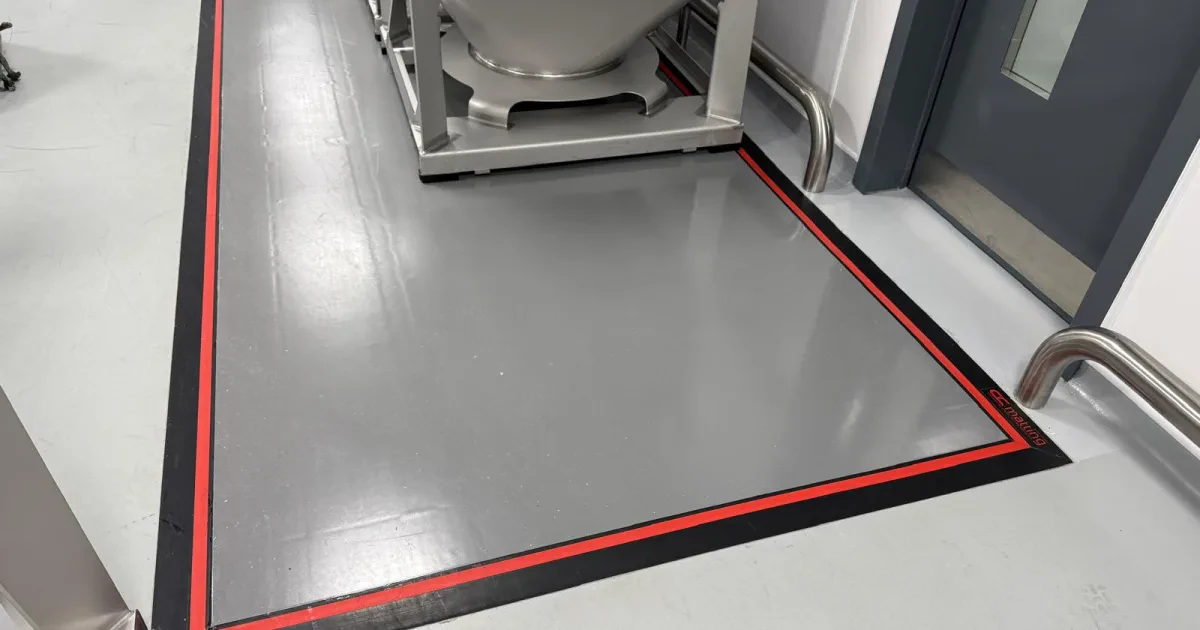
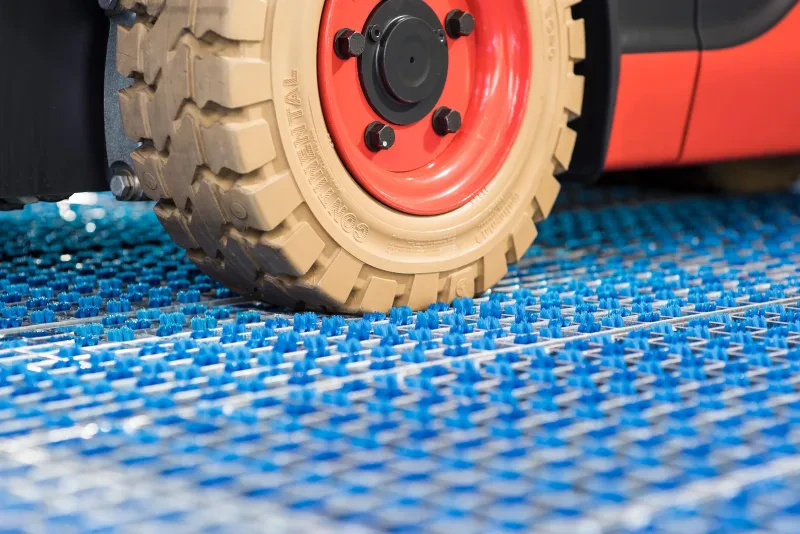
A practical guide for routes where wheels, casters, carts and soles can carry dirt or contamination between food-production zones.
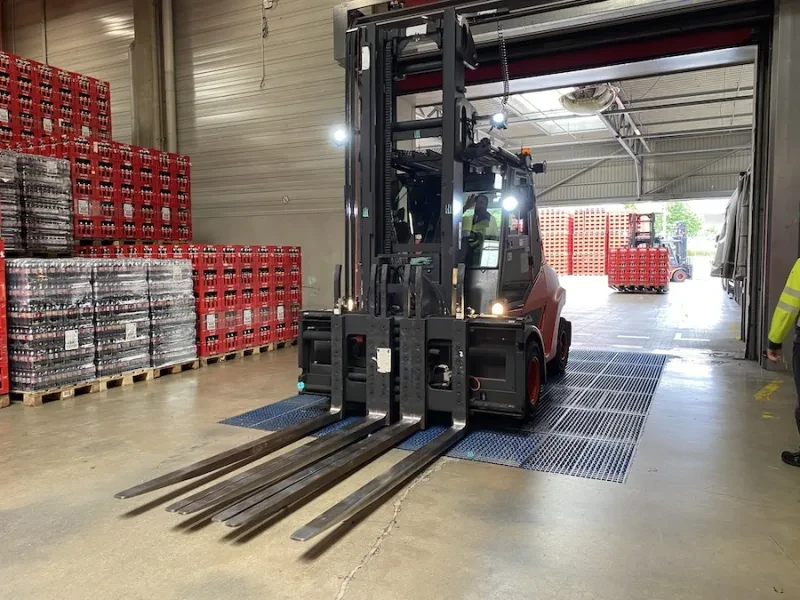
How to choose between ProfilGate active cleaning, CC Matting polymer matting and mixed points where traffic, contact and cleaning routine decide the direction.
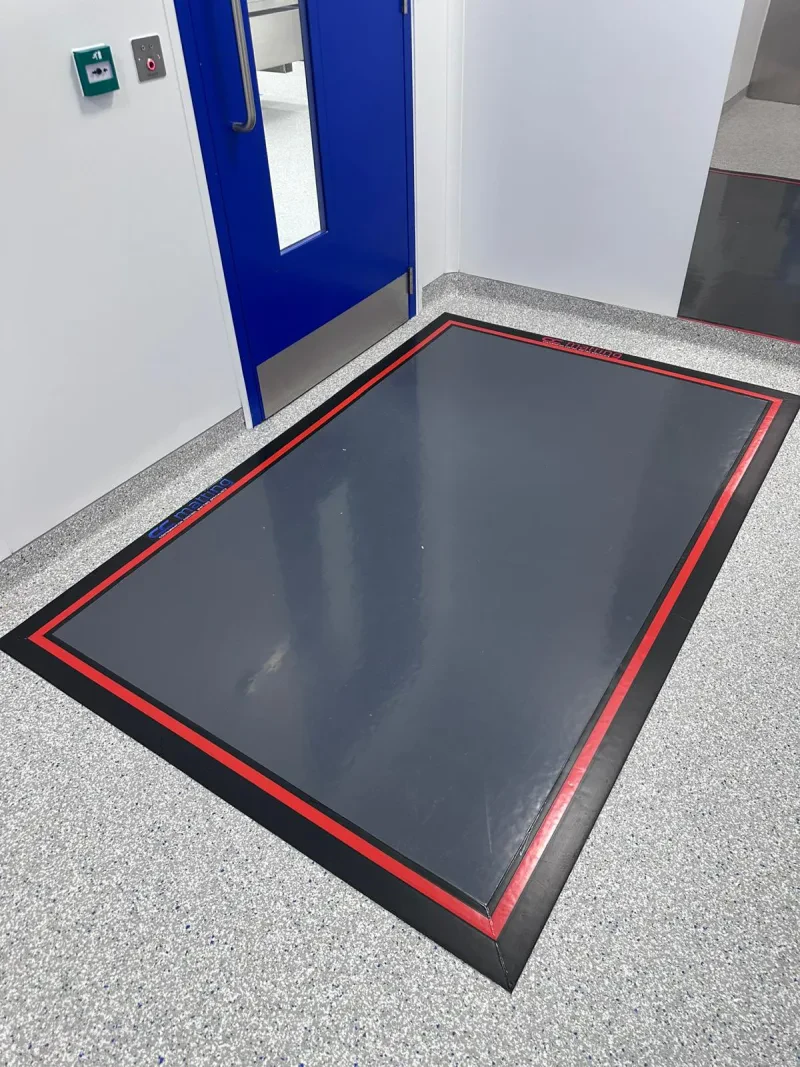
How to use CC Matting Heavy Duty documentation when the area needs ISO Class 5 material, particle control, clear cleaning and quality traceability.
Do you have a greenhouse route, carts or mobile equipment that should be included in the hygiene concept?

Start with wheels that move between areas with different status: greenhouse, storage, washing, packing, support corridors, technical areas or spaces where plant residues are present.
For each traffic type, note wheel material, diameter, tread, crossing frequency and whether the wheel can create enough contact with the active field. Small carts can matter as much as larger equipment when they move frequently and touch sensitive routes.
Plant residues, soil and wet dirt change the contact between the disinfectant agent and the surface. If contaminated material remains trapped in the wheel profile, simply crossing a wet surface may not be enough.
That is why mechanical cleaning and disinfection should be viewed together in horticulture applications. ProfilGate aqua can add mechanical contact, while the disinfectant is checked against label, concentration, procedure and site requirements.
The study is useful because it shows a concrete combination: ProfilGate clean-off zone, MENNO Florades, ToBRFV, contaminated wheels, different materials and defined crossing distance.
The figures should stay connected to the method. If your point has a different length, wheel type, soiling level or solution routine, the comparison remains useful, but it should be checked against the real application.
The most natural positions are crossings already used by traffic: entrances between compartments, points between greenhouse and packing, cart entrances or routes where mobile equipment cannot be manually washed at every crossing.
A good point has guidance, length, drainage or liquid management, access for cleaning and a clear owner. If traffic can bypass the active area easily, route correction comes first.
For a quick review, send visual and operational information, not only the product name you have in mind. Photos taken during operation usually show more than a perfect sketch made after the shift.
The most useful data are the details the team can check immediately on site.