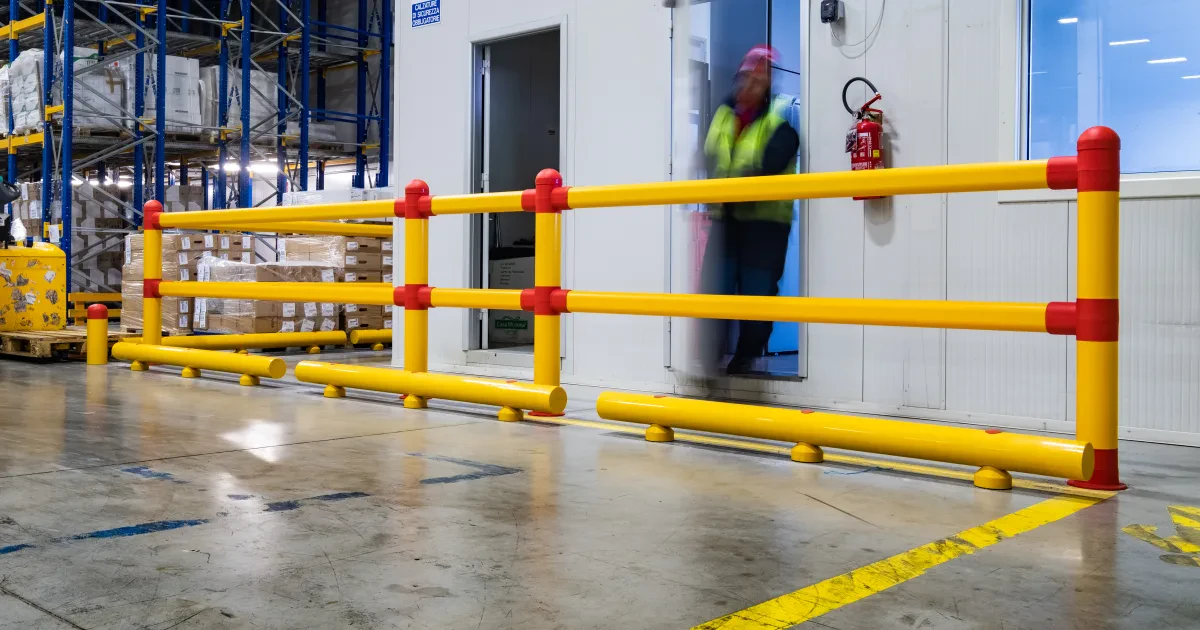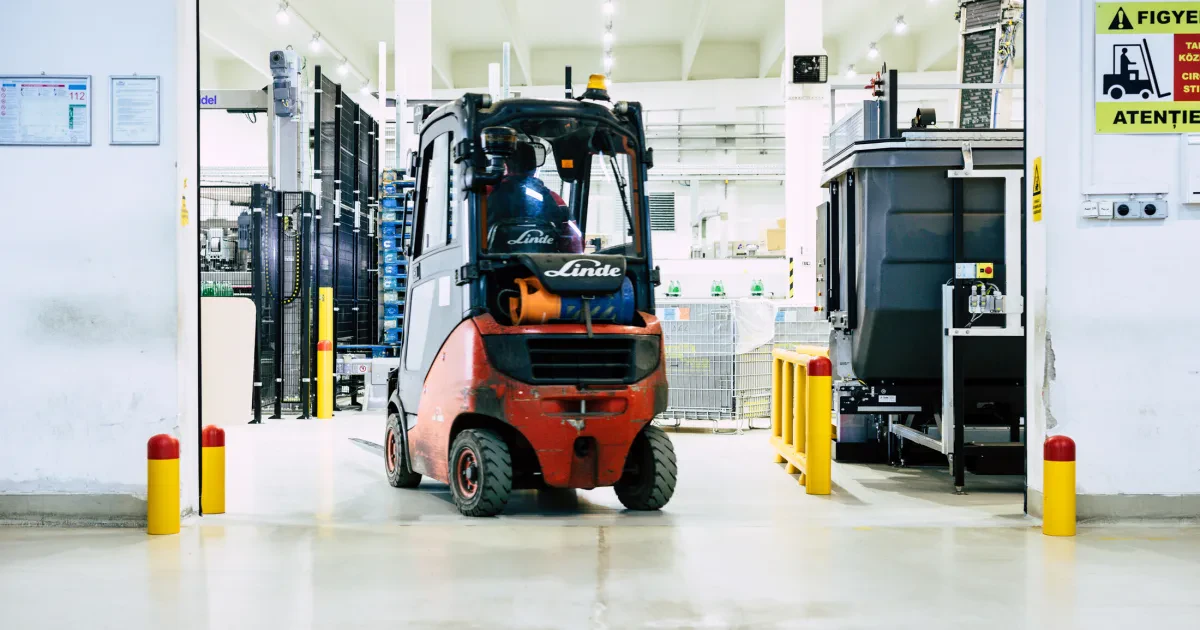

Entries into ESD areas
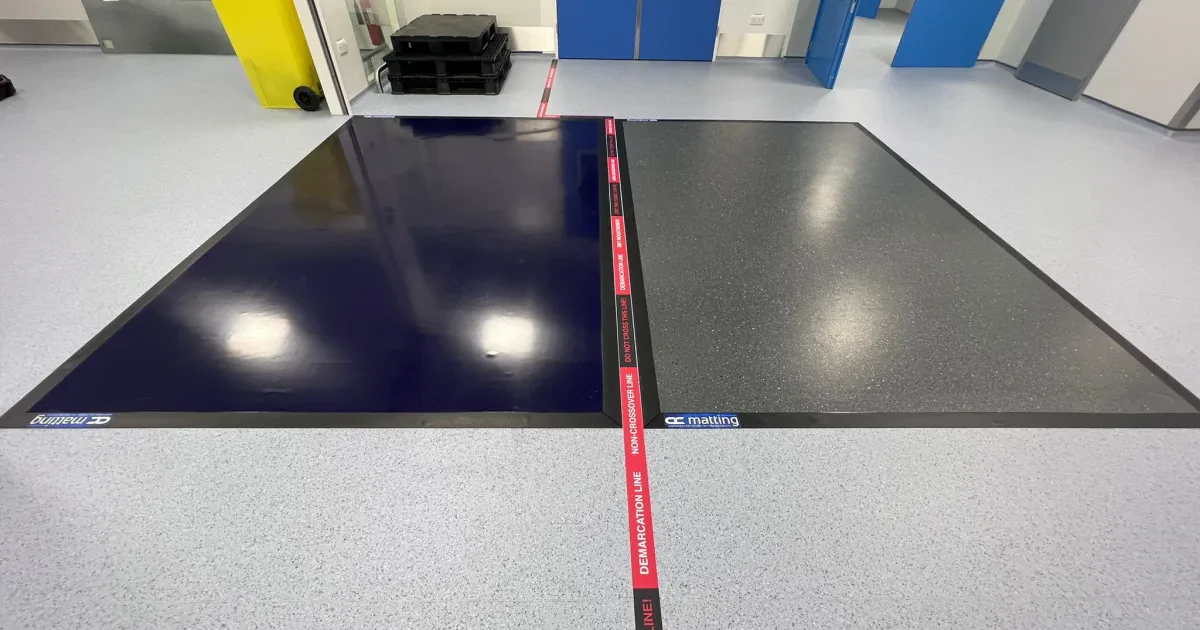
Points where operators arrive from locker rooms, warehouse or less clean areas before access verification.

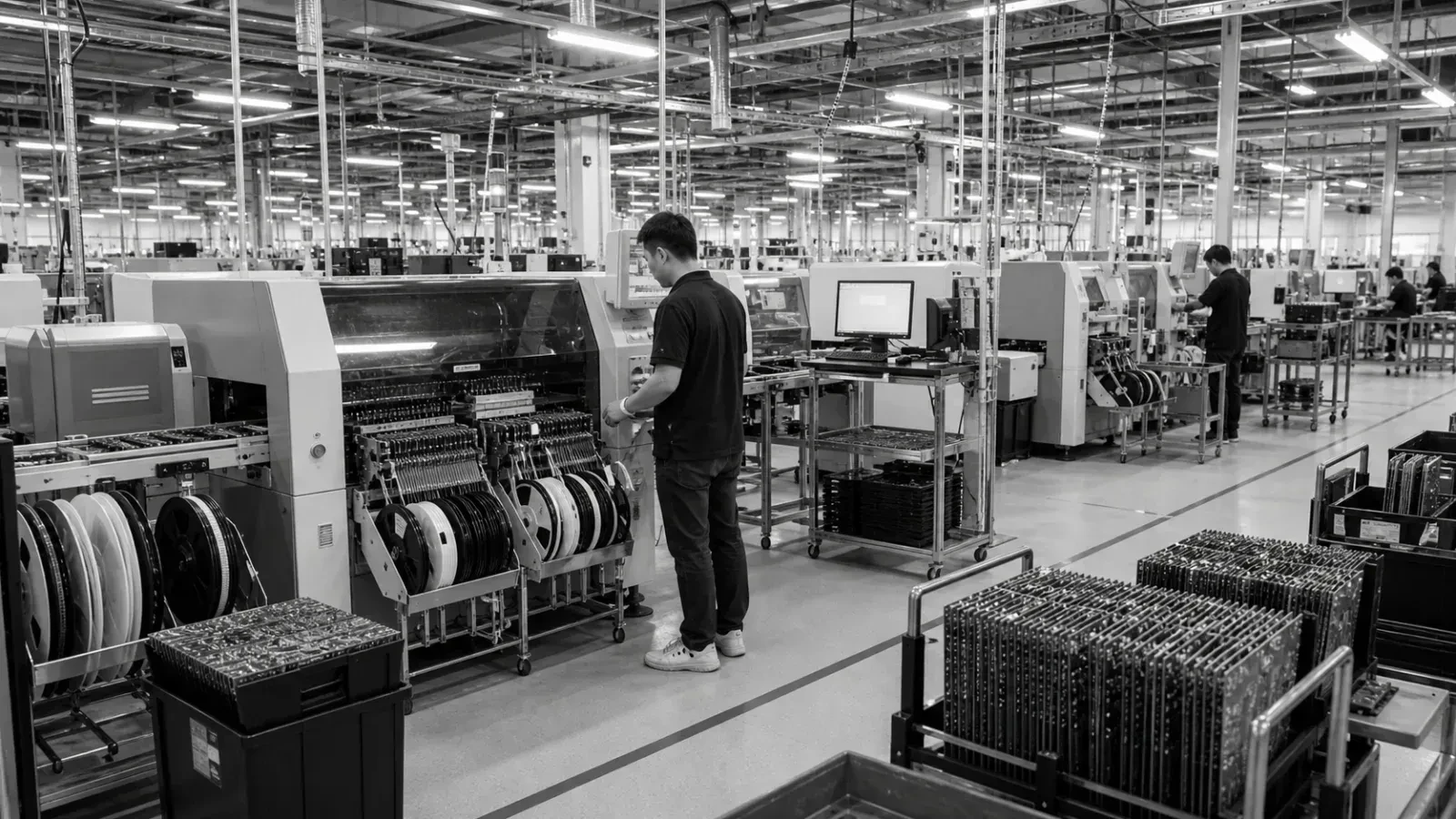
In electronics production, the same routes move operators, carts, mobile racks, PCBs, components, test equipment and packaging between warehouse, SMT, assembly, test, ESD areas and internal delivery.
IEC 61340-5-1 treats ESD as a program with administrative and technical requirements, while IEC TR 61340-5-2 provides implementation guidance. In an electronics plant, these references become route questions: where people enter, where footwear is checked, what arrives on wheels and what happens before the protected area.
At floor level, the discussion is not only visible cleanliness. Dirt under footwear can affect the stability of an ESD check, particles can move towards sensitive areas, and carts or mobile equipment can expose panels, conveyors, test stations and racks to impact or uncontrolled movement.
The route shows who enters, which wheels cross, which particles appear, which equipment is exposed and who validates the measure internally.
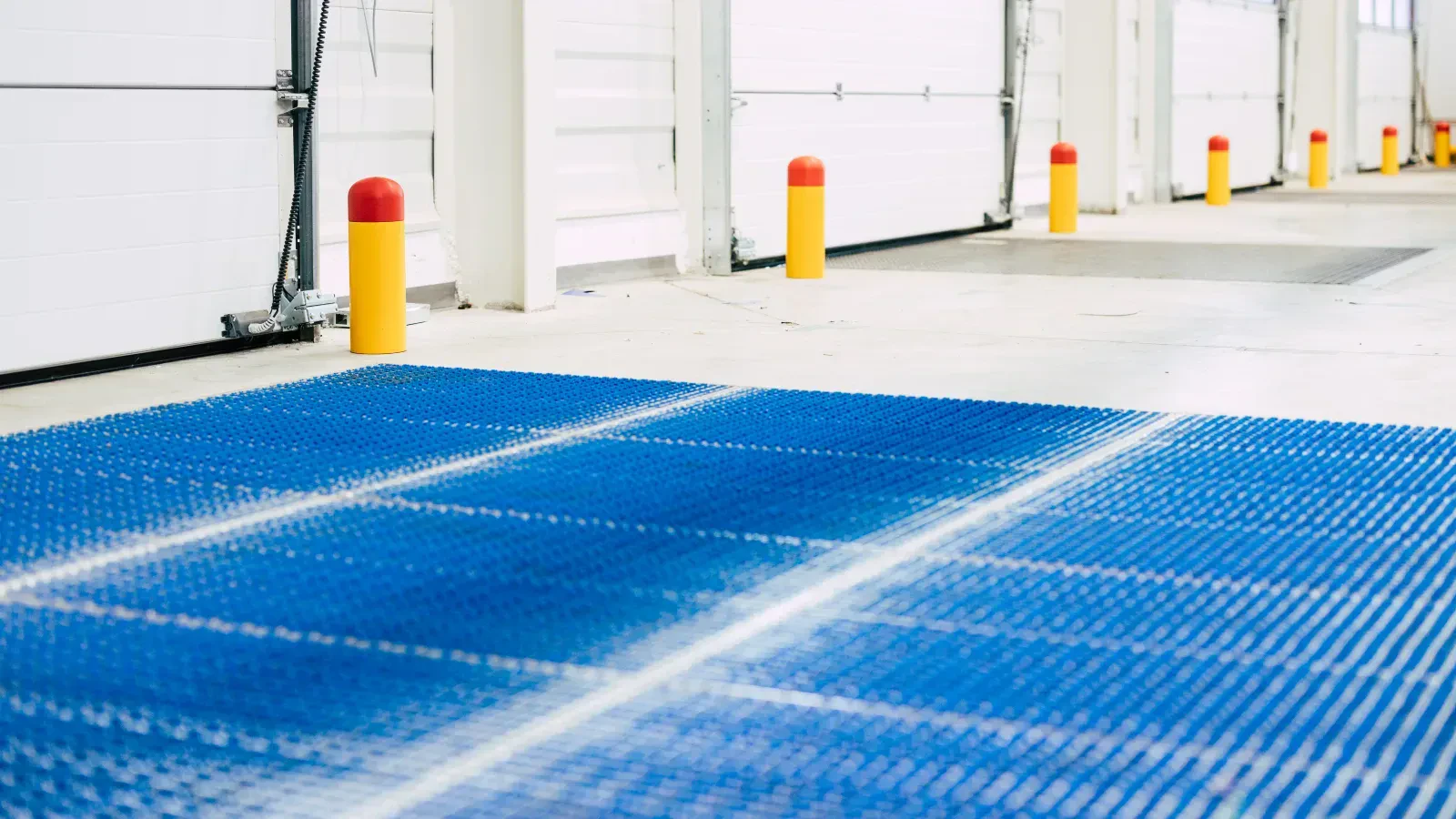
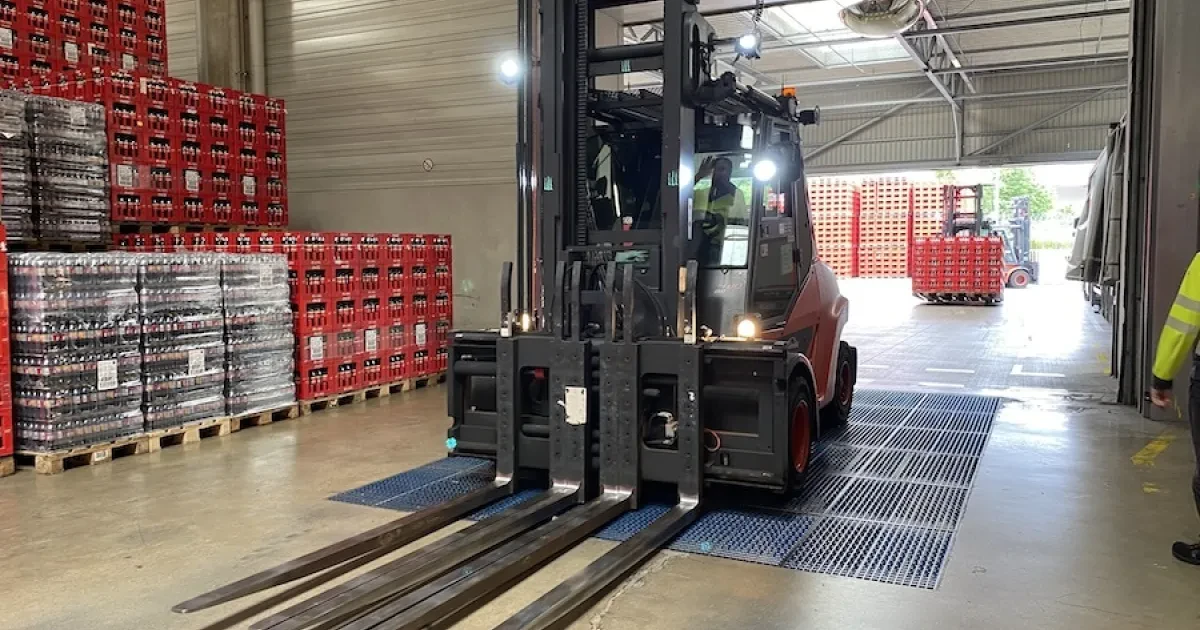
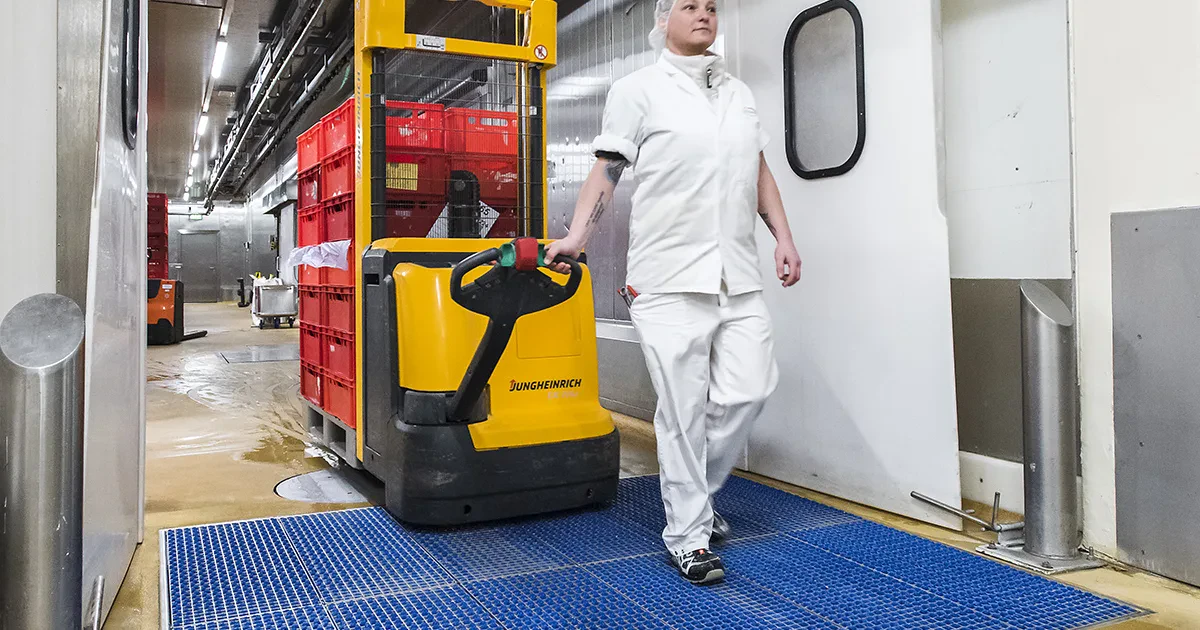
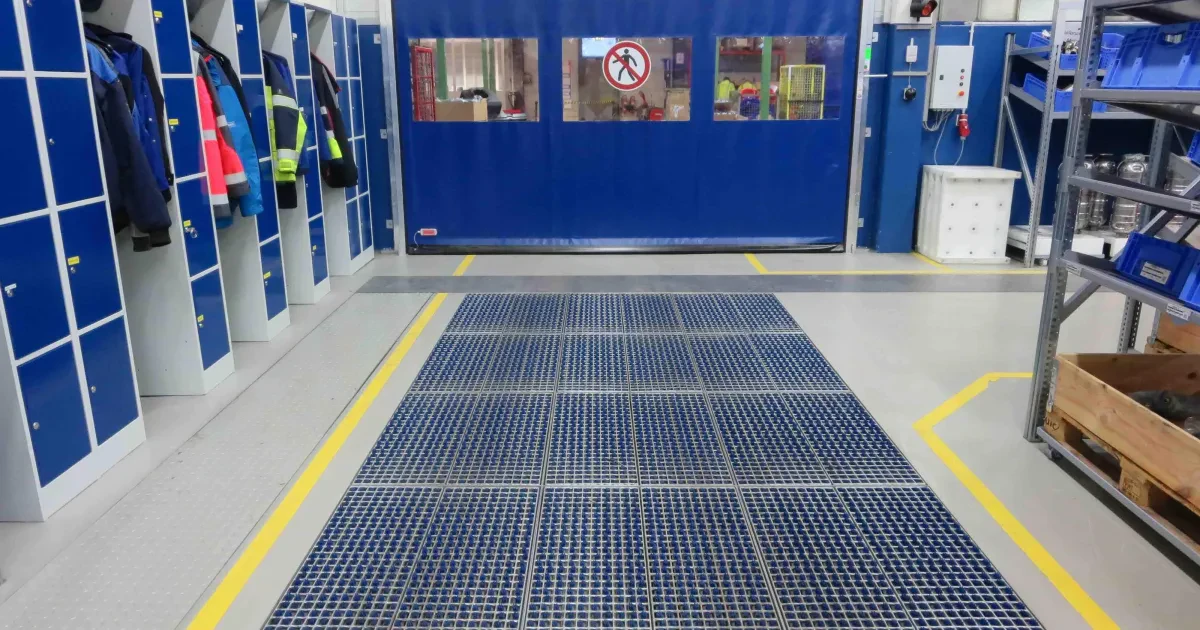
Before ESD, SMT, test or sensitive assembly areas, soles, wheels and carts can bring dust, fibres, fine particles or moisture from locker rooms, warehouse, logistics or support corridors. When traces appear on the access route, the control point should be treated as part of the flow, not as an accessory.
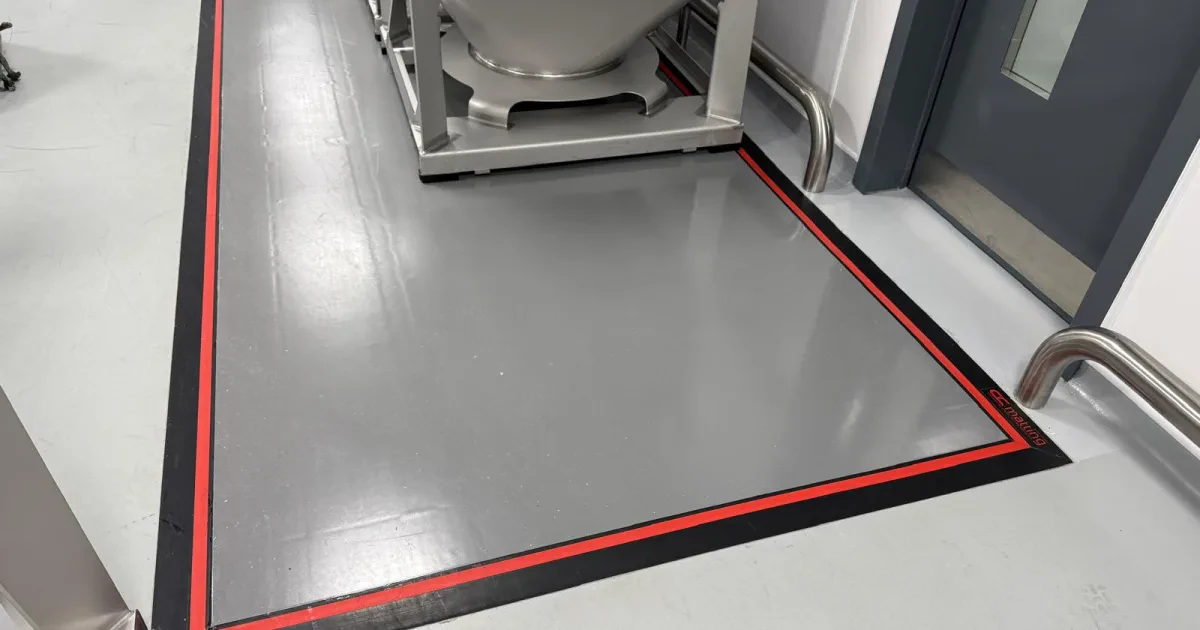
Sole and wheel cleaning, polymer contamination-control mats and hard-to-bypass transition points become relevant when there is enough contact, a cleaning routine and an internal owner for verification. In ESD areas, the procedure, limits and validation remain with the site ESD/Quality team.
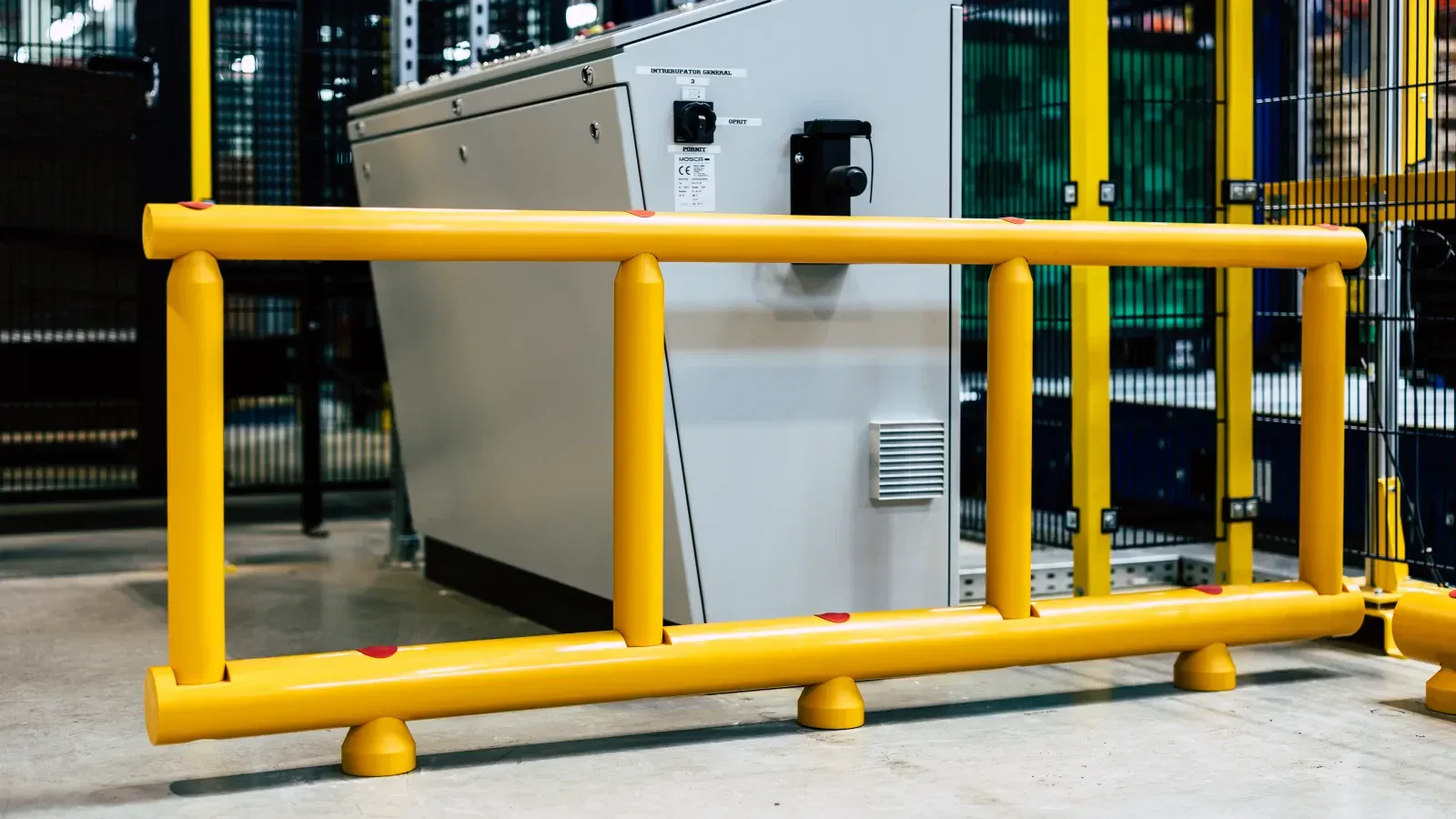
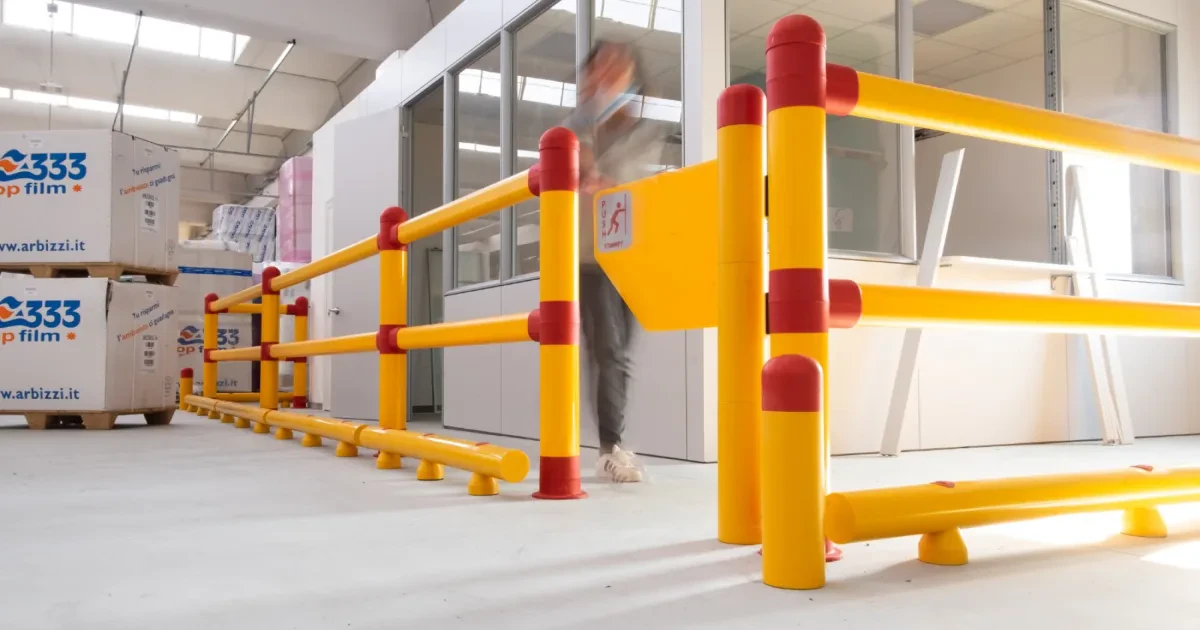
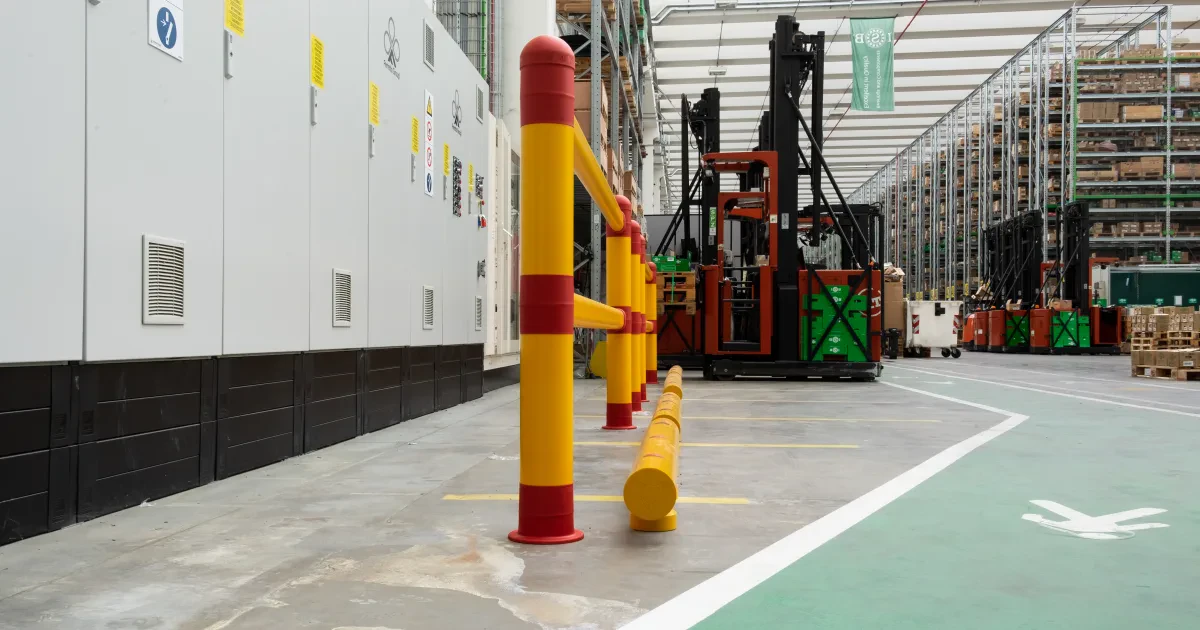
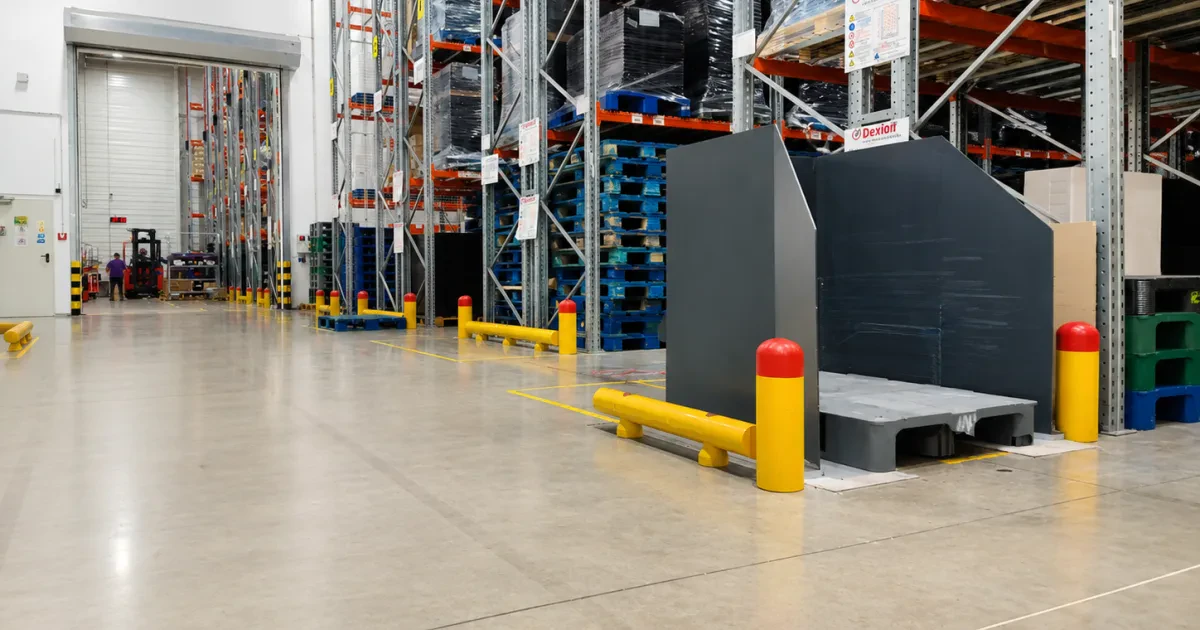
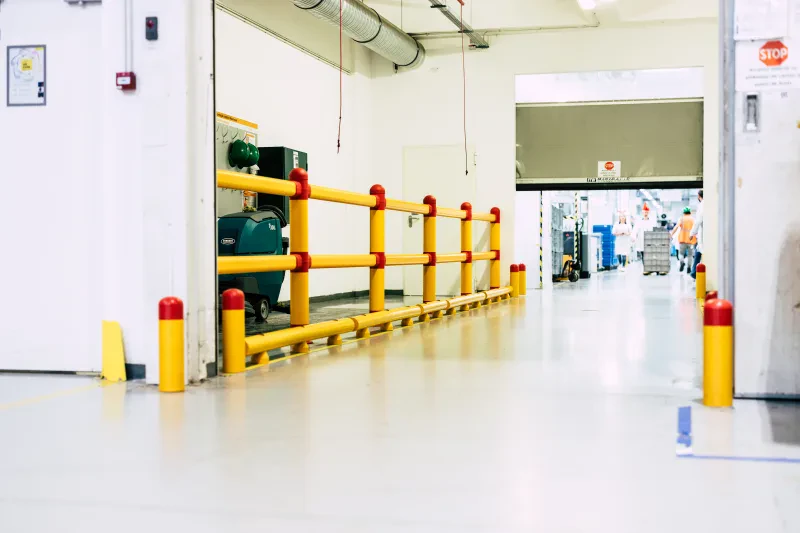
In electronics, aisles can be narrow, and carts, pallet trucks, AGVs or mobile racks may pass close to electrical panels, conveyors, test stations, doors, columns and technical areas. A small impact may look local, but it can block access, maintenance or production flow.
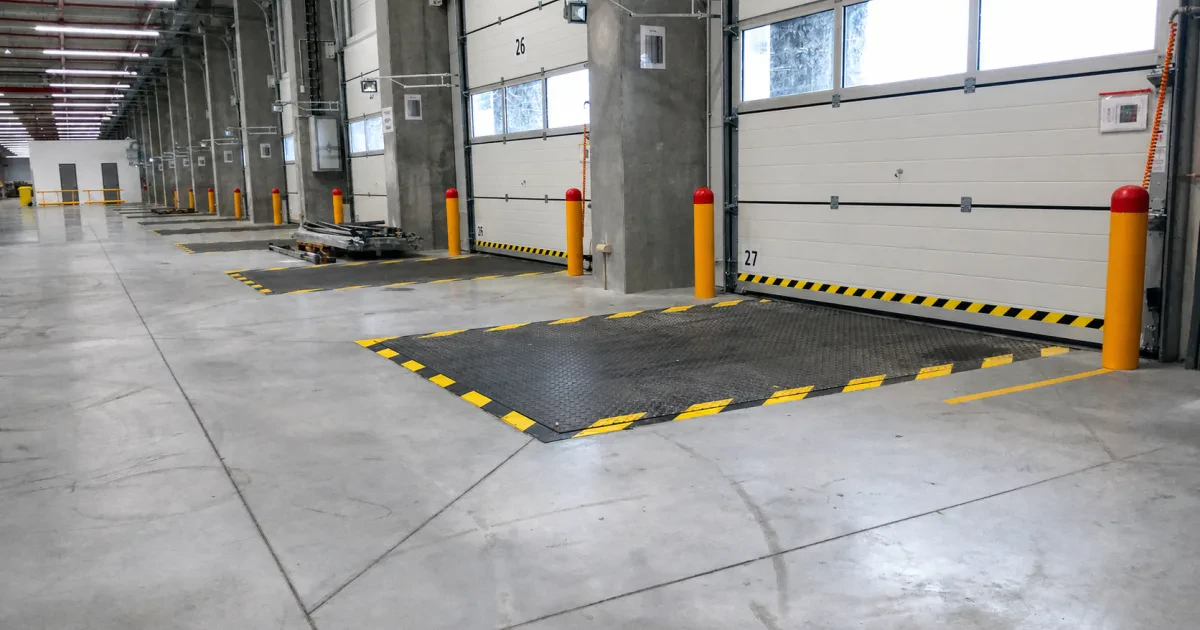
Protection should be selected against the real impact scenario: vehicle, mass, speed, angle, deformation space, floor, anchoring and what needs protection without blocking maintenance, cleaning or evacuation.
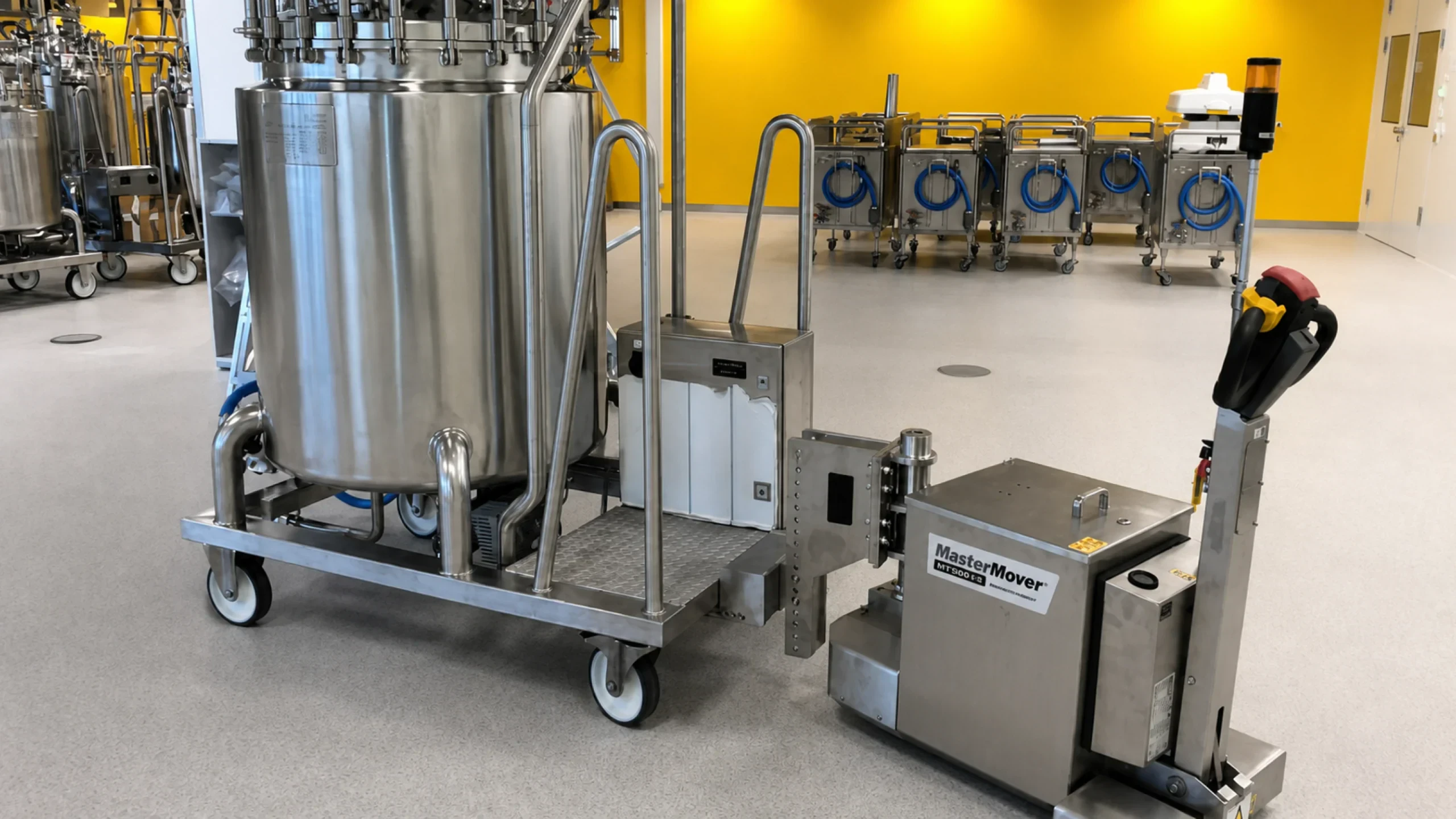
Mobile racks, fixtures, reels, test equipment, special containers or loads with sensitive components can be difficult to move manually without stops, route deviations, impacts or imprecise positioning. For frequent moves, control during start, stop and turning becomes part of flow quality.
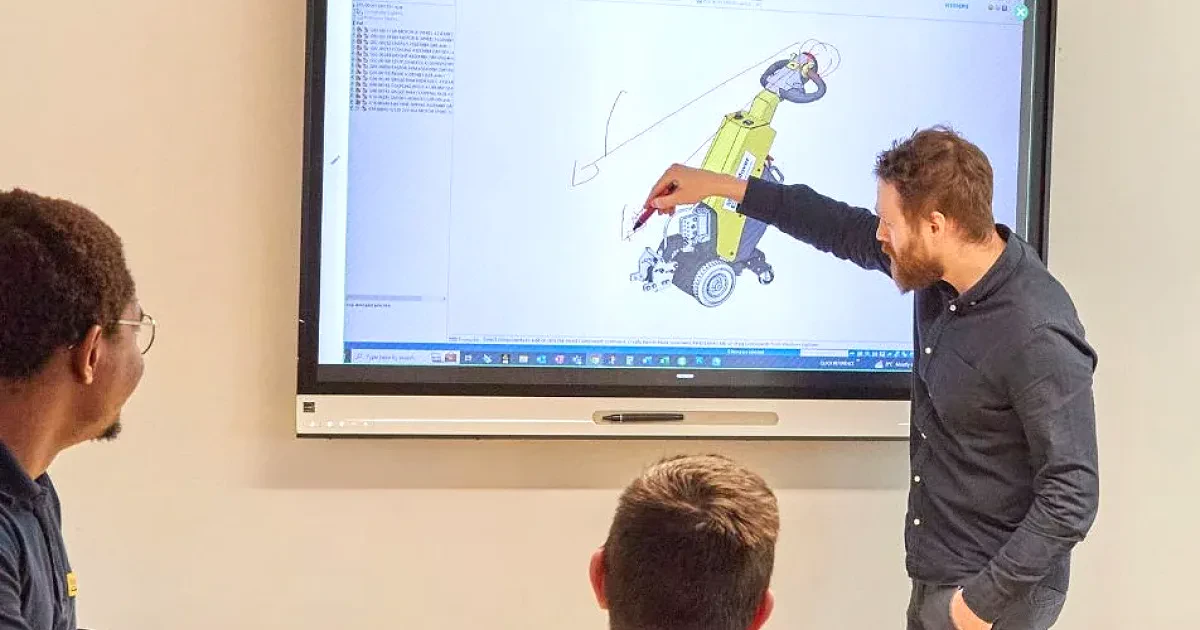
Electric tugs become relevant when the load is on wheels or can be adapted for coupling. Weight, wheels, centre of gravity, floor, gradient, turning space, frequency and proximity to lines, benches or ESD areas need to be checked.

Before choosing, it should be clear whether the pressure comes from particles, ESD verification, mixed traffic, impact, manual movement or a combination of these. The entry point, bypass risk, wheeled traffic, cleaning routine, verification method and internal validation owner all matter.
Area photos, a simple route sketch, crossing frequency, footwear and wheel types, ESD/Quality observations and frequently moved loads help separate the directions: contamination control, physical protection, route clarity or controlled movement.











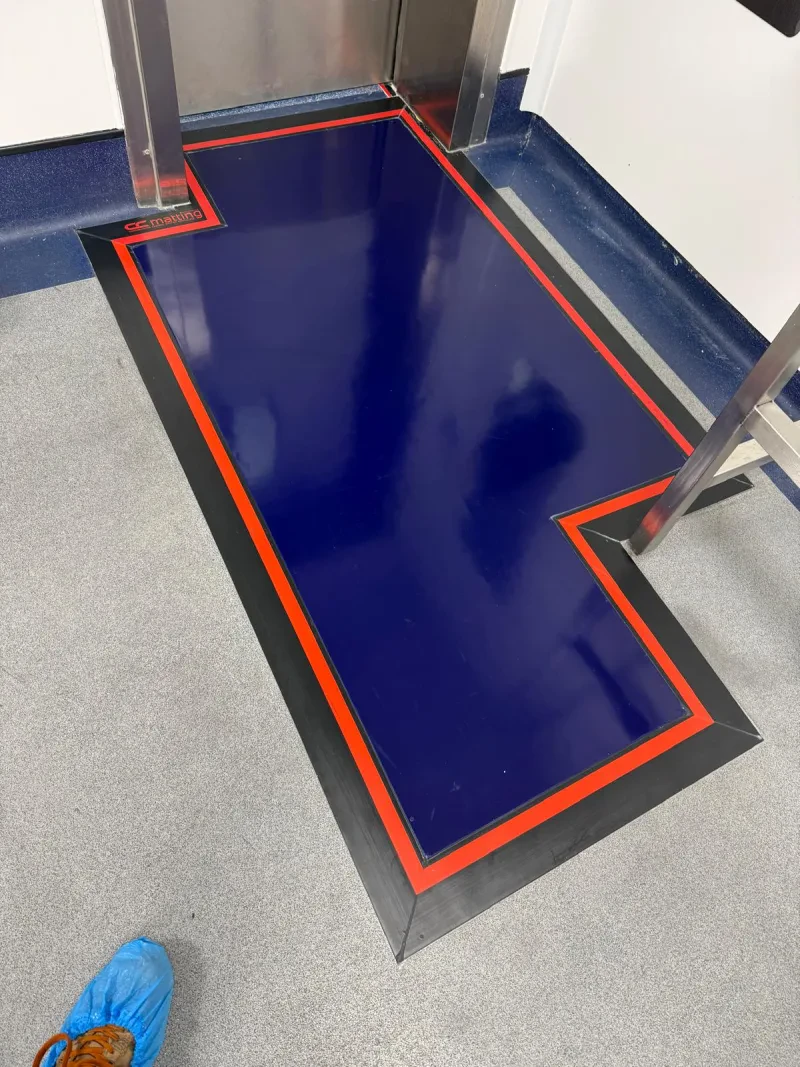
A guide to choosing polymer-mat length, width and position from successive sole contacts, wheel rotations, traffic and cleaning.
A guide to integrating wheel cleaning before doors, floors, drainage and routes are fixed.
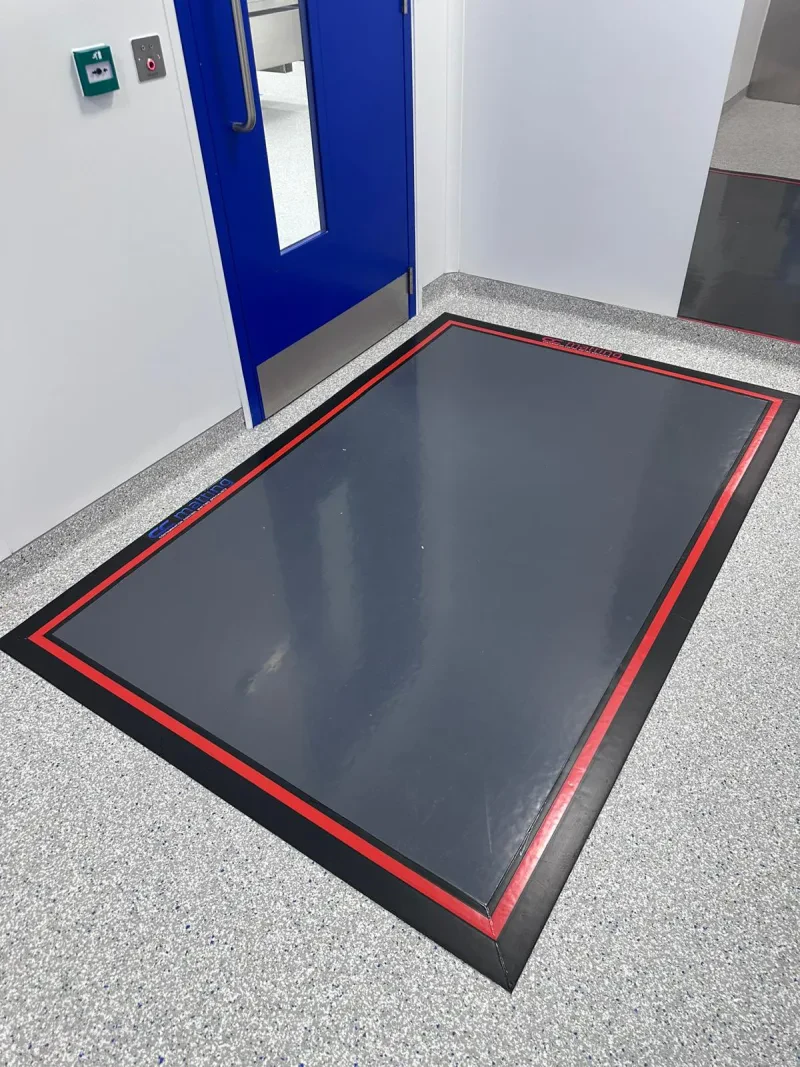
How to use CC Matting Heavy Duty documentation when the area needs ISO Class 5 material, particle control, clear cleaning and quality traceability.
Do you have an electronics area where particles, ESD access or movement slow the flow?

Useful signals appear along the access or transfer route: particles near entry, failed or unstable ESD access checks, visible floor dirt, carts crossing from warehouse to SMT, impact marks near panels or sensitive loads that are difficult to position.
When several signals appear in the same area, the discussion should move to flow level: where contamination comes from, where ESD is checked, which equipment is exposed and how loads move during the shift.
Use it as a reference for the ESD program, verification, grounding, personnel, equipment and internal responsibilities. In copy and review, the standard helps frame the right questions about route, access and validation.
The measures discussed should support the operator existing program. Limits, checks, acceptance in an ESD area and documentation remain with the internal ESD/Quality team.
It becomes relevant when operators, carts or wheels arrive from less clean areas and move towards ESD, SMT, test, assembly or sensitive storage. The point needs to sit on the natural route, before access is checked or before particles move further inside.
Bypass risk, contact length, sole and wheel types, crossing frequency and the owner of cleaning and maintenance should all be checked.
They make sense at transfer points with frequent traffic and a realistic cleaning routine: ESD-adjacent entries, clean corridors, packaging areas, test access or routes with light wheels and carts.
Fit should be checked with the ESD/Quality owner when the area is electrostatically sensitive. Static properties or material tests can support selection, but process acceptance depends on the internal requirement and site validation.
Physical protection becomes relevant when a vehicle, cart or mobile rack can hit panels, conveyors, test stations, doors, columns or equipment. In areas with weak visibility, the route and markings should be clarified before choosing the protection shape.
The choice depends on impact energy and the behaviour you want to change. Where energy is high or stoppage consequence is serious, better visibility does not automatically replace physical protection.
It can help when the load is on wheels or can be adapted for coupling, and the movement is frequent, heavy, sensitive or difficult to control manually. Electronics examples include mobile racks, fixtures, test equipment, reels, containers or special carts.
Before choosing, weight, wheels, floor, gradient, centre of gravity, turning radius, proximity to lines and whether the movement happens near an ESD area should be checked.
Photos of the entry or route, a simple sketch, wheel and footwear types, crossing frequency, ESD/Quality observations, frequent impact points and frequently moved loads are useful.
A complete technical brief is not needed for the first orientation. The important part is to show where the signal appears in the flow and what internal decision needs support.