ISO Class 5 material
Fraunhofer IPA certification indicates material suitable for Air Cleanliness Class ISO Class 5 under the tested material pairing and conditions.

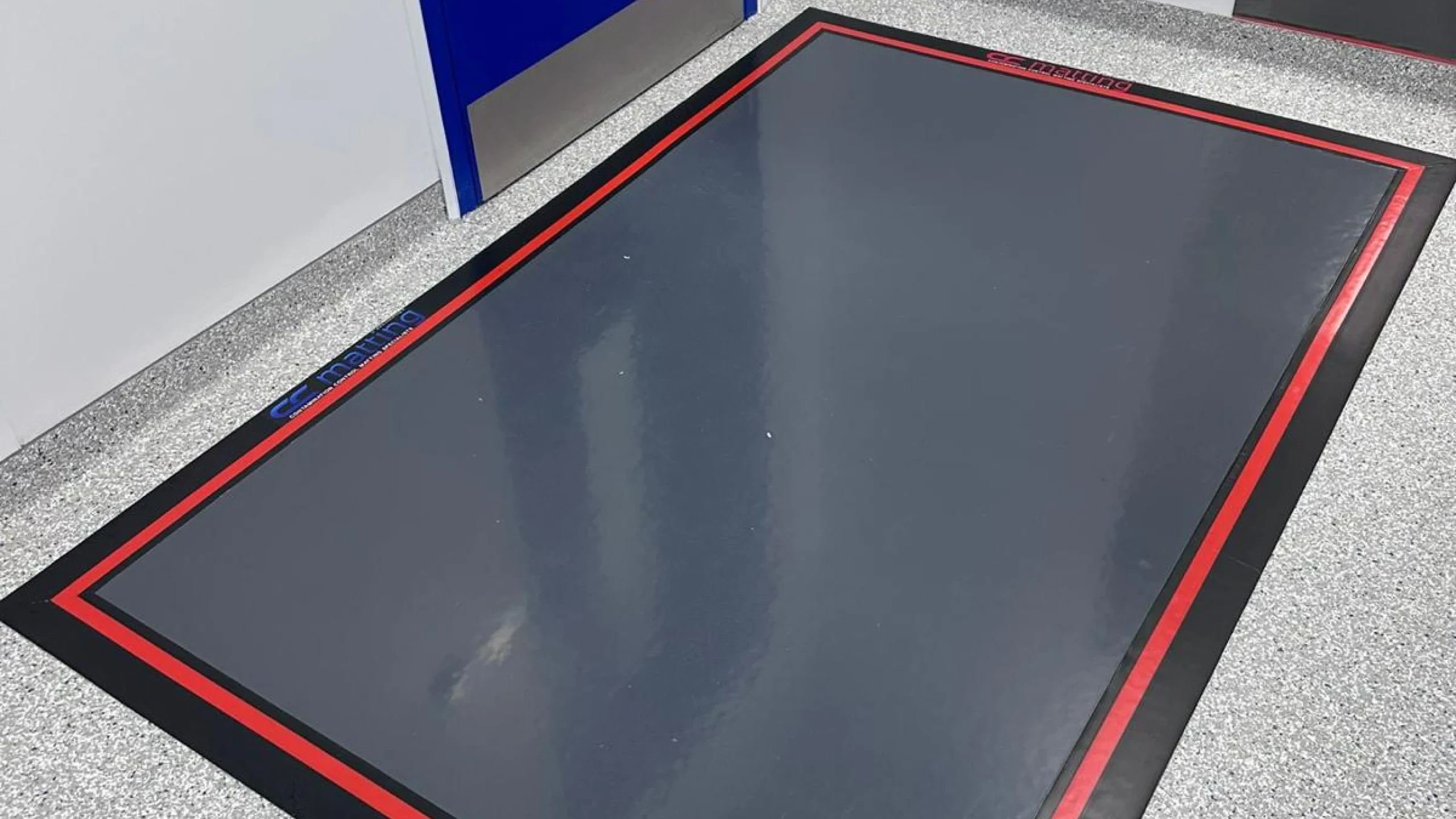
In cleanrooms and controlled environments, an entrance mat can become the point where you reduce particle transfer from soles and light wheels, with a clear cleaning routine and documentation the quality team can use.
At a transfer point into a clean area, the difference is not only colour or mat size. What matters is the traffic crossing the surface, which particles can be transferred, how the mat is cleaned and which documents help the team during selection, validation or audit.
For many teams, peel-off adhesive mats have been the simple option. But when the point is permanent, traffic is steady and the area needs clearer documentation, reusable polymer matting can become the more stable direction.
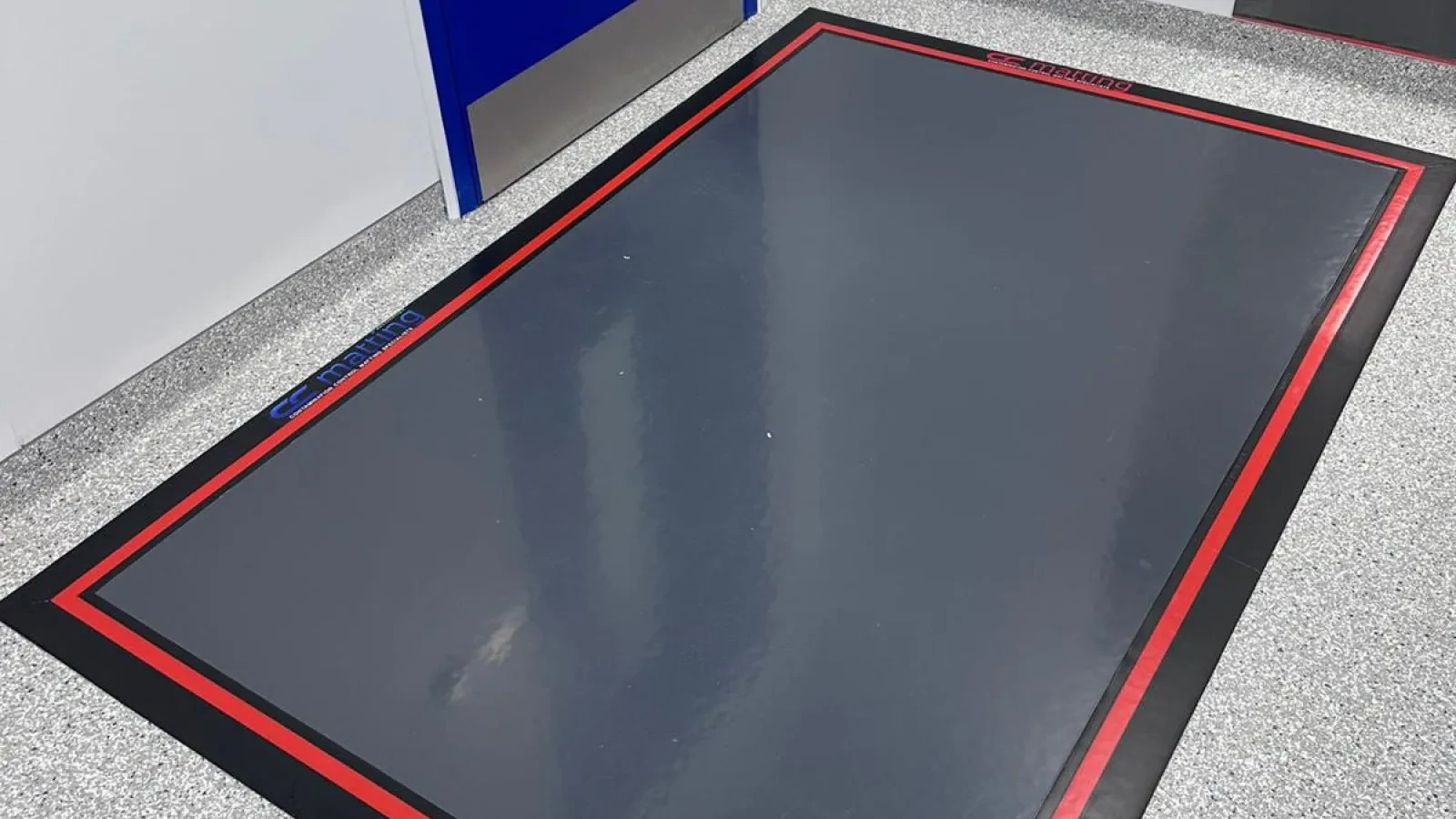
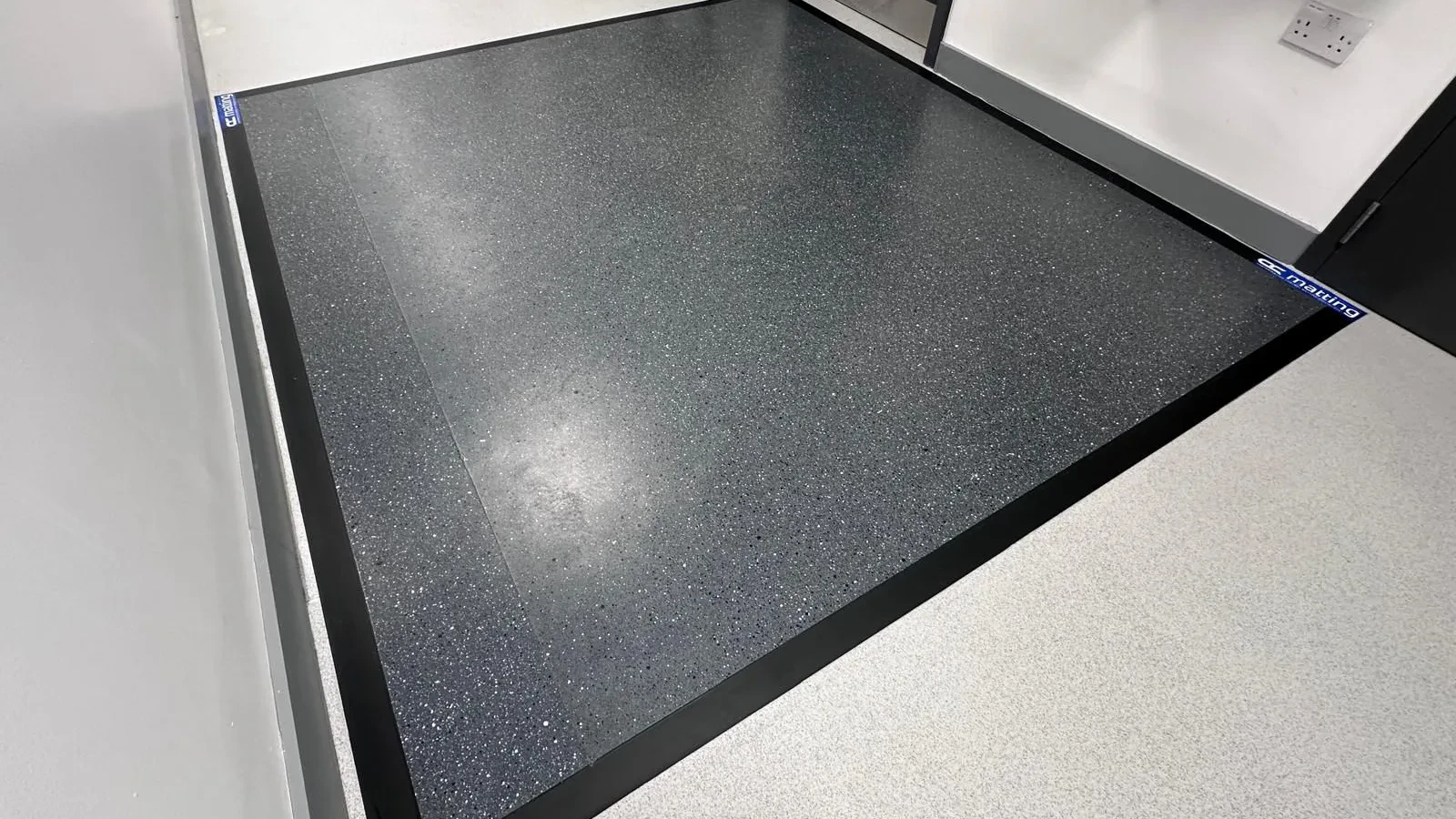
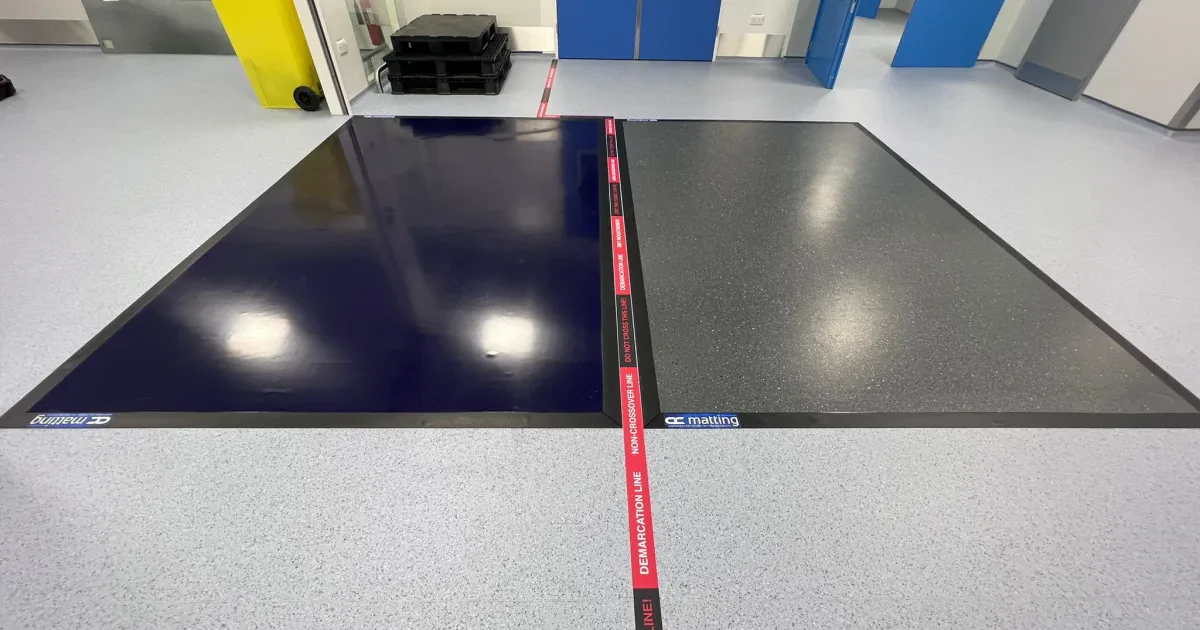
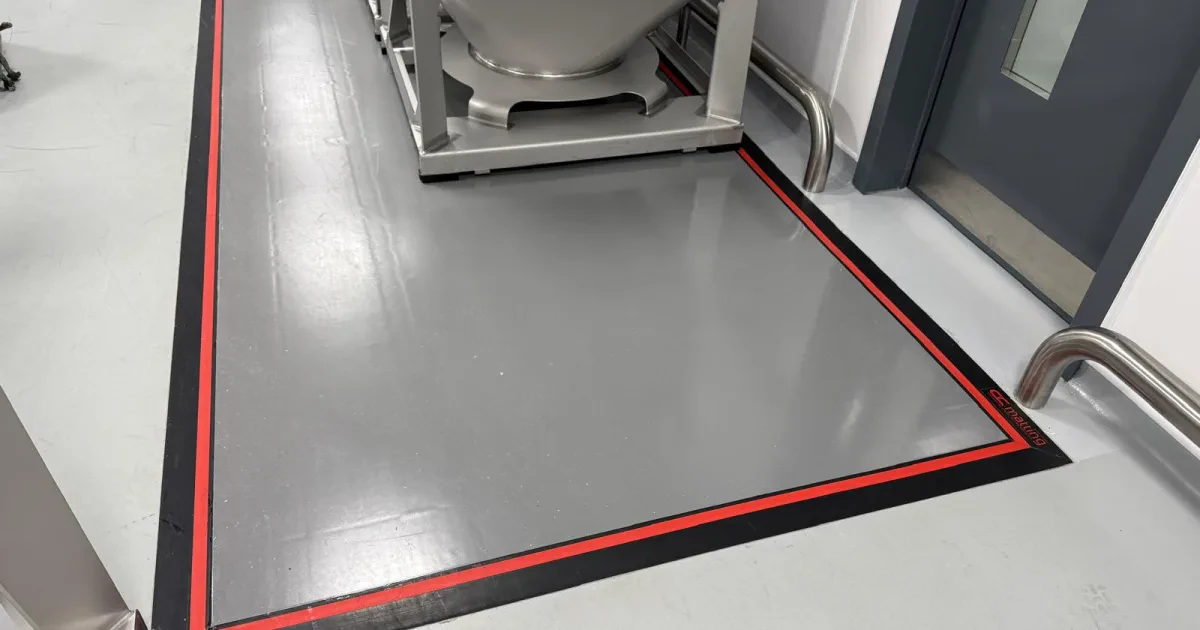
The CC Matting Heavy Duty polymer contamination-control mat helps when the team needs a washable mat with documented material, available tests and instructions that fit the site procedure.
ISO 14644-1 classifies air cleanliness by airborne particle concentration in cleanrooms and clean zones. It is the language teams use when they discuss ISO Class 5, ISO Class 7 or ISO Class 8.
For CC Matting Heavy Duty, the Fraunhofer IPA certificate refers to the material: CCM HD Polymeric Matting solid grey was tested for particle emission and indicated as suitable for Air Cleanliness Class ISO Class 5 under the test conditions.
In sterile pharma, EU GMP Annex 1 works with Grade A, B, C and D, plus “at rest” and “in operation” states. Grade A is the critical zone for high-risk operations; Grade B is usually the background for Grade A in aseptic manufacturing; Grade C and D support less critical stages.
In practice, Grade A and Grade B “at rest” use ISO 5-equivalent particle levels for ≥0.5 µm. In operation, Grade A remains ISO 5, Grade B corresponds to ISO 7, Grade C to ISO 8, while Grade D in-operation limits are set through risk assessment and routine data.
A good controlled point connects three things: available material documentation, real traffic and the routine that keeps the surface clean.
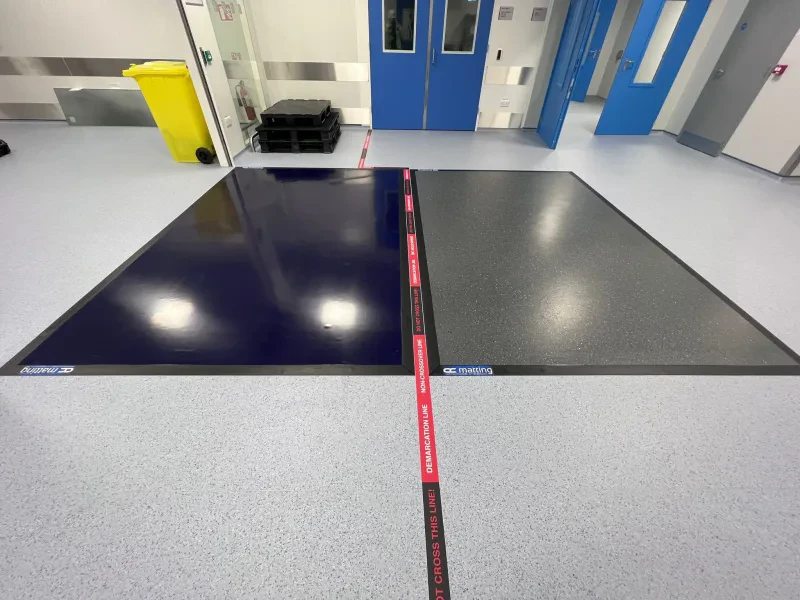
The Fraunhofer IPA certificate for CCM HD Polymeric Matting solid grey indicates suitability for Air Cleanliness Class ISO Class 5 based on particle emission testing of the material.
For the buyer, this moves selection toward verifiable criteria: tested material, available documentation and a clear link with the clean-area requirement.
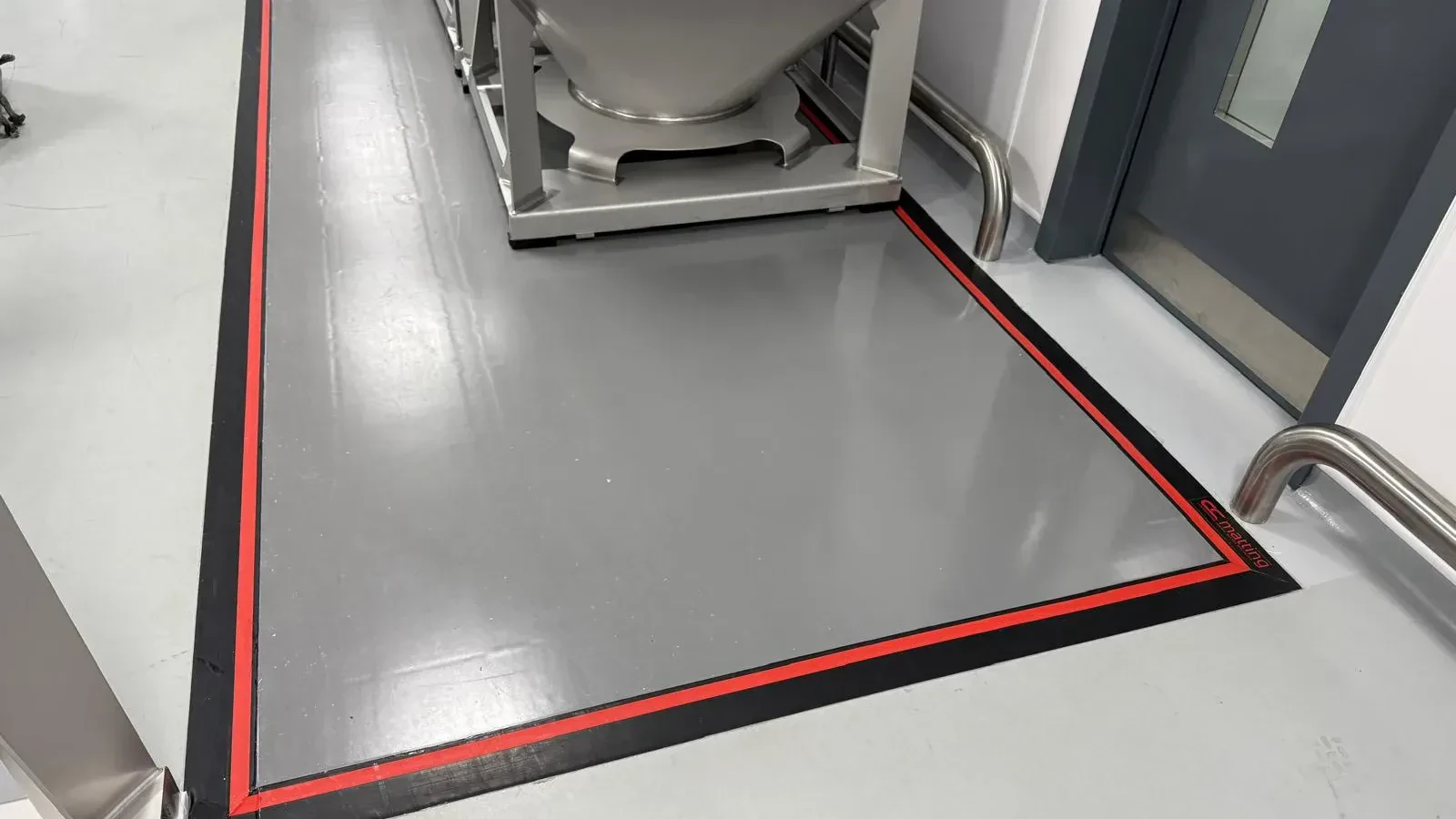
The particle removal report analysed particles collected from warehouse flooring and transferred through shoe soles and trolley wheels. The result is useful for areas where light traffic crosses straight over the surface.
Selection still depends on the application: number of steps, wheel rotations, bypass, load, wheel material and cleaning frequency all change site behaviour.
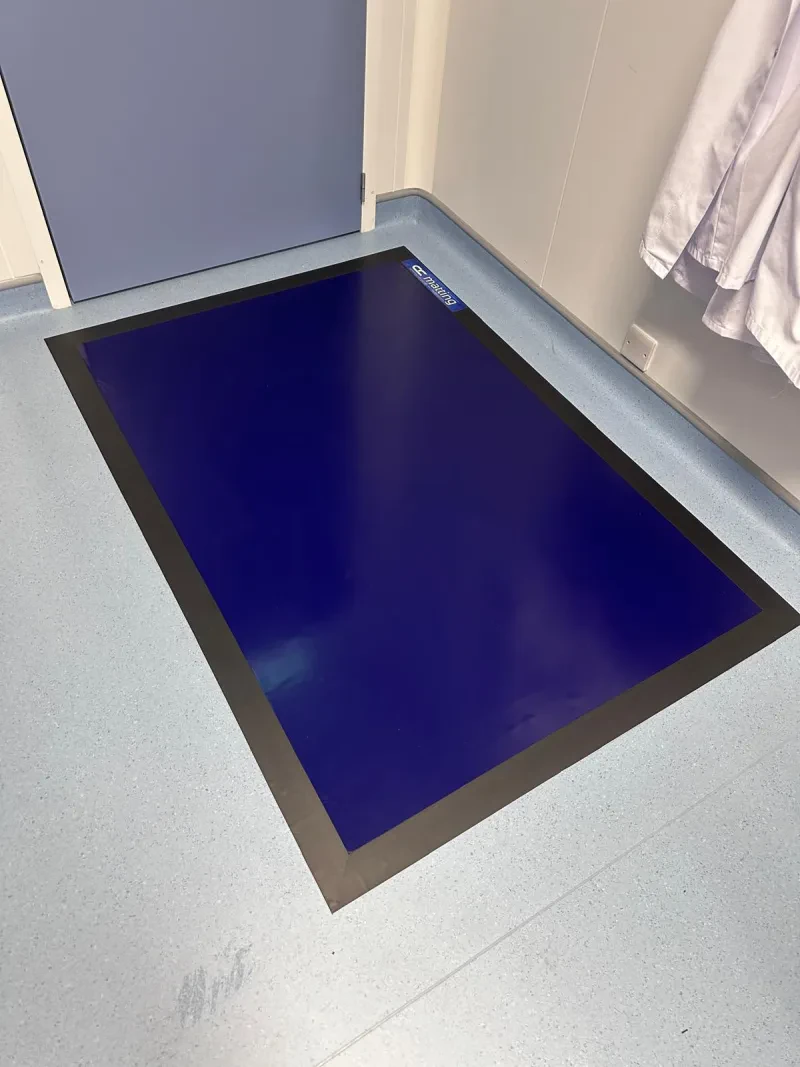
CC Matting Heavy Duty comes with useful selection documents: CE/DoP, RoHS/SVHC, material information, cleaning instructions and antistatic data, depending on the file required.
In practice, the advantage appears only when the surface is cleaned correctly and the area owner knows when the mat returns to service. Documentation helps; the site routine makes the difference.
The Fraunhofer IPA certificate names CCM HD Polymeric Matting, solid grey vs. PA6 material pairing, reel-on-disc test with 300 N normal force and suitability for Air Cleanliness Class ISO Class 5.
This is a clear material argument. Room classification is established through the operator procedure, monitoring and validation.
The particle removal test looked at particles >5 um, particles >100 um and fibres >100 um, transferred through shoe sole and trolley wheel, then counted microscopically.
The report conclusion indicates efficiencies above 90% for the three tested categories. In quotation, the number should travel with the test conditions and the way the point will be cleaned on site.
A clean area may include airlocks, gowning, air showers, pass-throughs, HEPA or GMP procedures. Polymer matting complements control at floor level, on the route of soles and light wheels.
Before quotation, a few practical details should be clear.
Do you have an area where material documentation matters?

For CCM Heavy Duty, ISO Class 5 refers to the tested material and Fraunhofer IPA certification for Air Cleanliness Class ISO Class 5. It is important information for material selection in clean areas.
For a project, the certificate should be read together with mat position, traffic, cleaning, edges and the operator procedure.
ISO 14644-1 classifies air by particles. EU GMP Annex 1 uses Grade A-D for sterile zones and adds the process context: at rest, in operation, monitoring, microbiology, gowning, flows, CCS and validation.
For CC Matting, the useful link is material selection at transfer points: ISO Class 5 material certification can support quality review, while final Grade A-D positioning remains part of the site procedure and contamination-control strategy.
The CCM Heavy Duty efficiency report tested particles >5 um, particles >100 um and fibres >100 um, transferred through shoe soles and trolley wheels. The conclusion indicates removal efficiencies above 90% for the three categories.
In public copy and quotation, the number should stay connected to the test conditions. On site, the result depends on traffic, position, contamination load and real cleaning.
It makes sense at transfer points where quality, validation or the internal procedure needs more than a product description: cleanrooms, pharma, medical, electronics, clean packaging, labs or transfer zones between controlled environments.
The 2.9 mm thickness is relevant for installation, edges, light-wheel crossing, cleaning and floor integration. It is not only a technical number; it changes how the mat behaves at the transfer point.
In a project, thickness should be read together with width, length, thresholds, doors, bypass risk, traffic and cleaning method.
Product documentation helps the team select the material and explain it internally. The site procedure defines how it is cleaned, who checks the area, when action is taken and which data is retained.
For orientation, a short description of the real point is enough to start; a complete technical file is not required.
With this, the direction can be clarified: CC Matting Heavy Duty, application test, combination with another measure or active route cleaning.