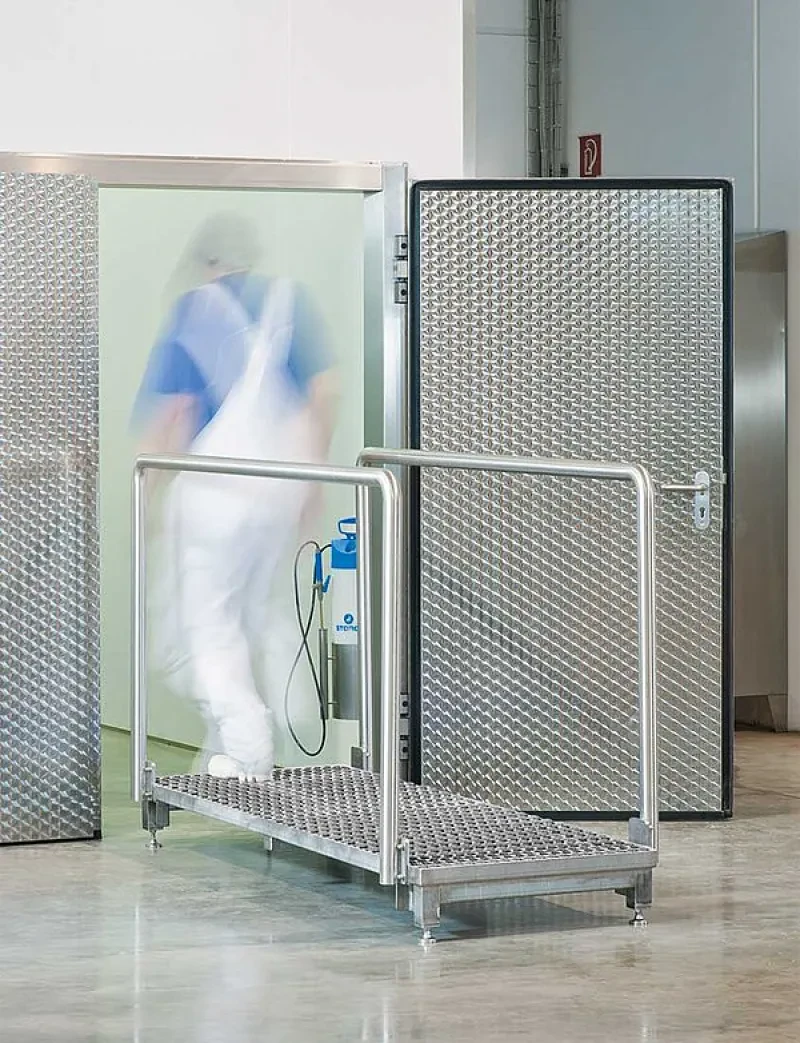
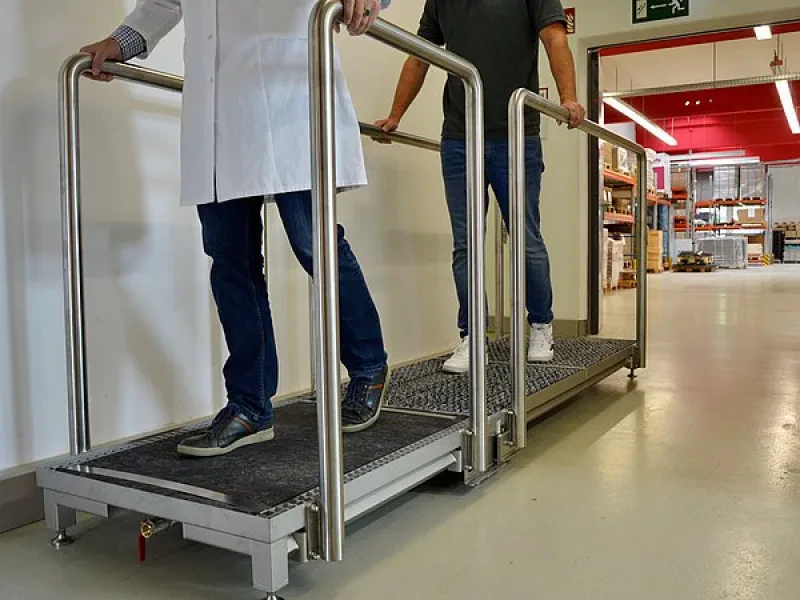
Food production and packaging
Entrances where soles and boots need to be cleaned before the work area, with a routine quality and production teams can understand.

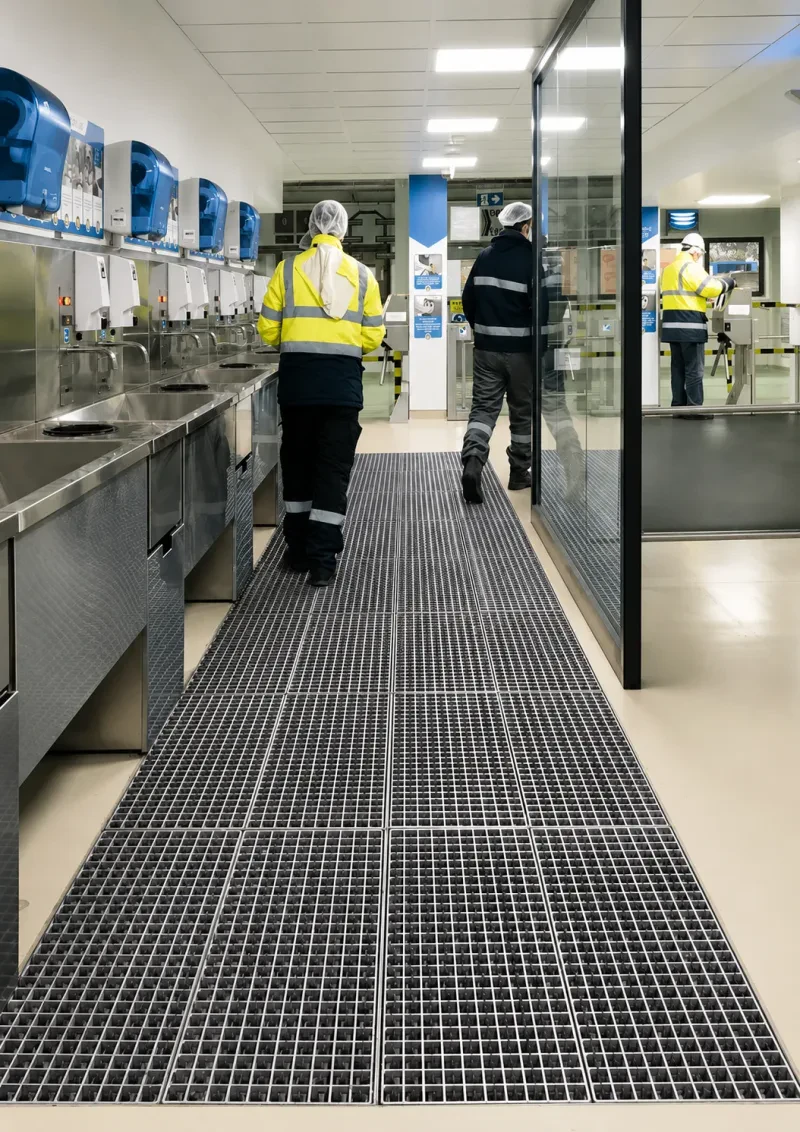
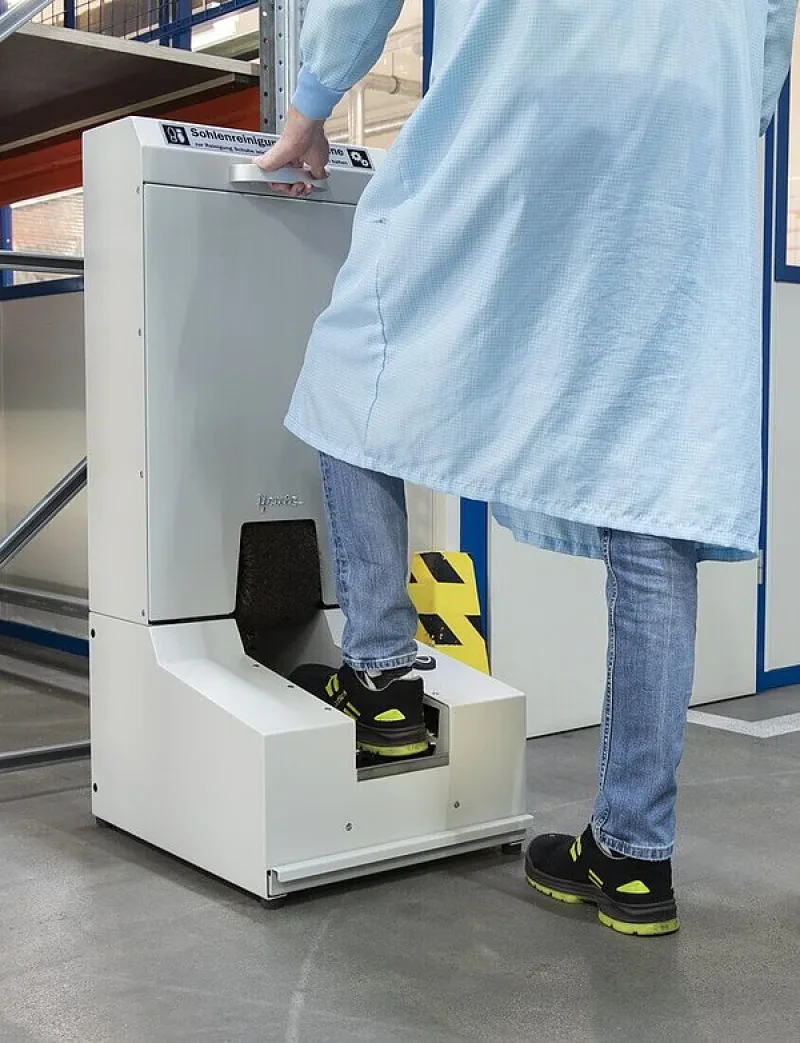
In food production, changing rooms, laboratories or sensitive areas, dirt on footwear should not travel further inside. HEUTE mechanically cleans soles and footwear exactly where personnel crosses into the controlled area.

HEUTE Maschinenfabrik GmbH & Co. KG is a German specialist in equipment for cleaning shoes, soles, wheels and special applications, with origins in 1905. The company developed the first fully automatic shoe shine machine in 1945 and expanded its expertise into industrial sole, boot, wheel and hygiene-sluice systems. Through SEVENSEAS, HEUTE is selected locally from personnel flow, footwear type, hygiene requirement, installation, cleaning and service.
At entrances between changing room and production, support areas and sensitive spaces, or before rooms with stricter requirements, footwear becomes part of route control. A good crossing needs enough cleaning, realistic throughput and practical maintenance.
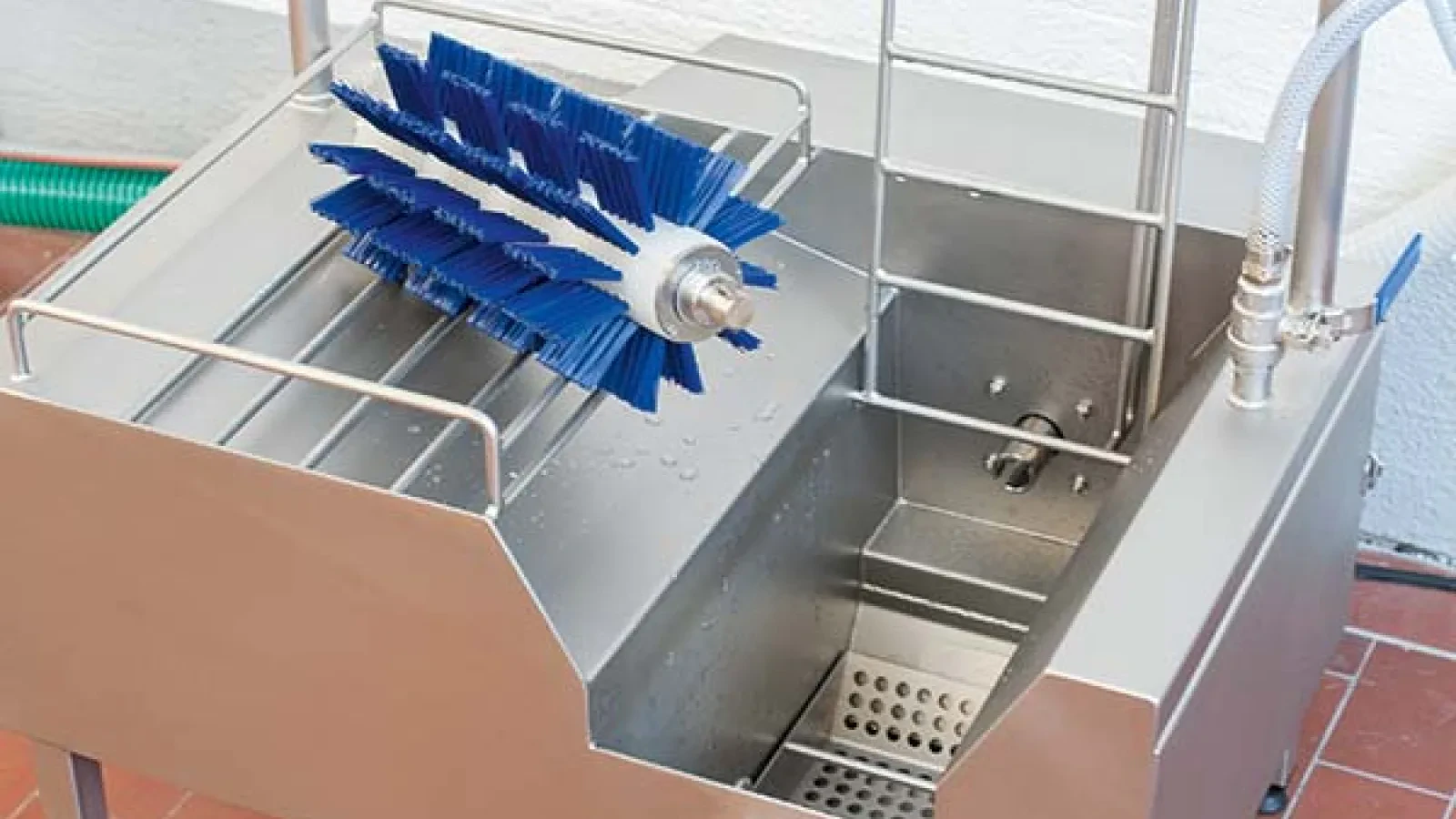
HEUTE fits when the access point needs more than a mat or a wall instruction: mechanical cleaning, controlled liquid, drying, boot brushes, dosing, two-way access or a turnstile after hand disinfection.
Selection is not only about model name. It depends on what needs to be cleaned, how long a person can stay in the crossing, whether liquid is used, whether footwear needs drying and who maintains the equipment.
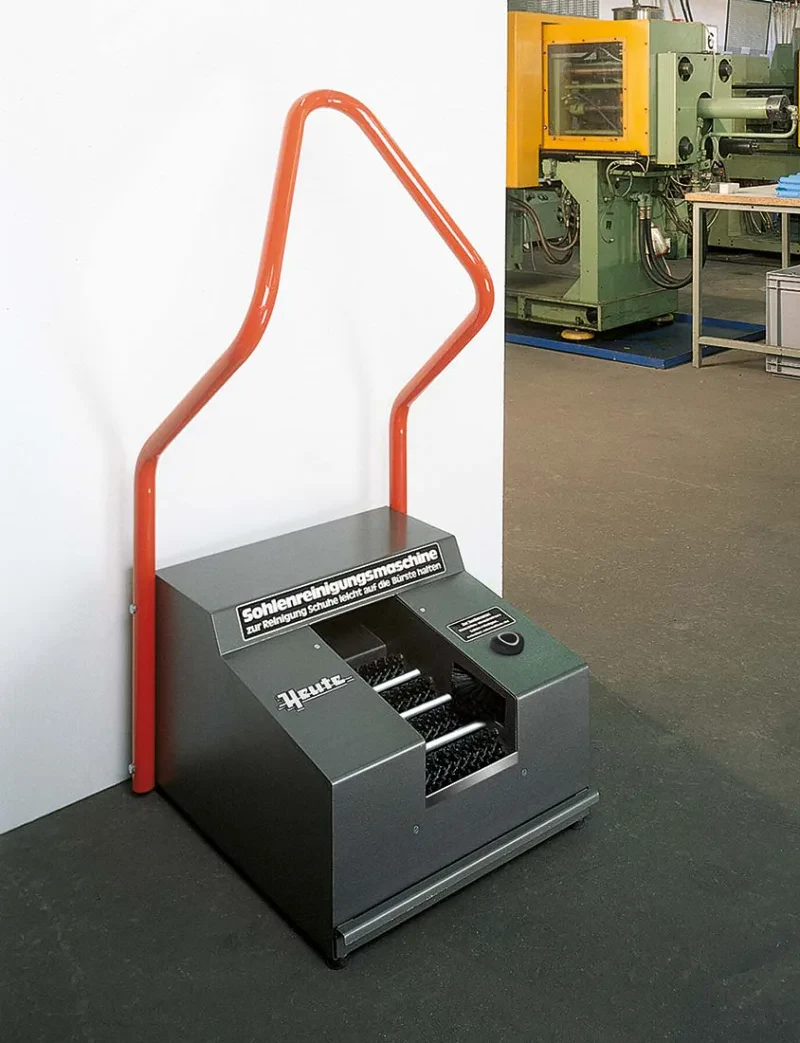
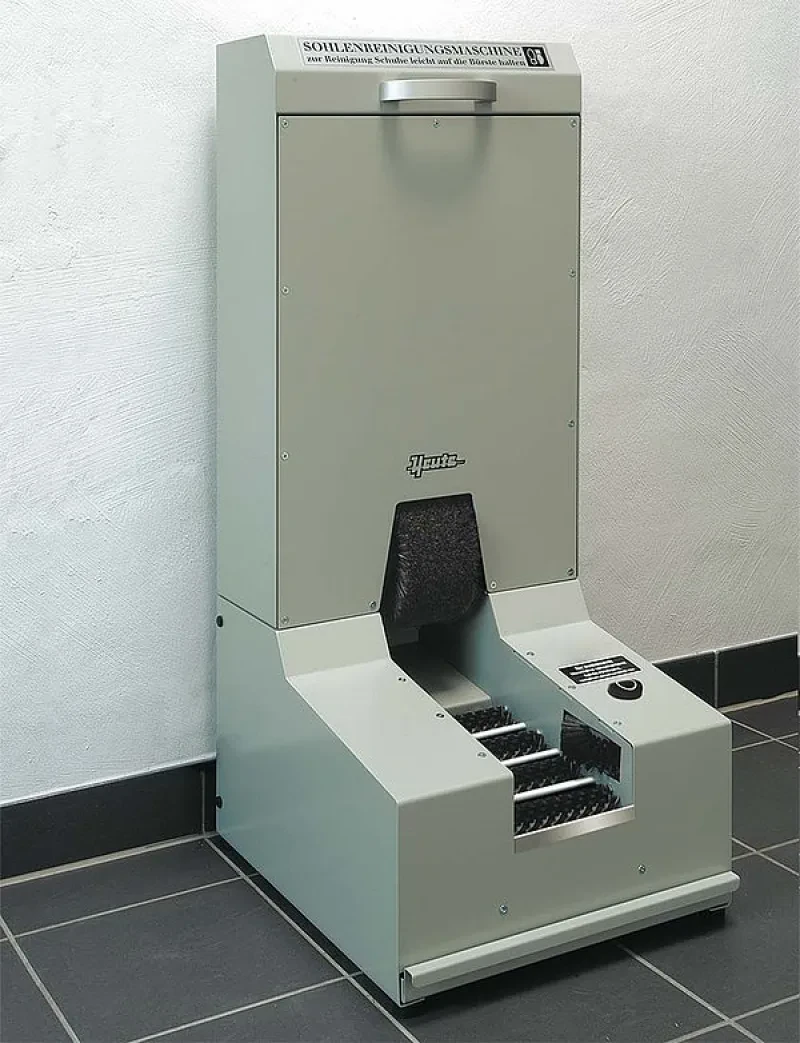
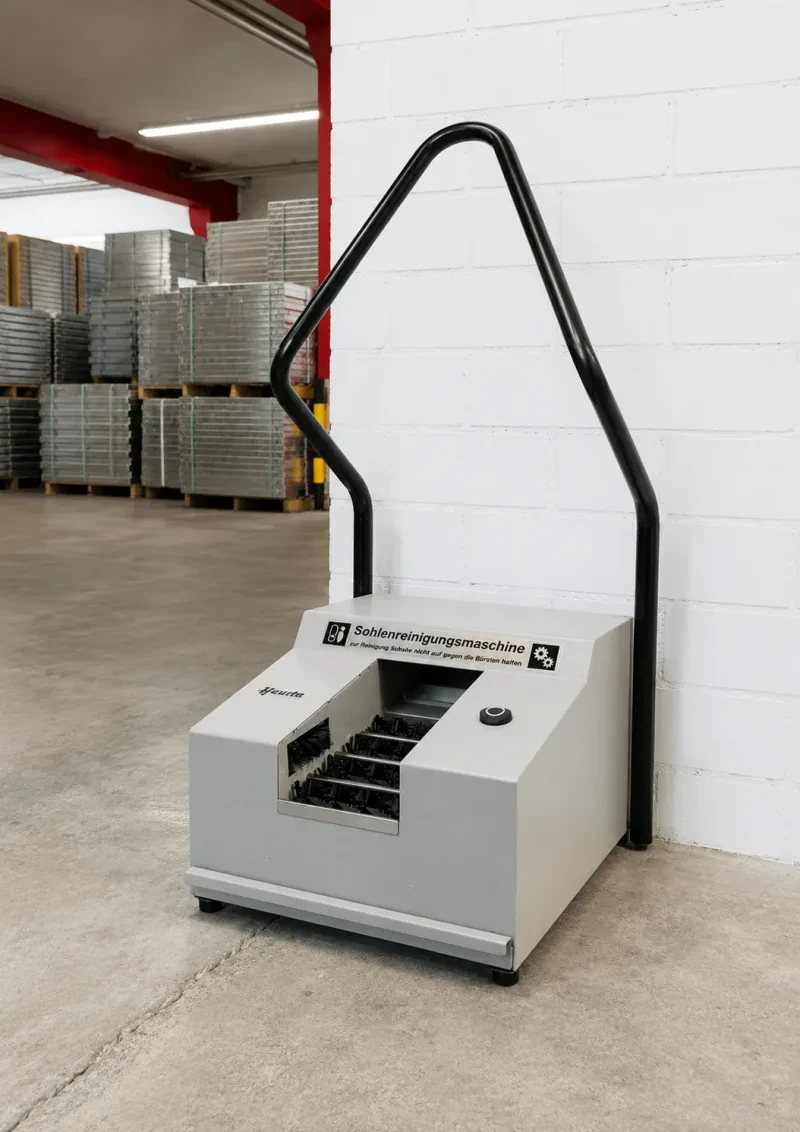
Dry cleaning fits when the aim is to remove dust, particles, sand or physical dirt from soles without liquid in the process.
Solamat and dry variants fit technical entrances, industrial office areas, support spaces or points where liquid-disinfectant hygiene is not required.
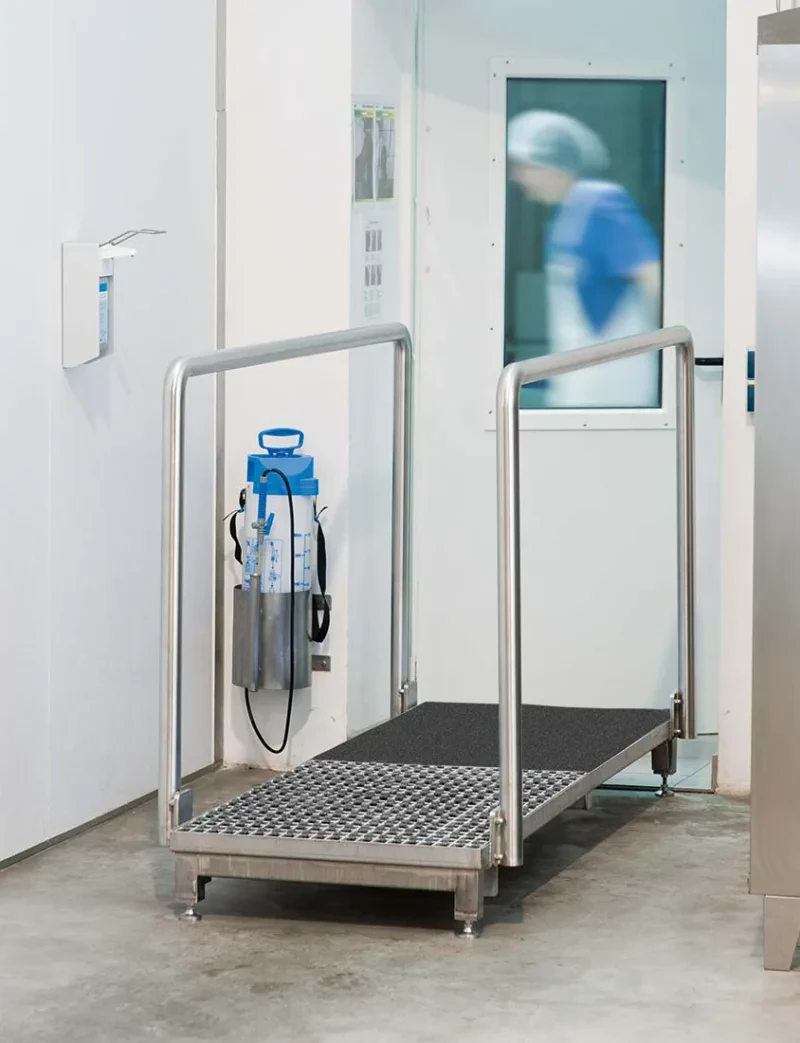
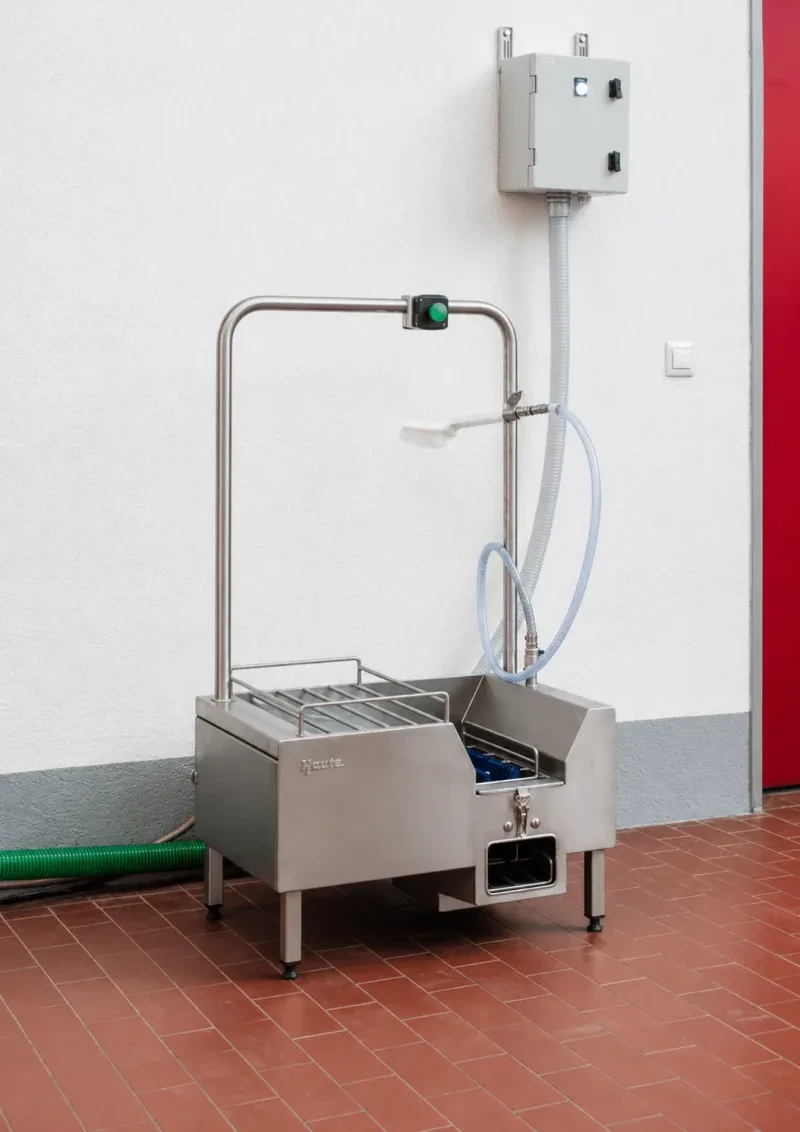
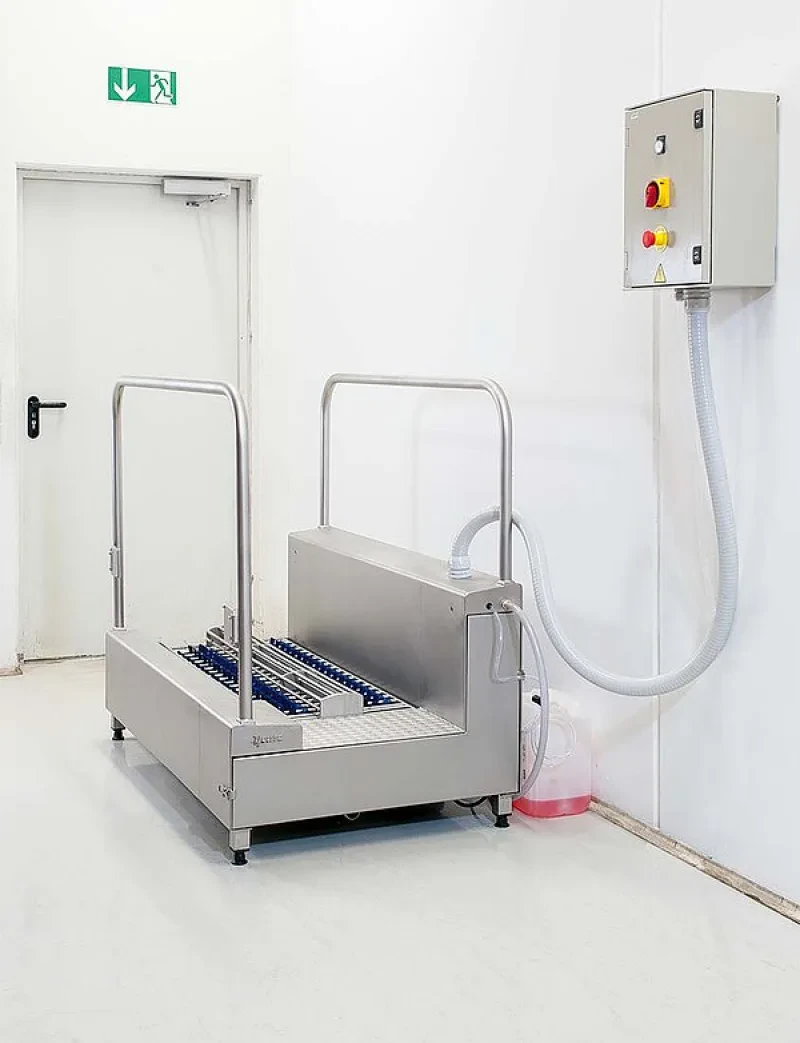
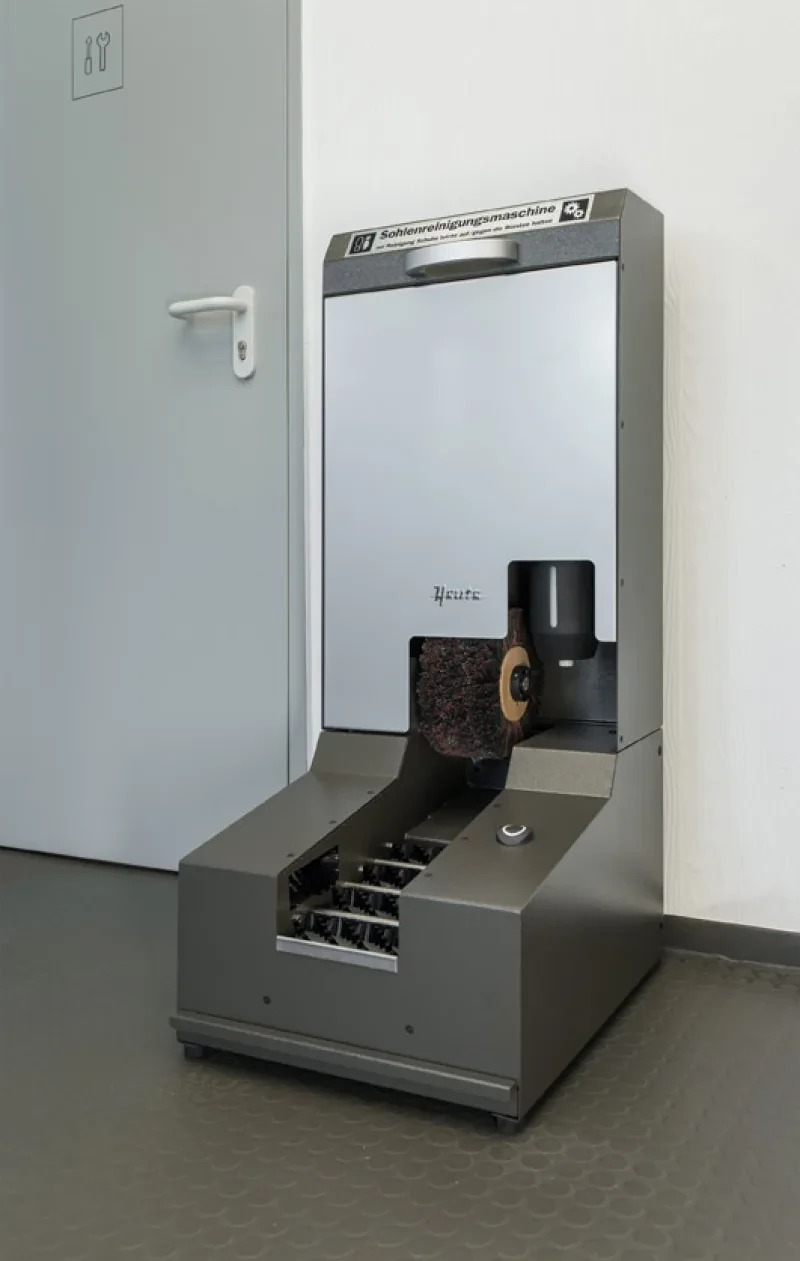
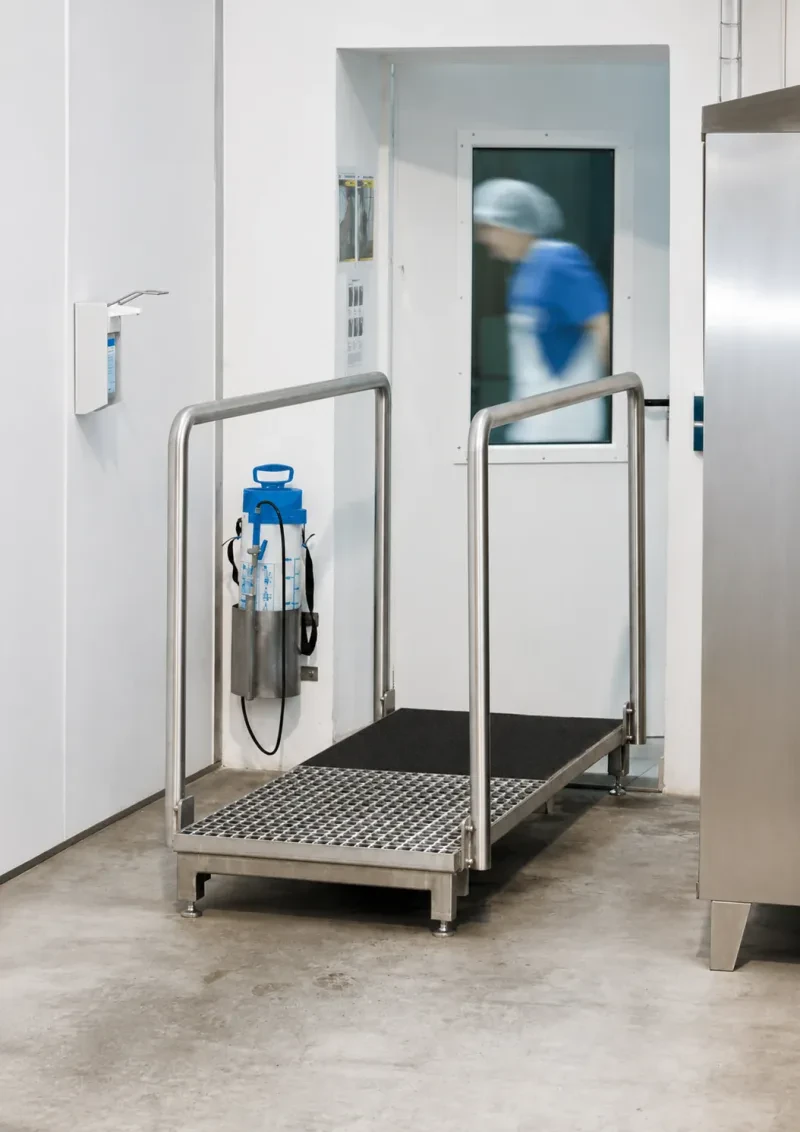
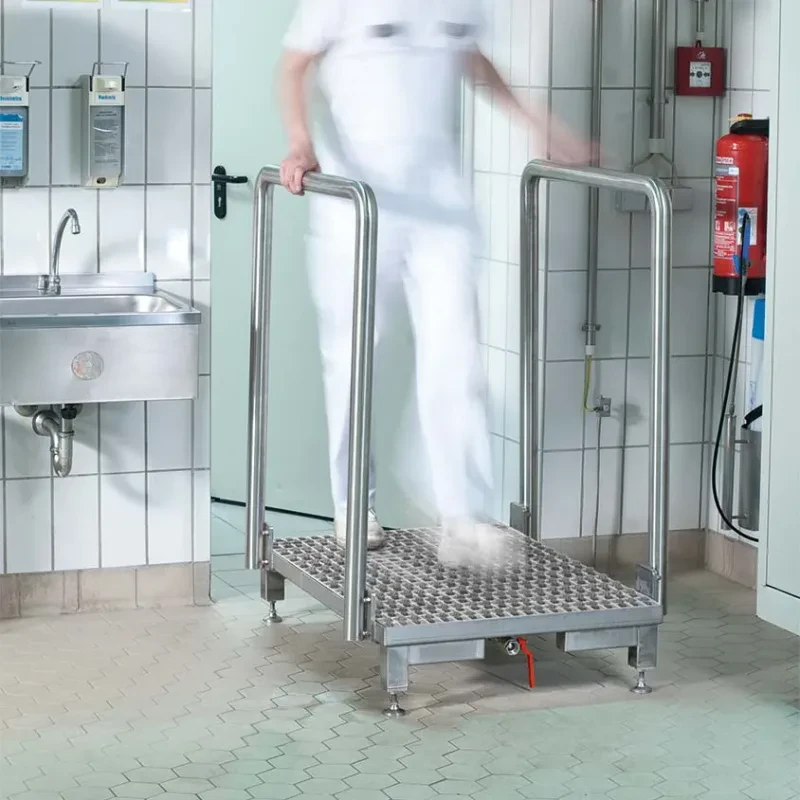
StepGate and Neptun use mechanical cleaning assisted by liquid for entrances where soles or boots need more intensive cleaning. Liquid type, concentration, trough level, drainage, refill and cleaning routine matter.
Where hygiene requirements apply, selection needs to connect with the operator procedure: who checks the liquid, who cleans the equipment and how bypass is prevented.
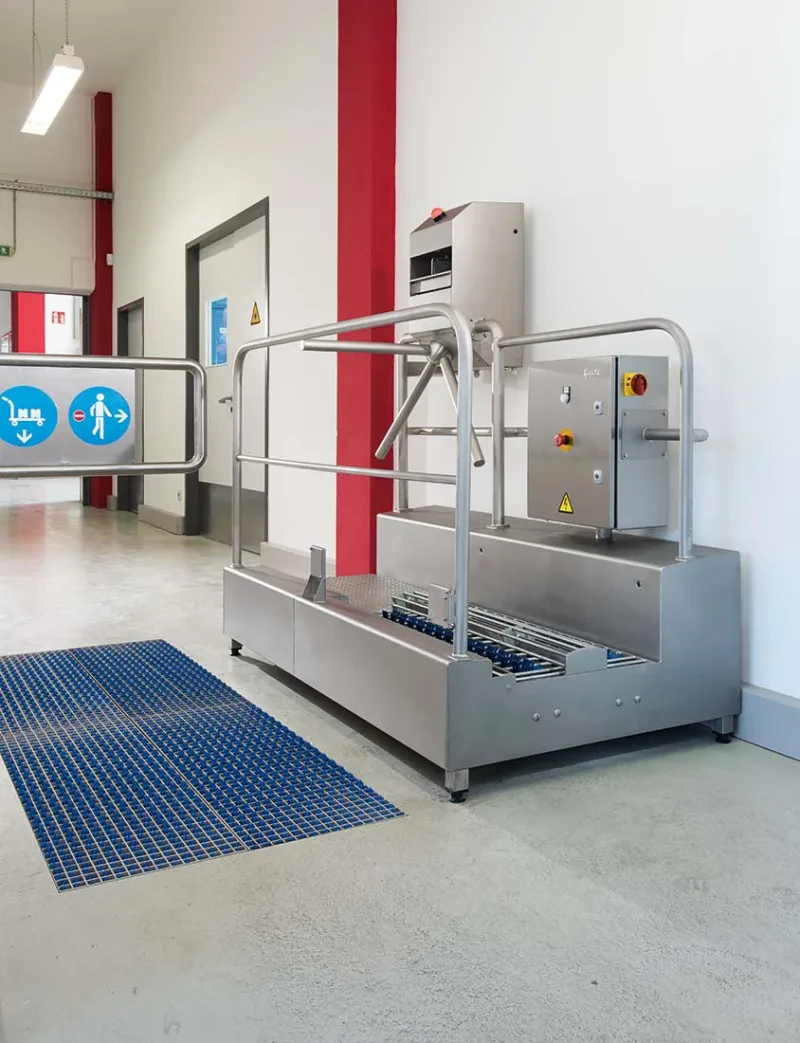
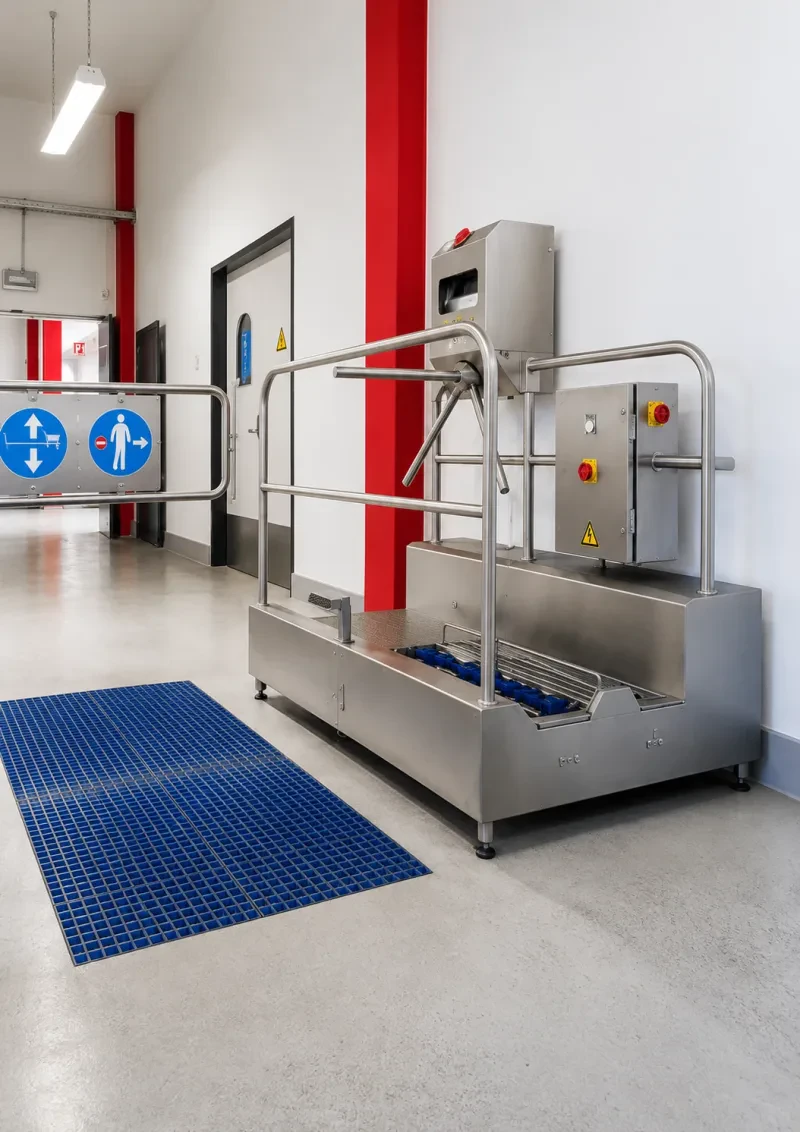
In some entrances, sole cleaning is not enough. Neptun HCS1 combines sole cleaning with hand disinfection and can link access release to completing the crossing.
This direction should be checked when personnel flow, hygiene requirement, space, crossing direction and service ownership can be supported in daily use.
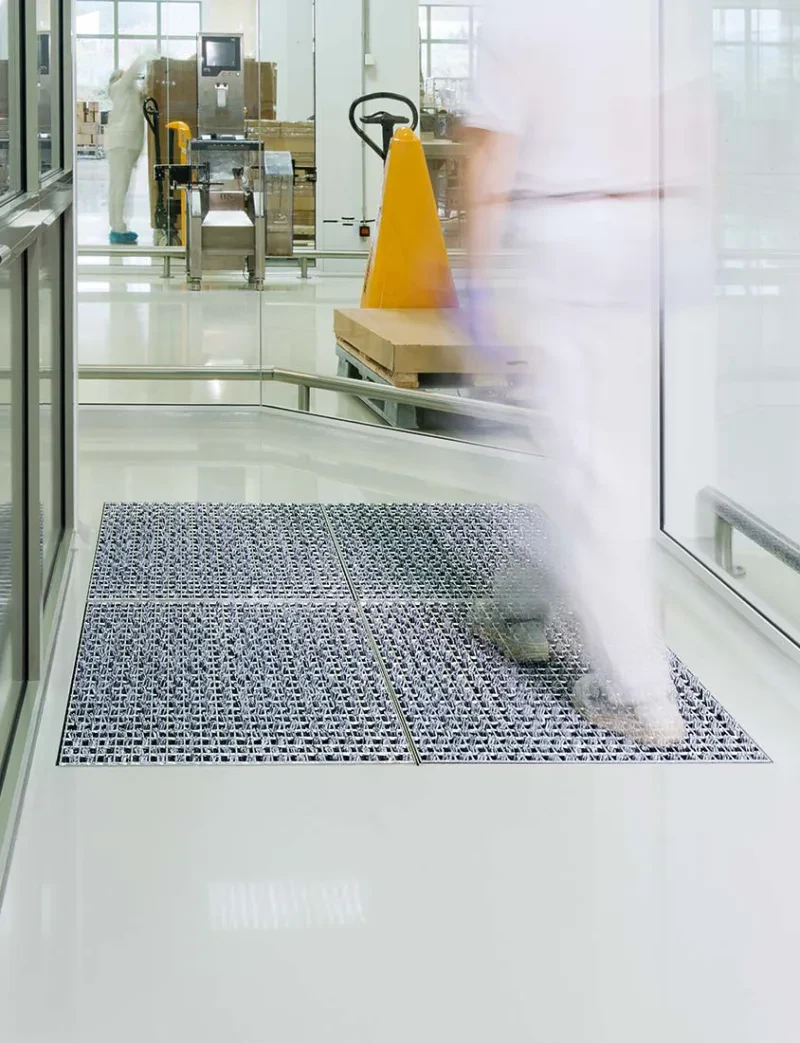
HEUTE Sole Cleaners mainly cover footwear, soles, boots and personnel entrances. If the same point is crossed by wheels, carts, pallet trucks or AGVs, ProfilGate or route-level cleaning may be the better direction.
SEVENSEAS separates the mechanism early: footwear cleaning, wheel cleaning, a polymer contamination-control mat or a combination of points, so each area controls what actually passes through it.
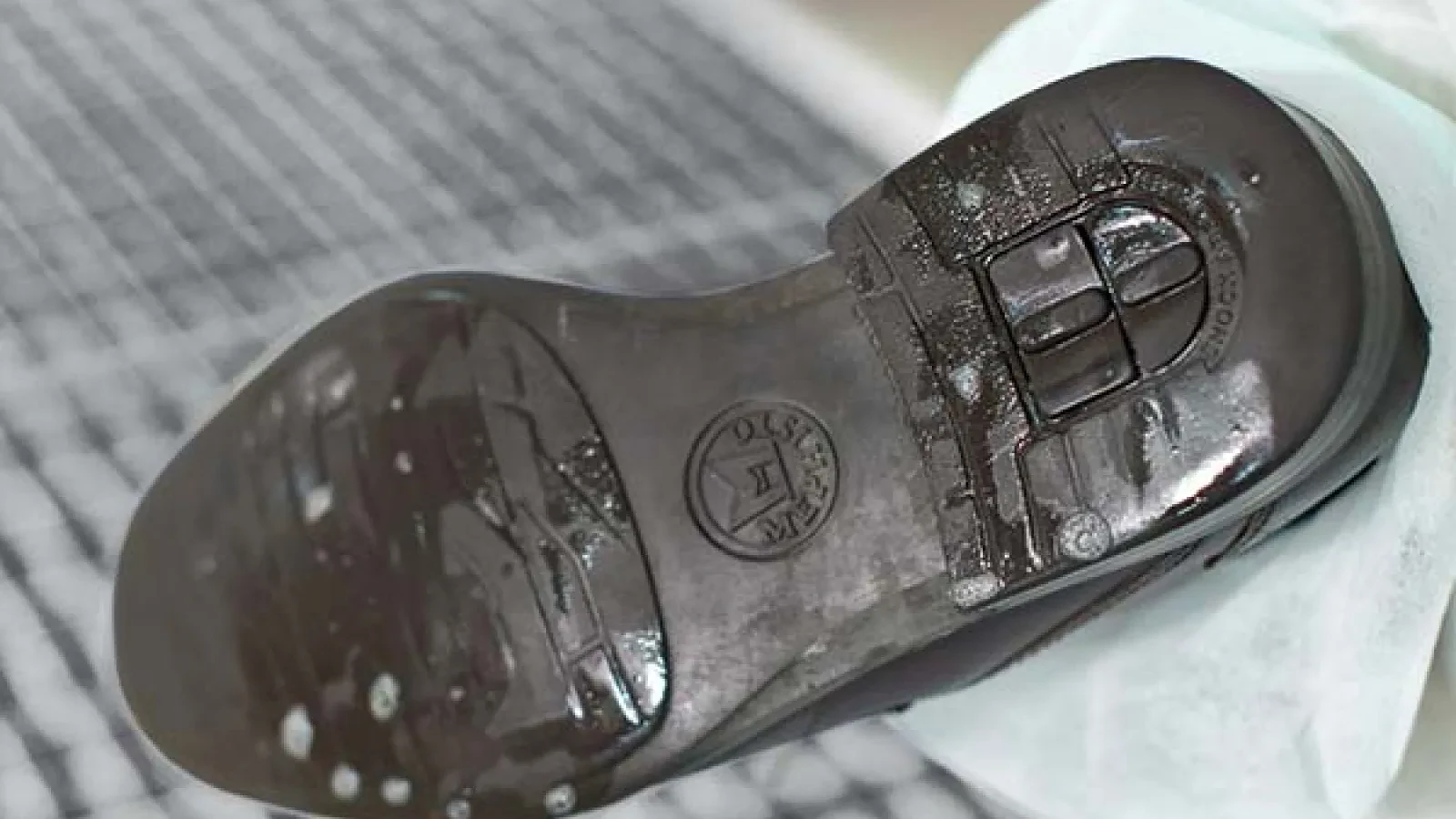
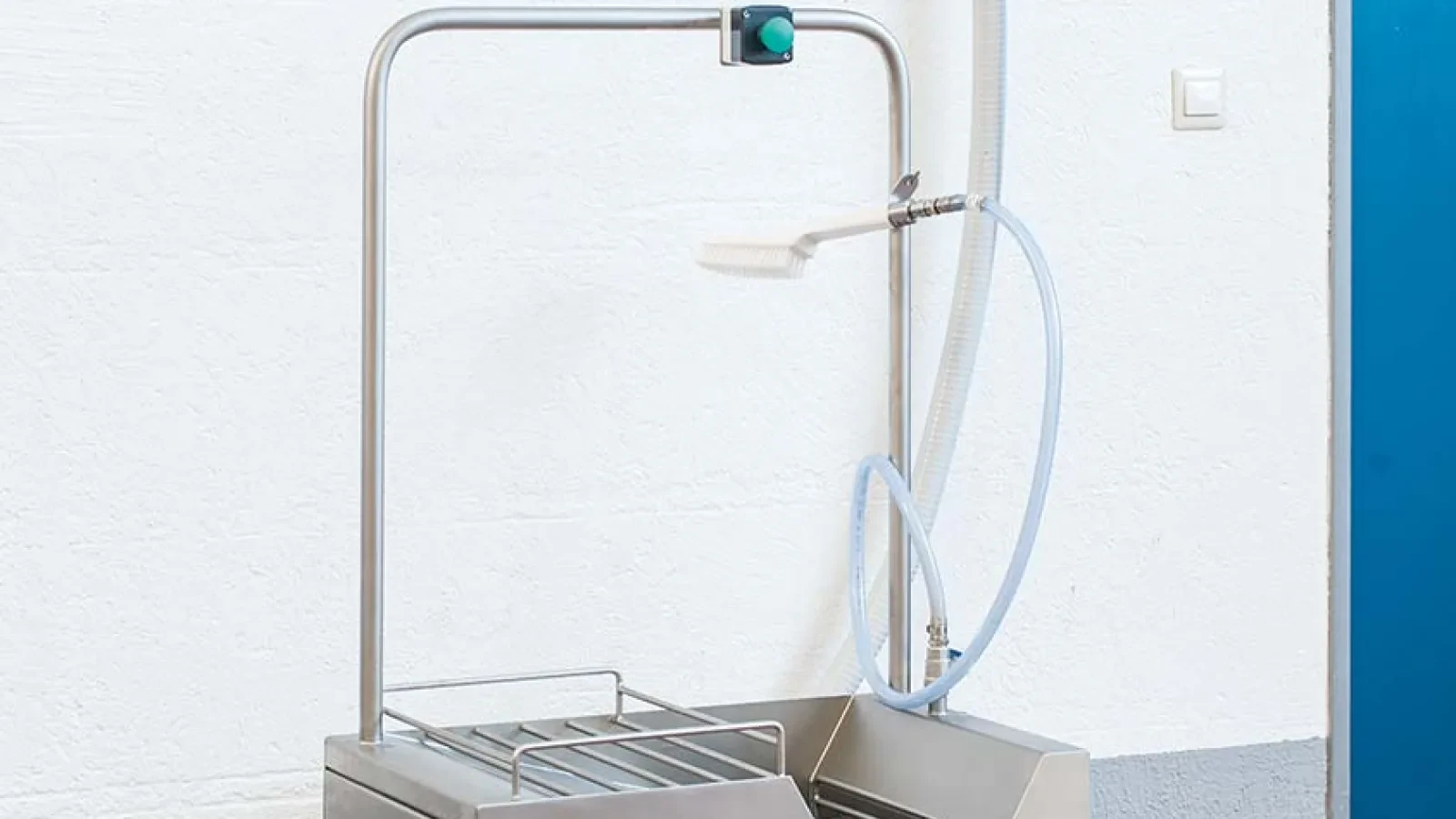
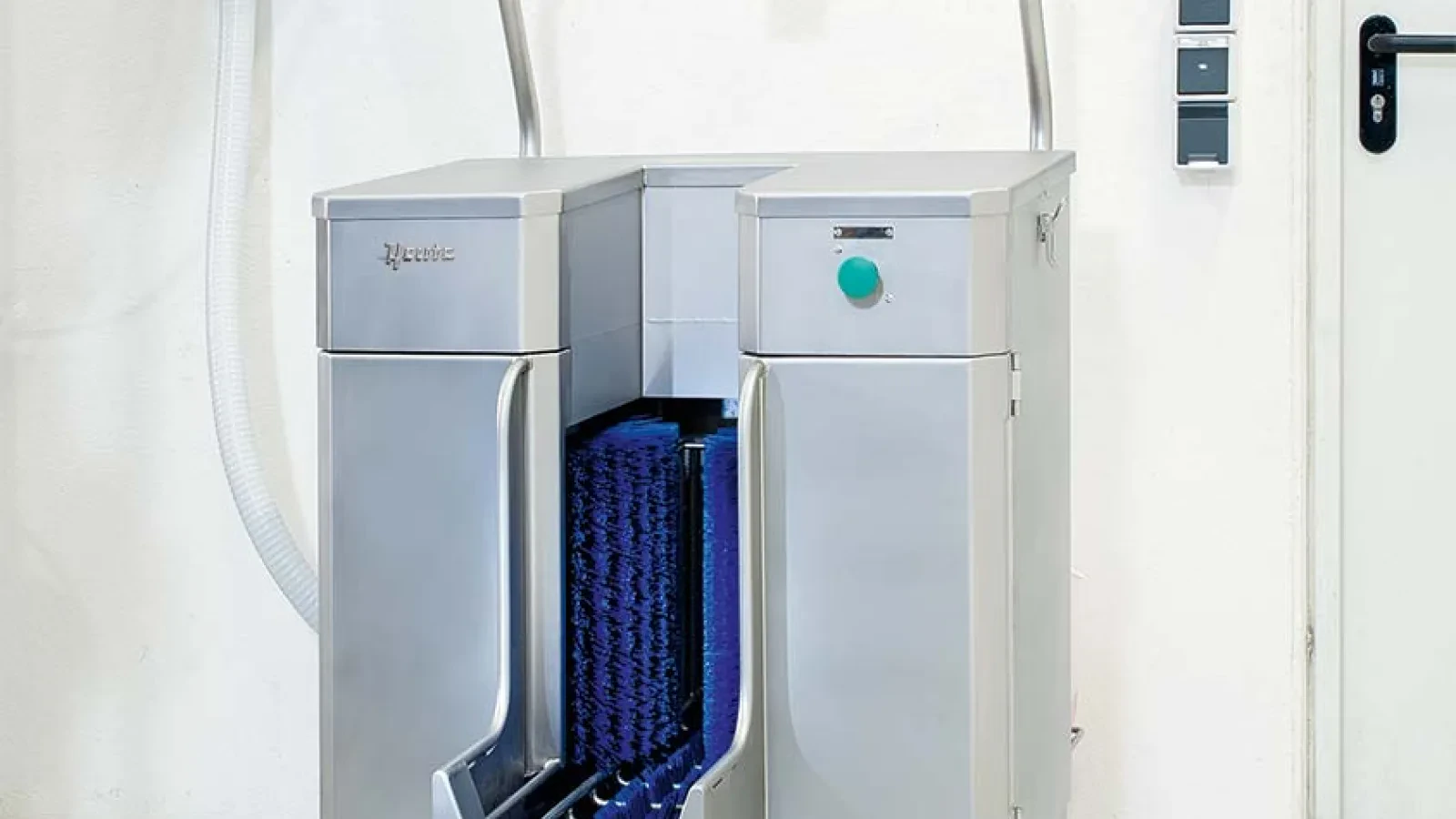
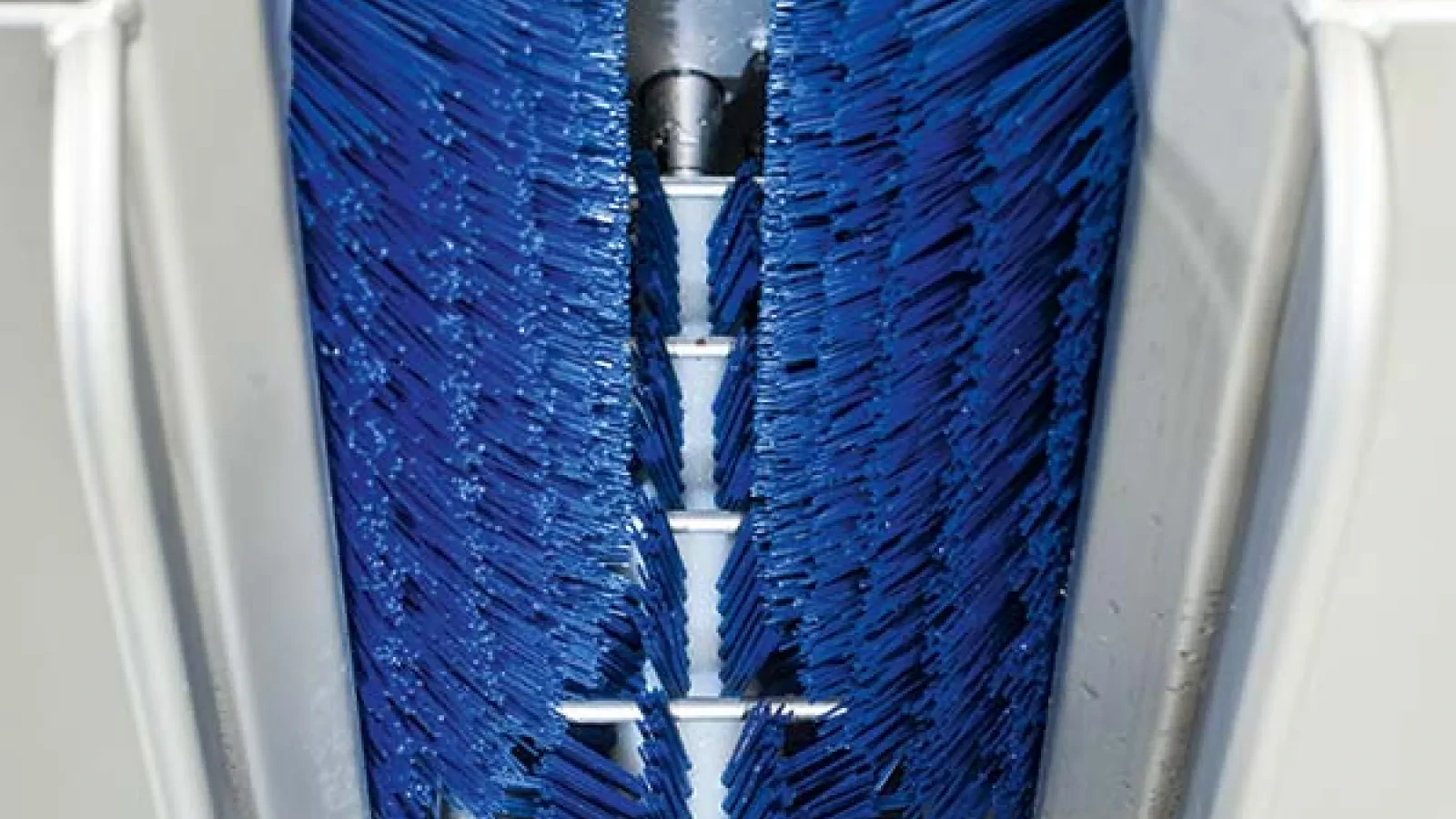
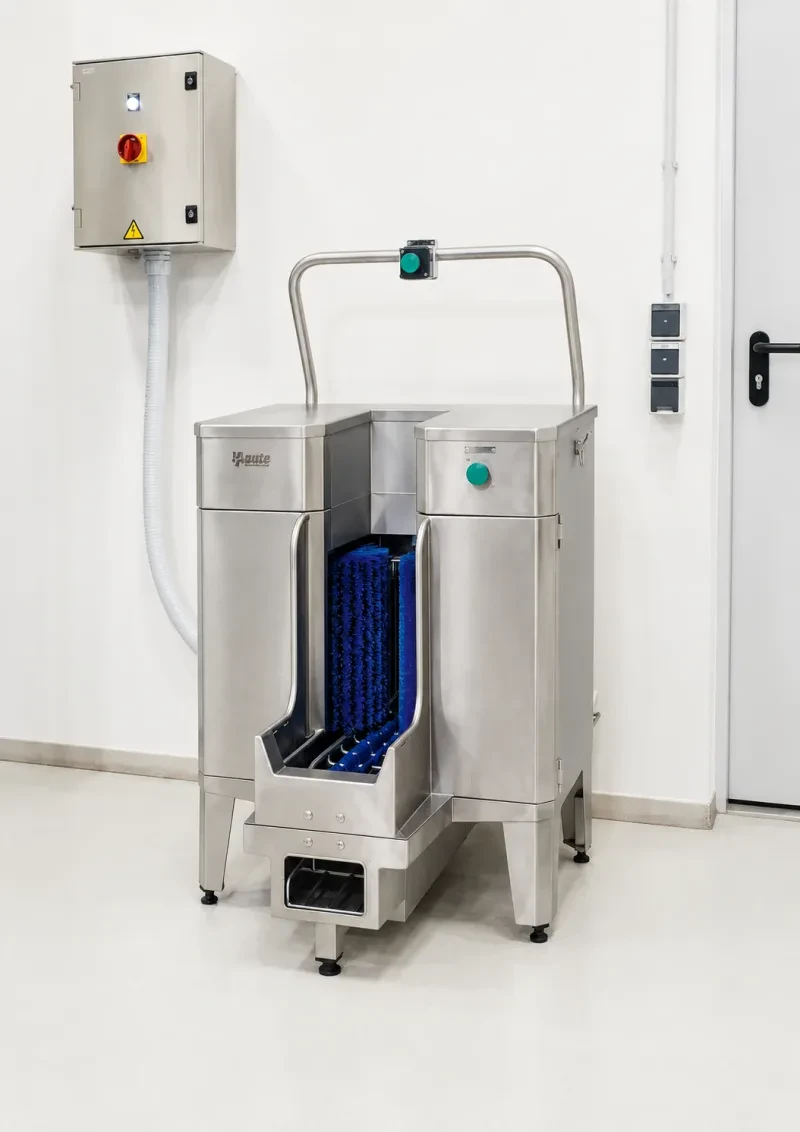
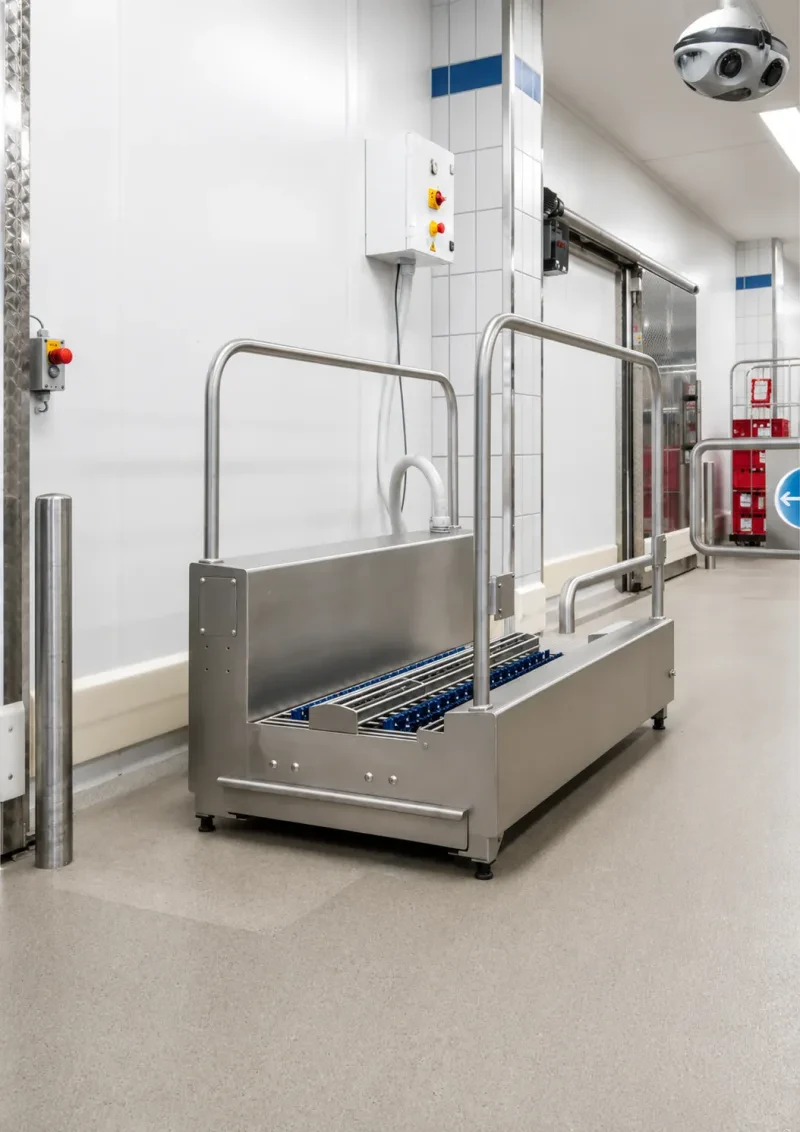
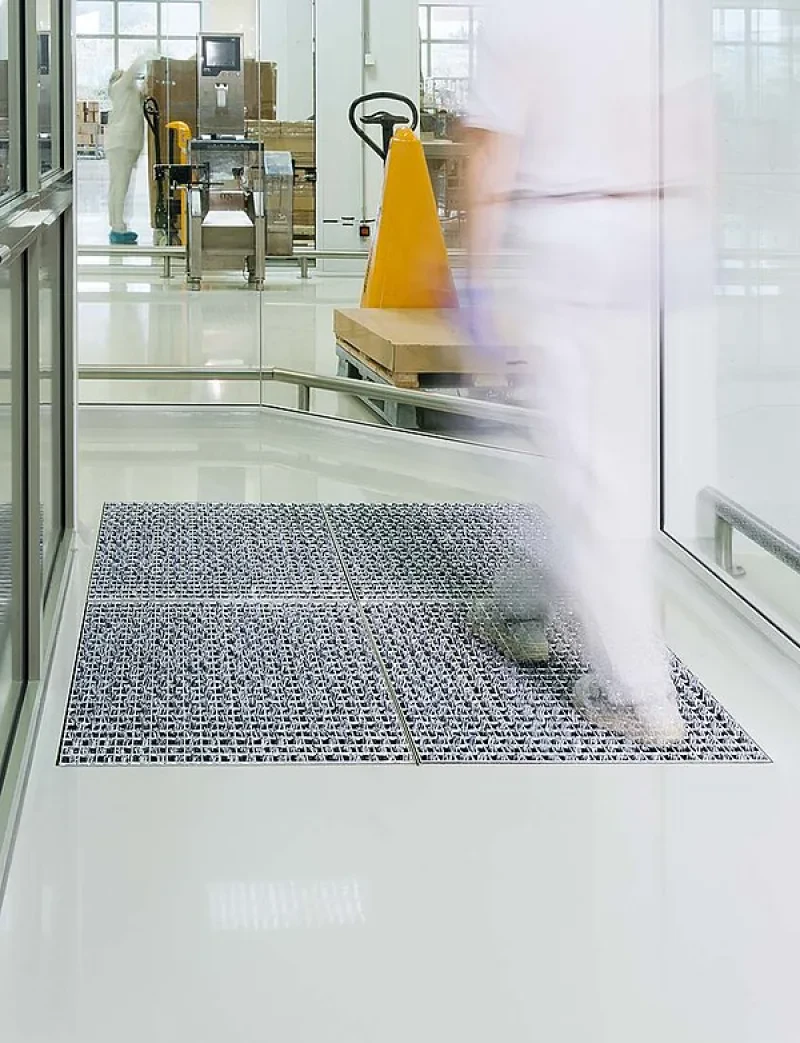
The gallery shows the difference between sole cleaning, boot cleaning, full footwear cleaning and sluices where hand disinfection or drying become part of the crossing.
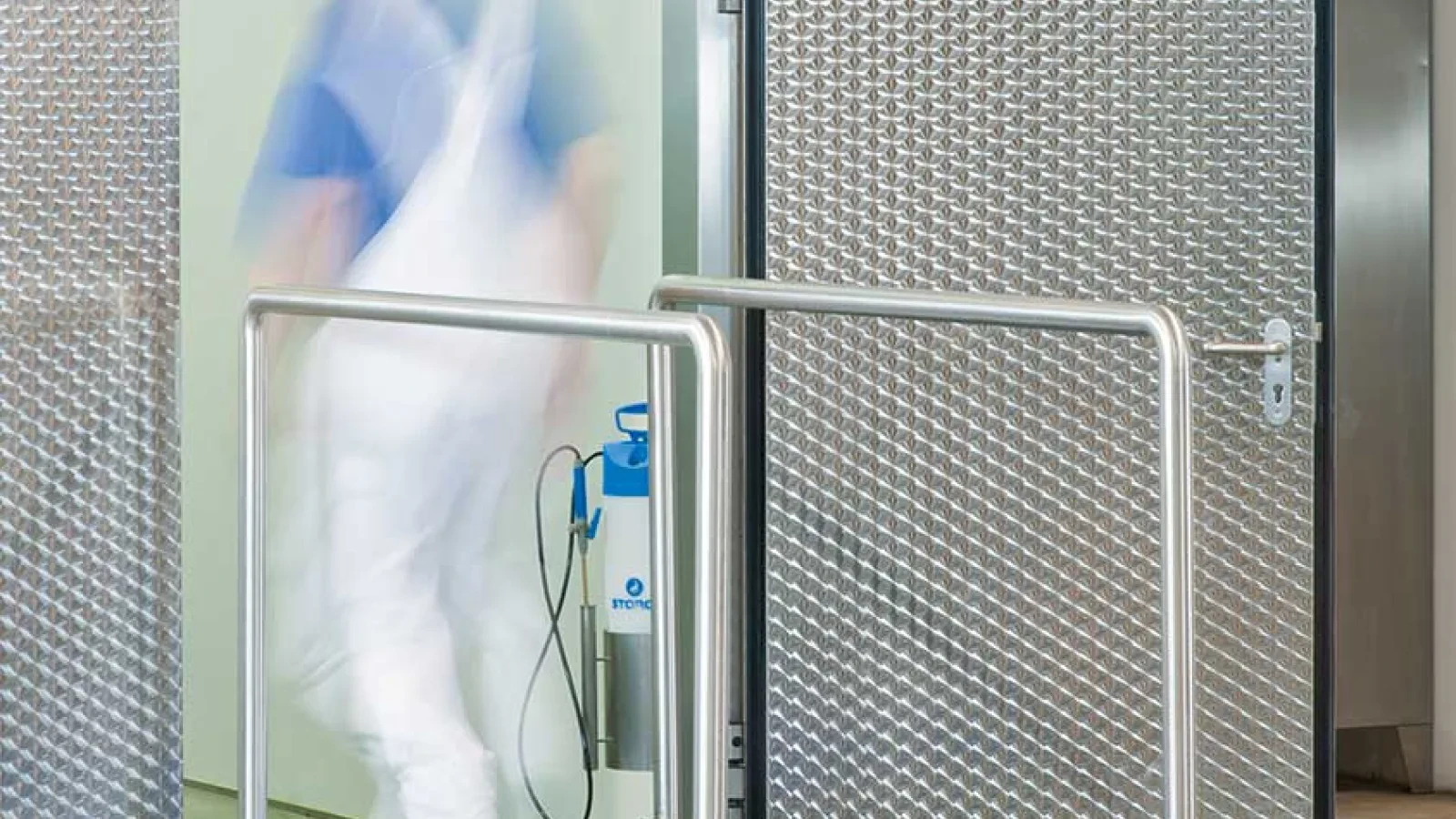








Do you have an entrance where soles, boots or hands need to be controlled before production?

HEUTE Sole Cleaners are equipment for footwear: soles, boots, upper shoe areas and, in some configurations, hand disinfection. ProfilGate is usually reviewed when the same route includes wheels, rollers, carts or mixed industrial traffic. A passive mat is a wiping surface without active mechanical cleaning.
If the entry is used only by personnel, HEUTE is usually the first direction. If the point is mixed, we compare the mechanism before quotation.
Dry cleaning targets dust, particles and physical dirt without liquid in the equipment. Wet cleaning adds cleaning or disinfectant liquid and needs a clearer routine: level, refill, drainage, concentration and trough cleaning.
Selection should connect to the operator procedure, not only to the model name.
A sluice with hand disinfection and access control fits when the entrance needs to create repeatable behaviour, not only offer optional equipment. If personnel can pass without cleaning or disinfection, control becomes hard to maintain.
StepGate is the direction for stainless-steel crossings and mechanical sole cleaning, including wet cleaning and drying variants. Solamat is more compact and fits dry cleaning of soles or footwear. Neptun covers more hygiene-oriented applications, boots, wet cleaning and combinations with hands or access control.
Photos, access width, footwear type and liquid requirement quickly clarify the right family.
A full technical file is not needed to start. A few concrete details about the entrance and personnel flow are enough for the first direction.
The equipment should be treated as part of the area routine, not as an installed object that is forgotten. Brushes, liquid, trough, grates, drying and cleaning access decide how well the point stays in operation.
When these are clear, HEUTE can support a more predictable and easier-to-control entrance.