Outdoor-to-indoor entrances
Reduce grit, stones, water and debris from outdoor areas before they spread onto forklift and pallet-truck routes.

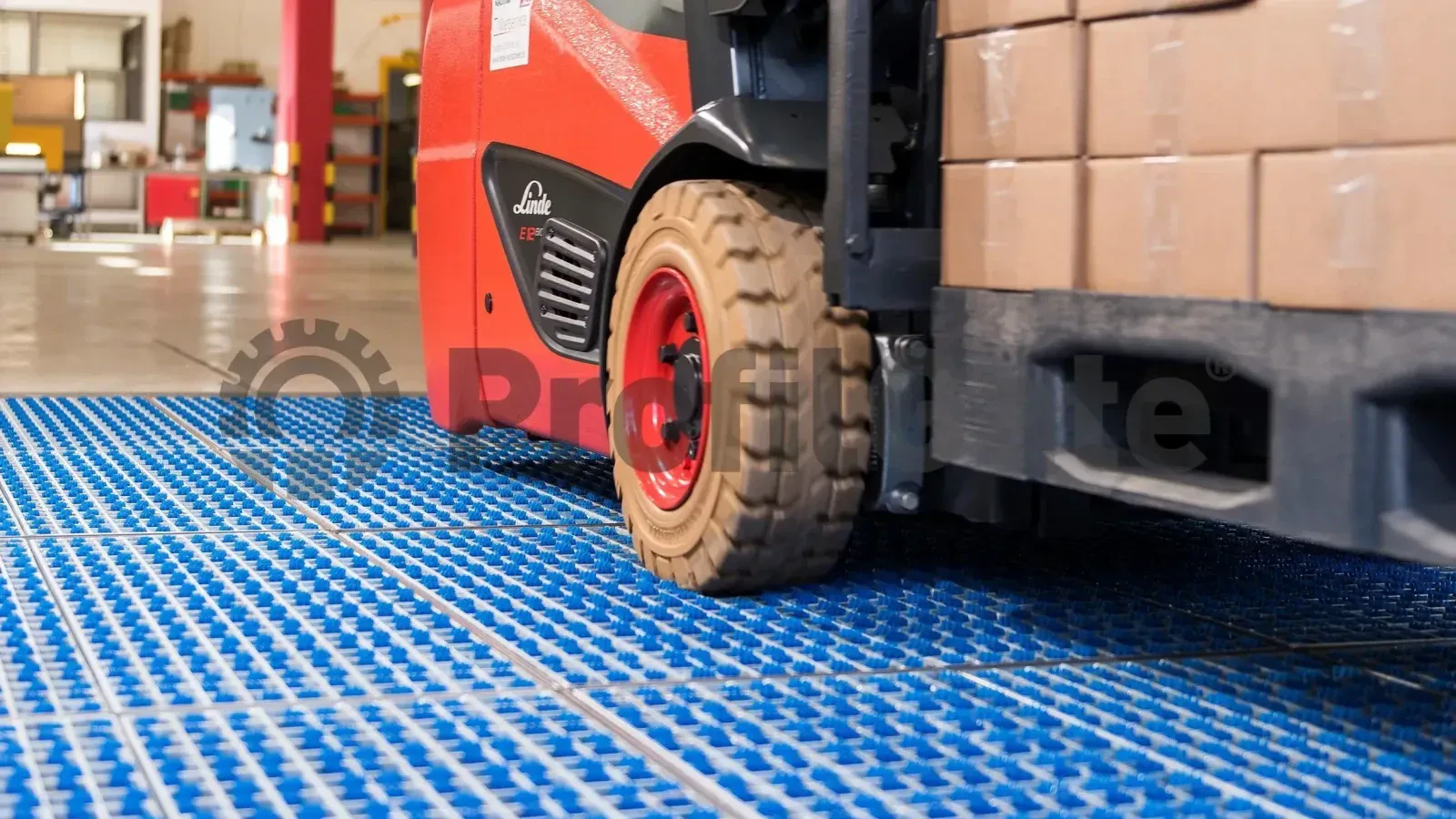
At entrances, docks, storage areas and transitions into production, dirt attaches to wheels, rollers, castors and soles. It then appears deeper inside the facility: on floors, on forklift routes, near packaging or in areas where cleanliness needs to stay controlled.

ProfilGate is the original patented system for active cleaning of wheels, rollers and footwear, developed in Germany by HEUTE Maschinenfabrik GmbH & Co. KG, a company based in Solingen. SEVENSEAS provides local support for route definition, installation context, traffic data, service and documentation.
ProfilGate is an active mechanical cleaning system for wheels, rollers and footwear, developed in Germany by HEUTE Maschinenfabrik. Instead of stopping every vehicle or only cleaning after dirt has spread, the crossing point becomes an active part of the route.
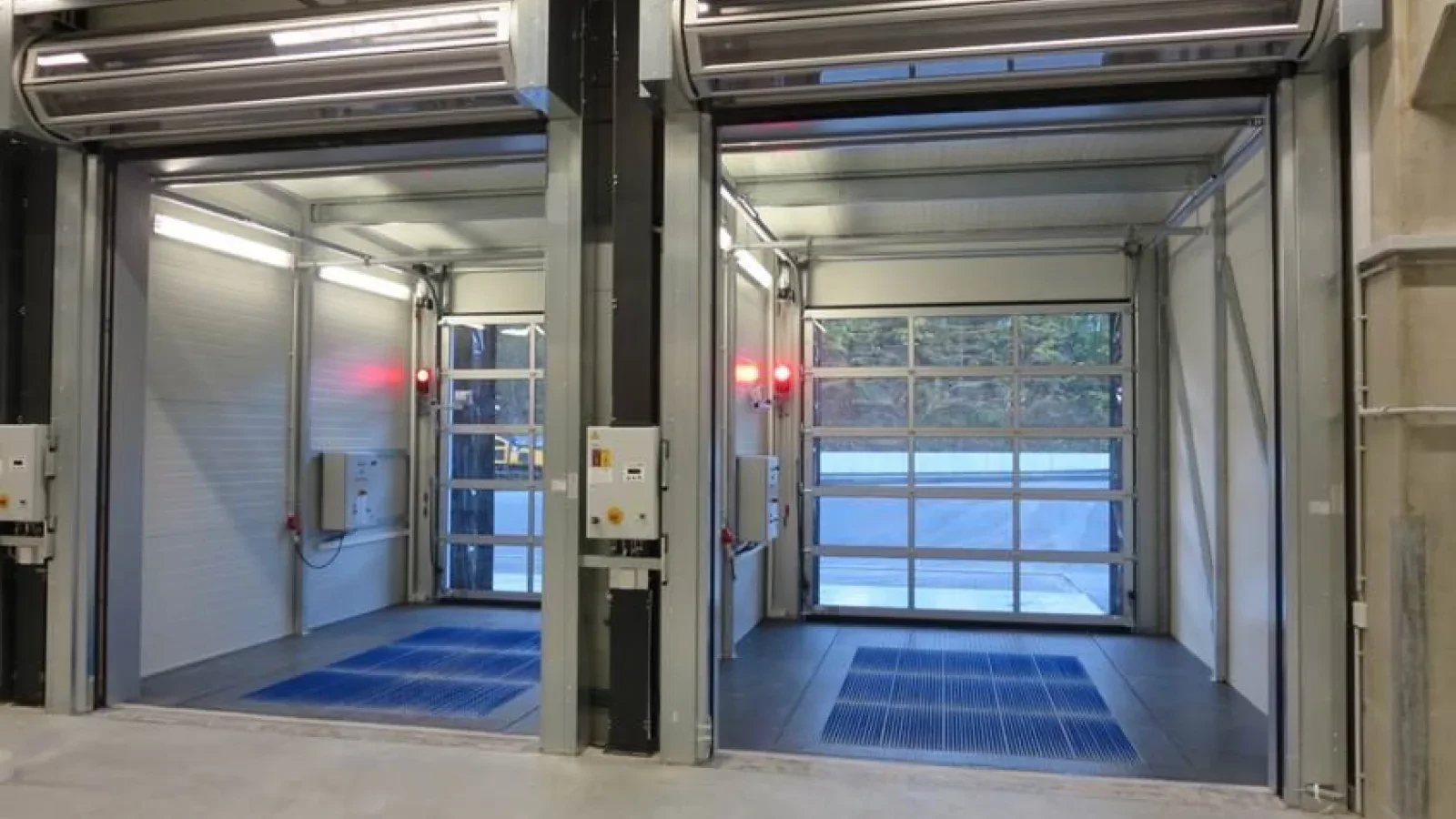
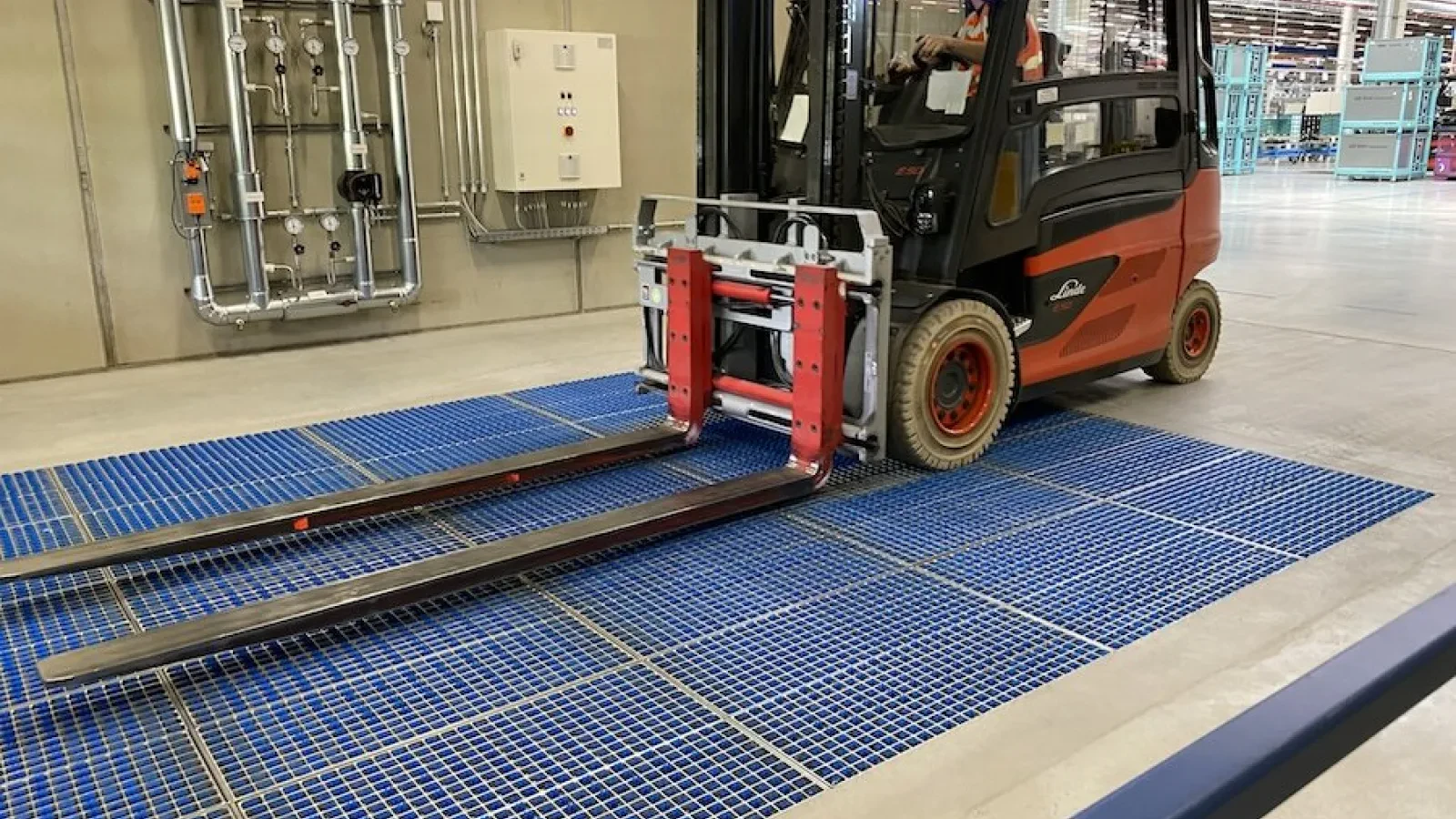
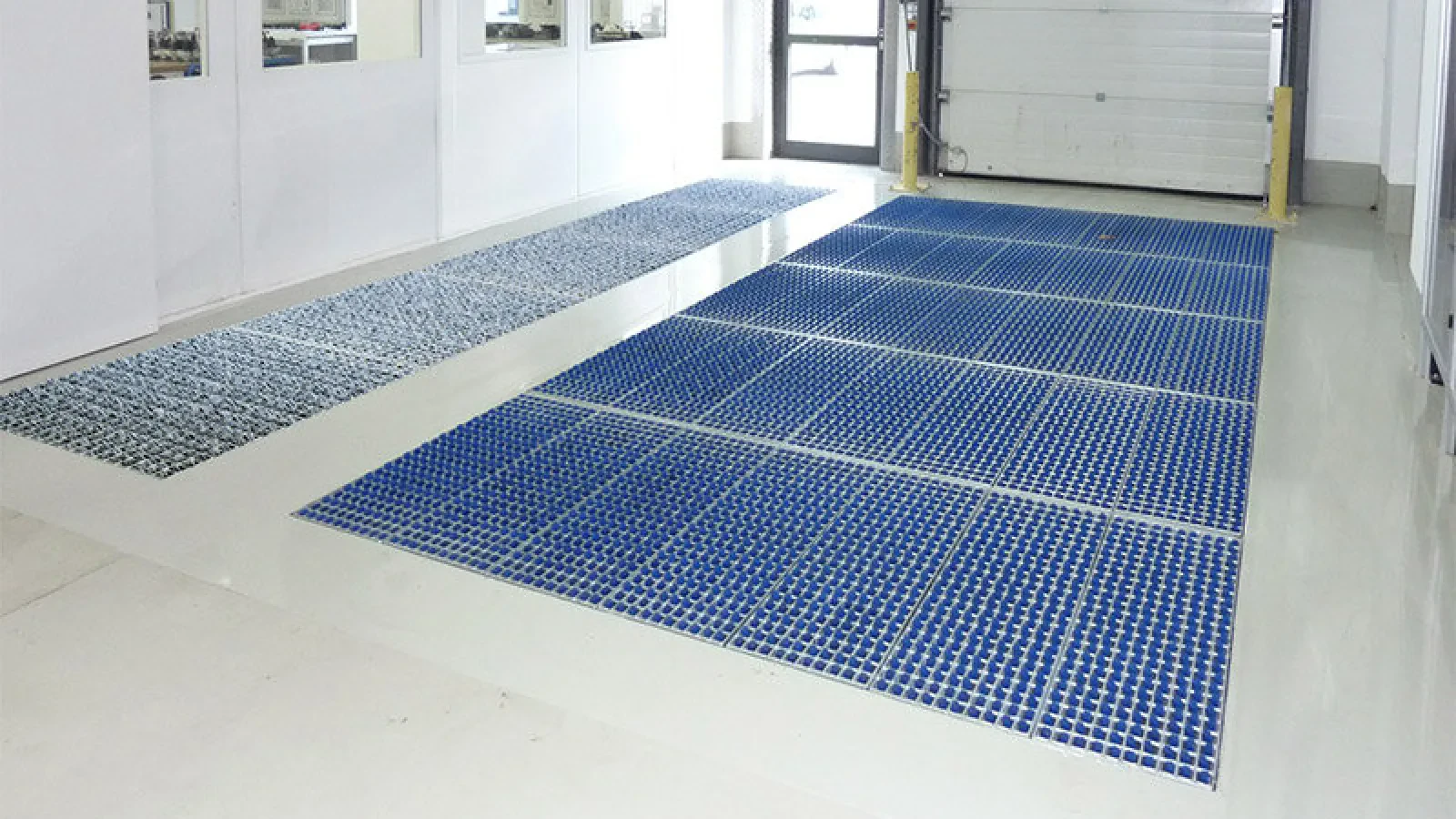
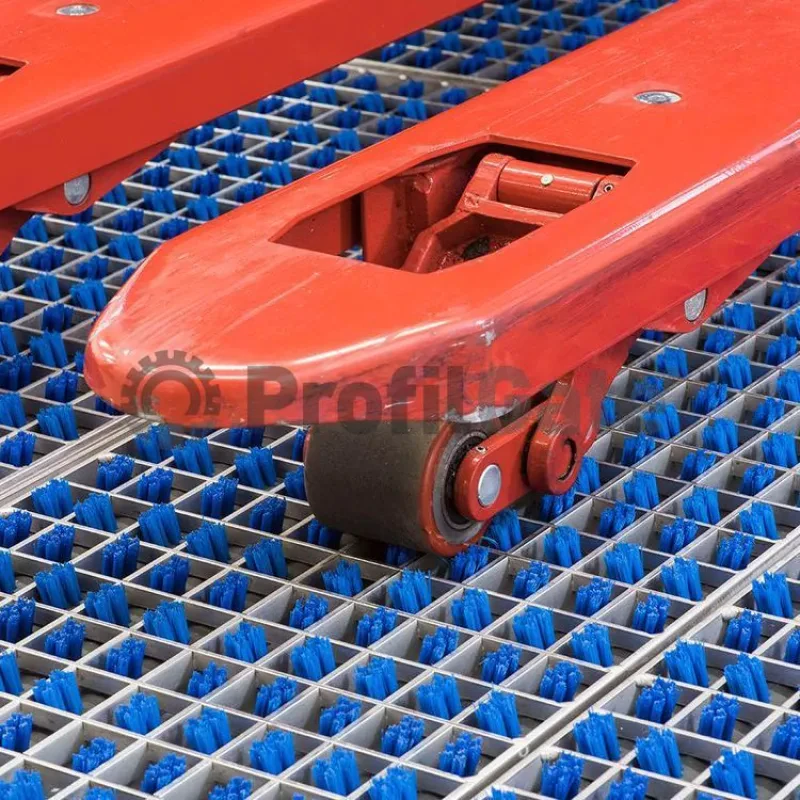
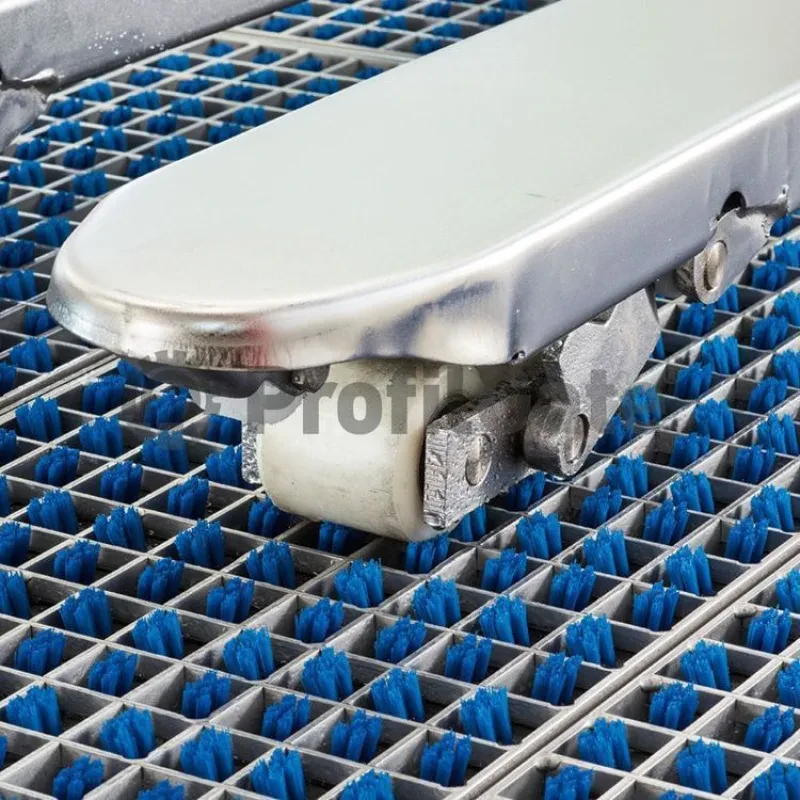
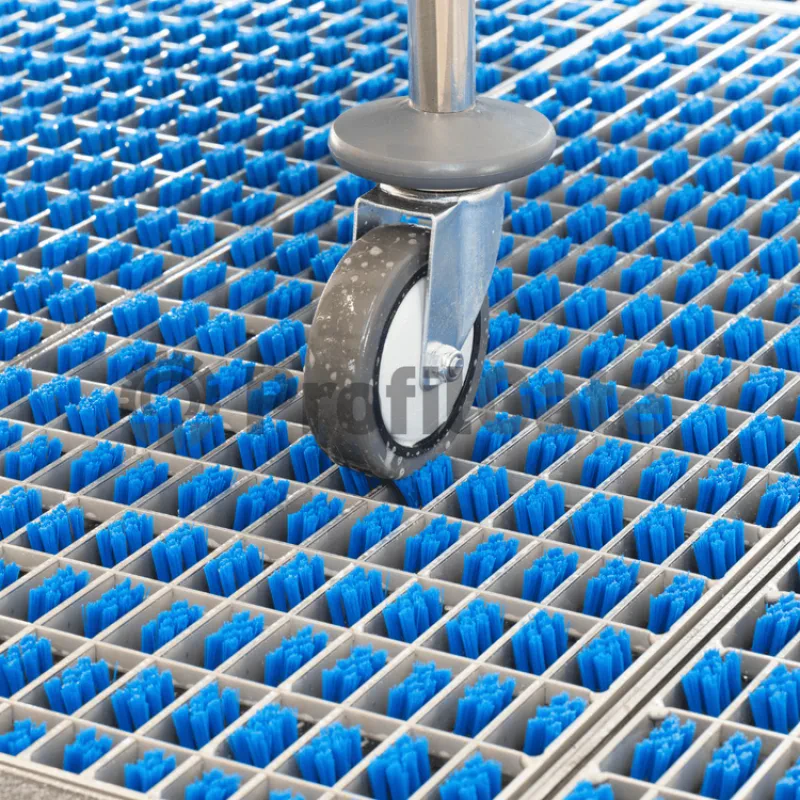
The system can be installed in the floor, on a ramp or in a prepared area, so forklifts, pallet trucks, carts, AGVs and personnel cross it naturally. When the position is right, cleaning happens repeatedly without a separate stop for every movement.
A strong ProfilGate configuration comes from the real flow: what crosses the field, which dirt should be reduced, how much space is available and how easily the system can be cleaned. From there, the ProfilGate variant, field length, installation and service routine can be selected.
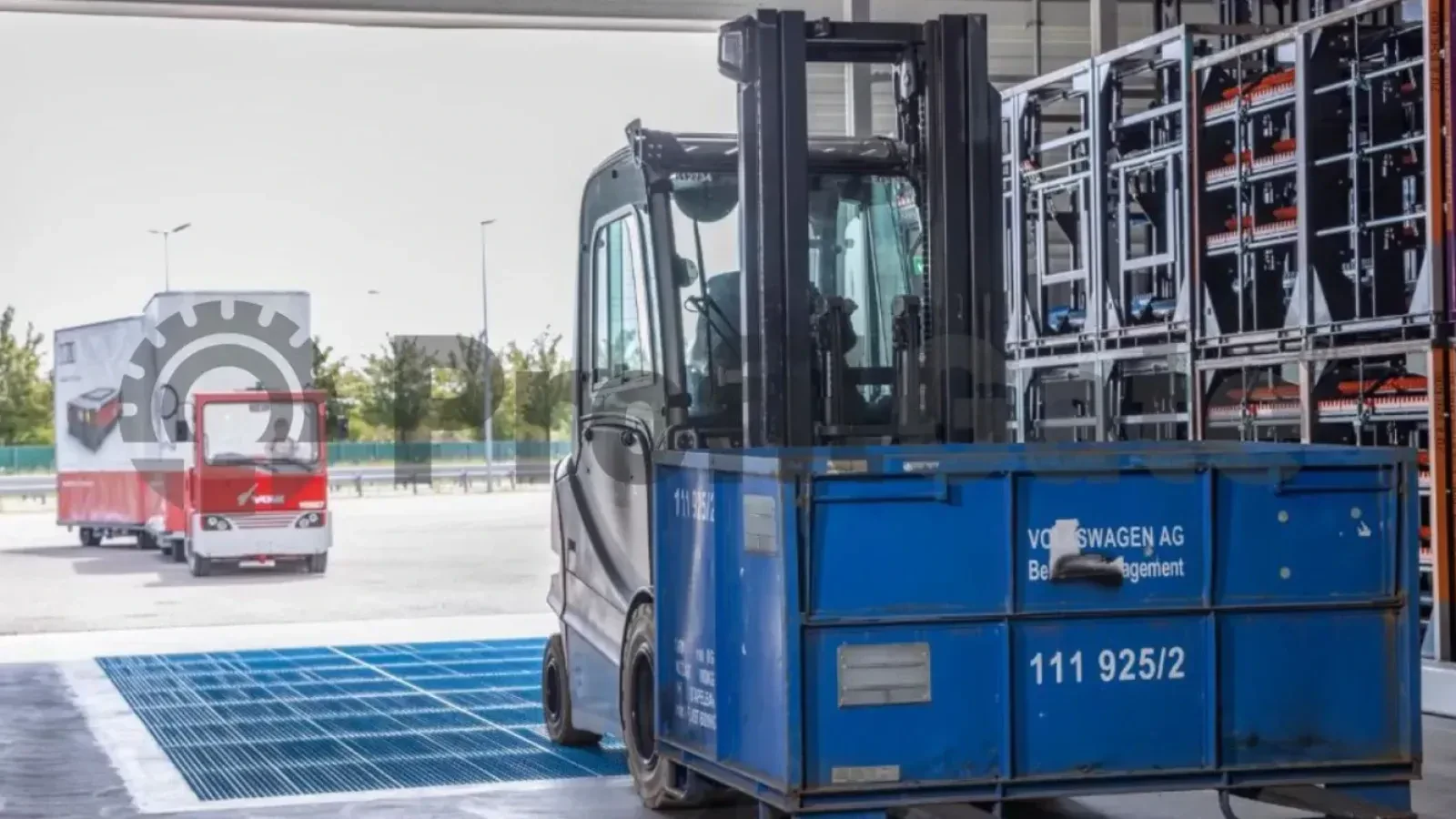
The strongest applications sit on points traffic already crosses: outdoors to indoors, dock to packaging, storage to production, technical area to controlled area or personnel access to a line.
The field should be hard to bypass and easy to cross straight. If vehicles turn on the grates, brake hard or have too little contact length, the layout should be adjusted before quotation.
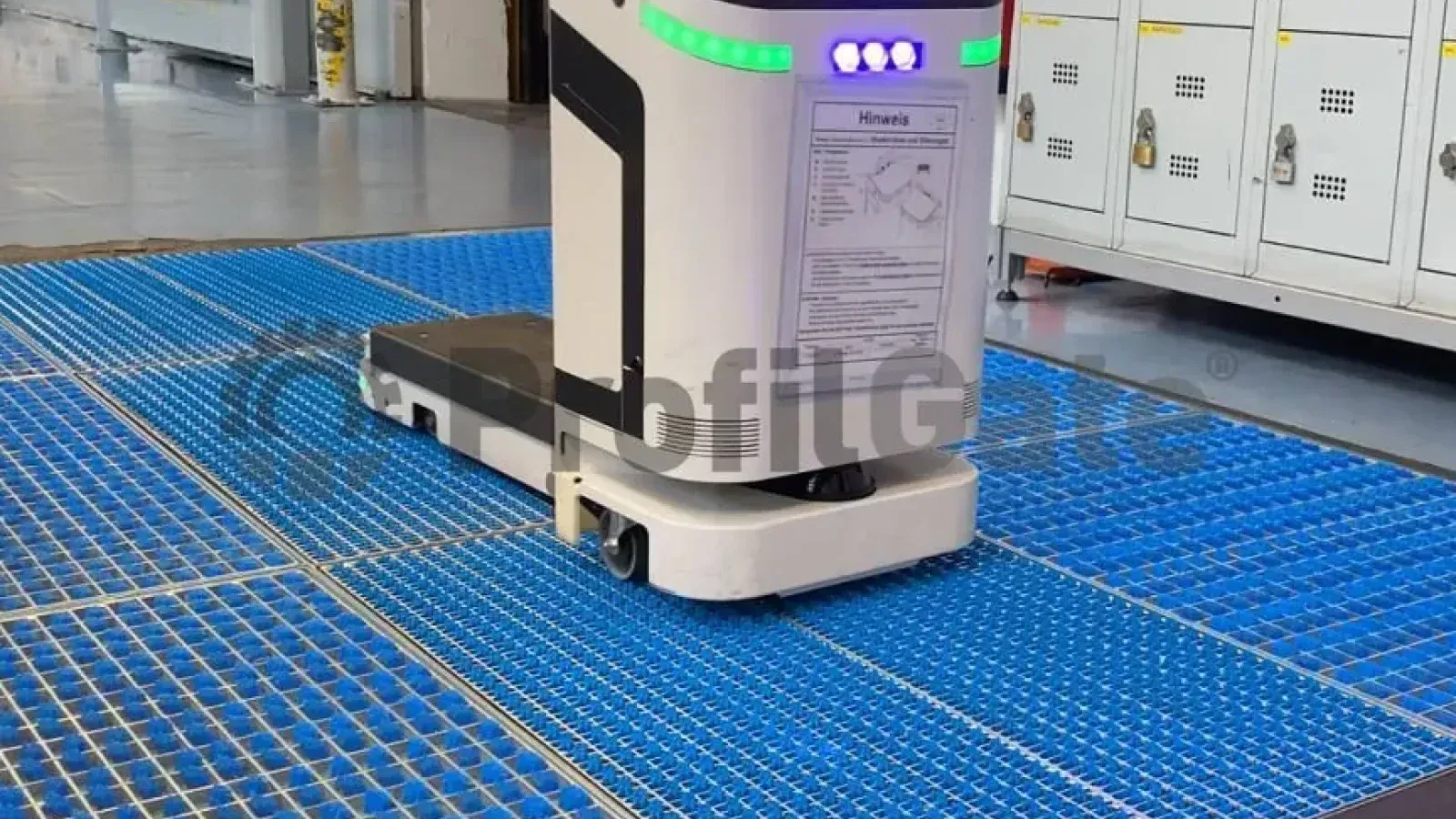
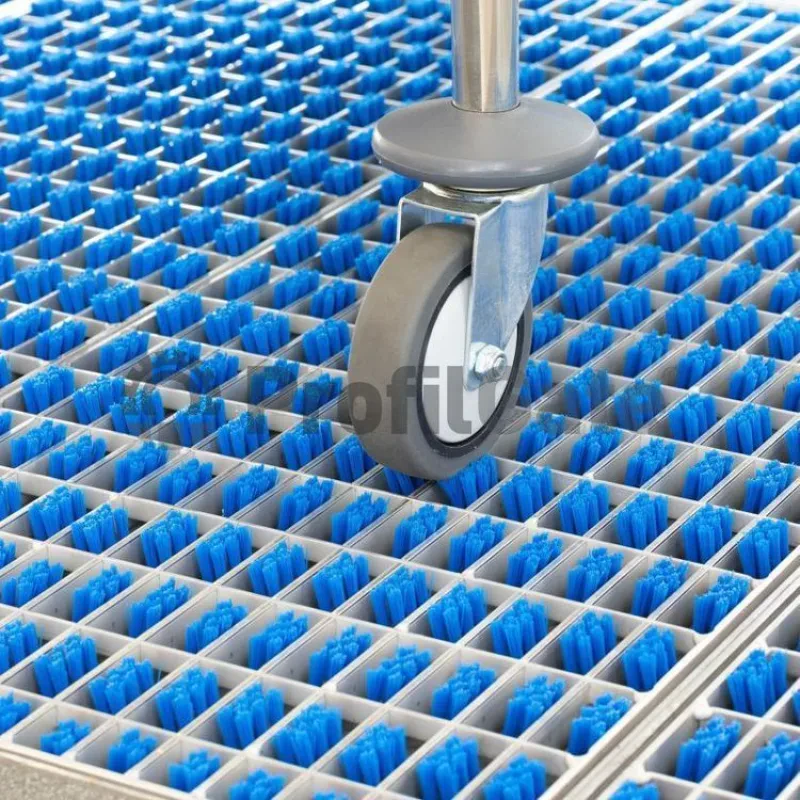
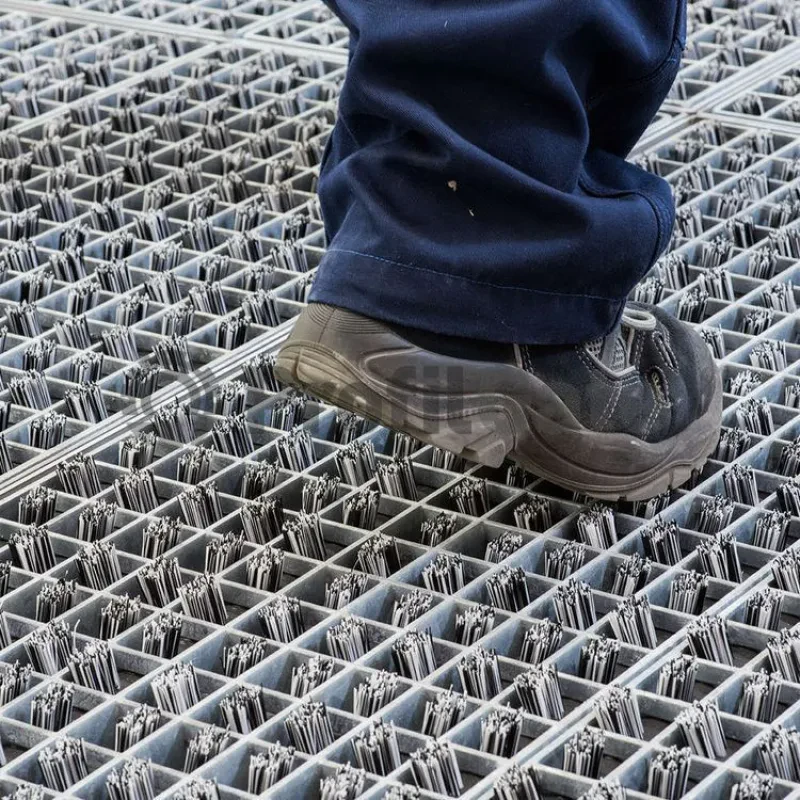
ProfilGate works through repeated mechanical contact. A forklift, pallet truck, cart, small roller, shoe sole and AGV all create different cleaning requirements.
Wheel width and diameter, load, speed, direction, daily crossings and straight travel all matter. These details point to heavy traffic, soles, narrow wheels, stainless steel or automated routes.
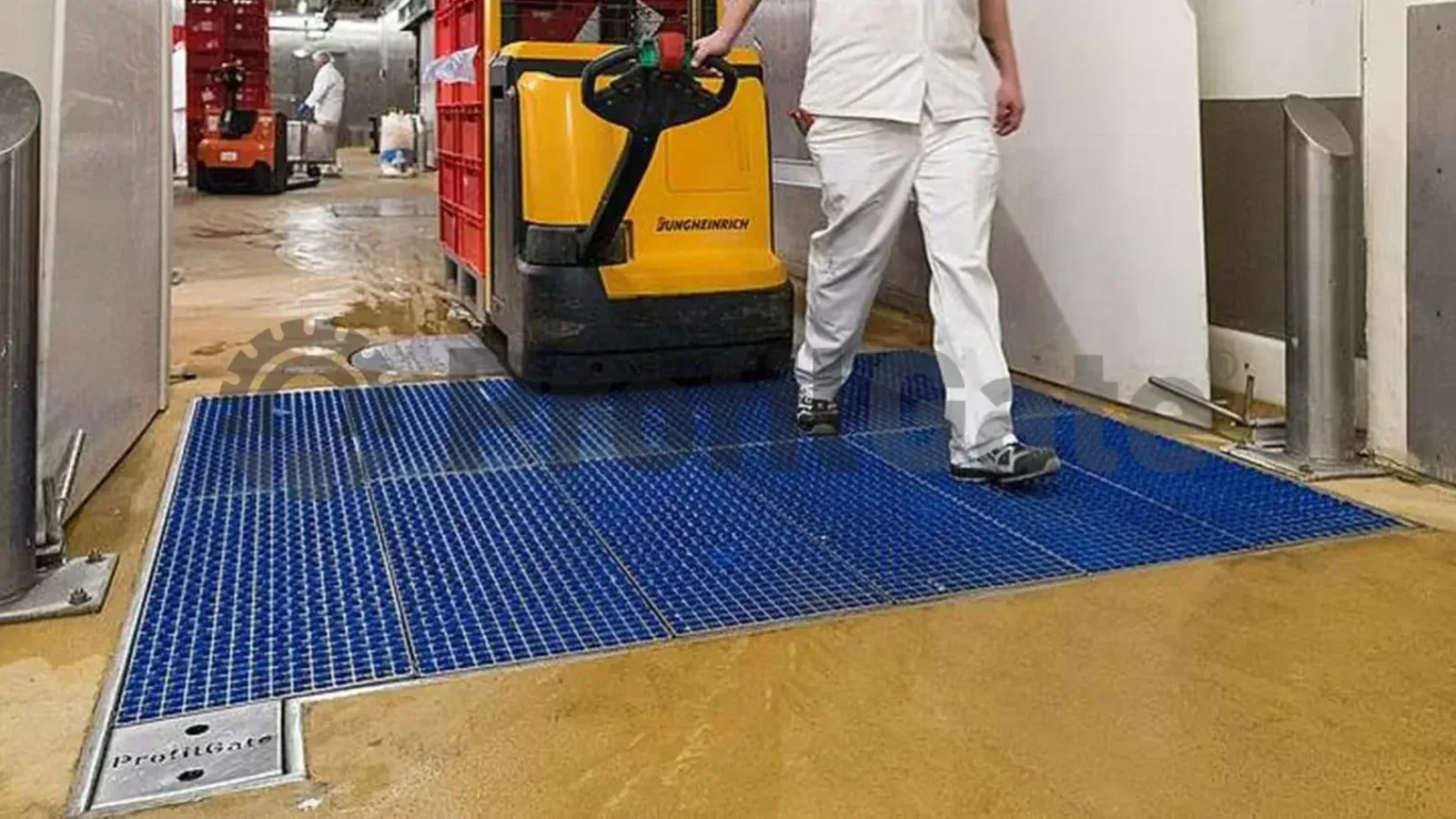
Dry mechanical cleaning is used for dust, grit, debris, particles and physical dirt removed by brushes without liquid in the system. This covers most industrial routes with wheels, rollers and soles.
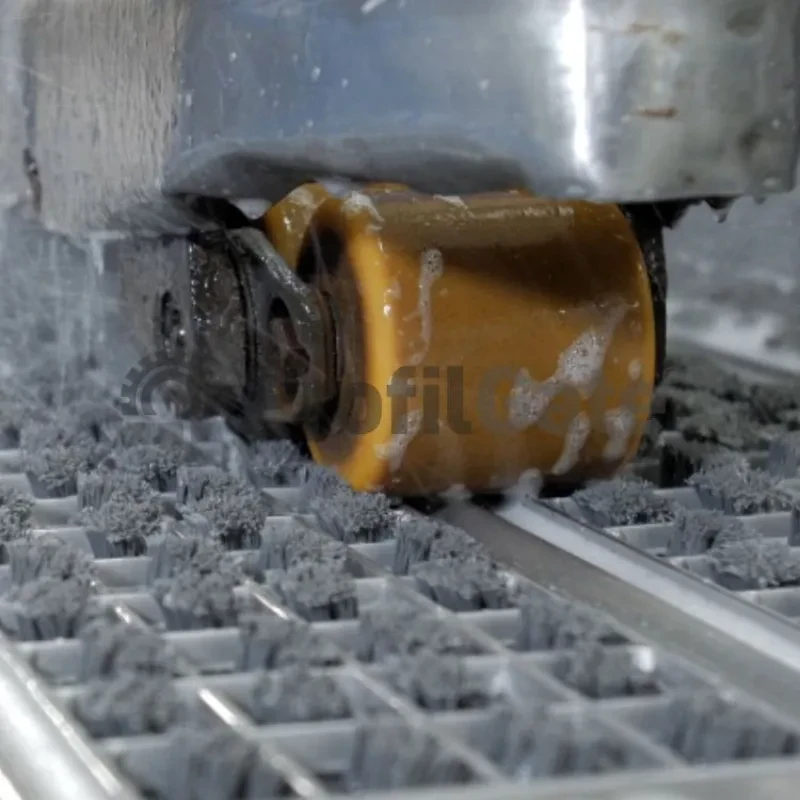
Wet cleaning or liquid-disinfectant hygiene is used when the process requires liquid, dosing, drainage and controlled refilling. DryZone is a separate direction for wheels that remain wet after a wash area or wet entrance.
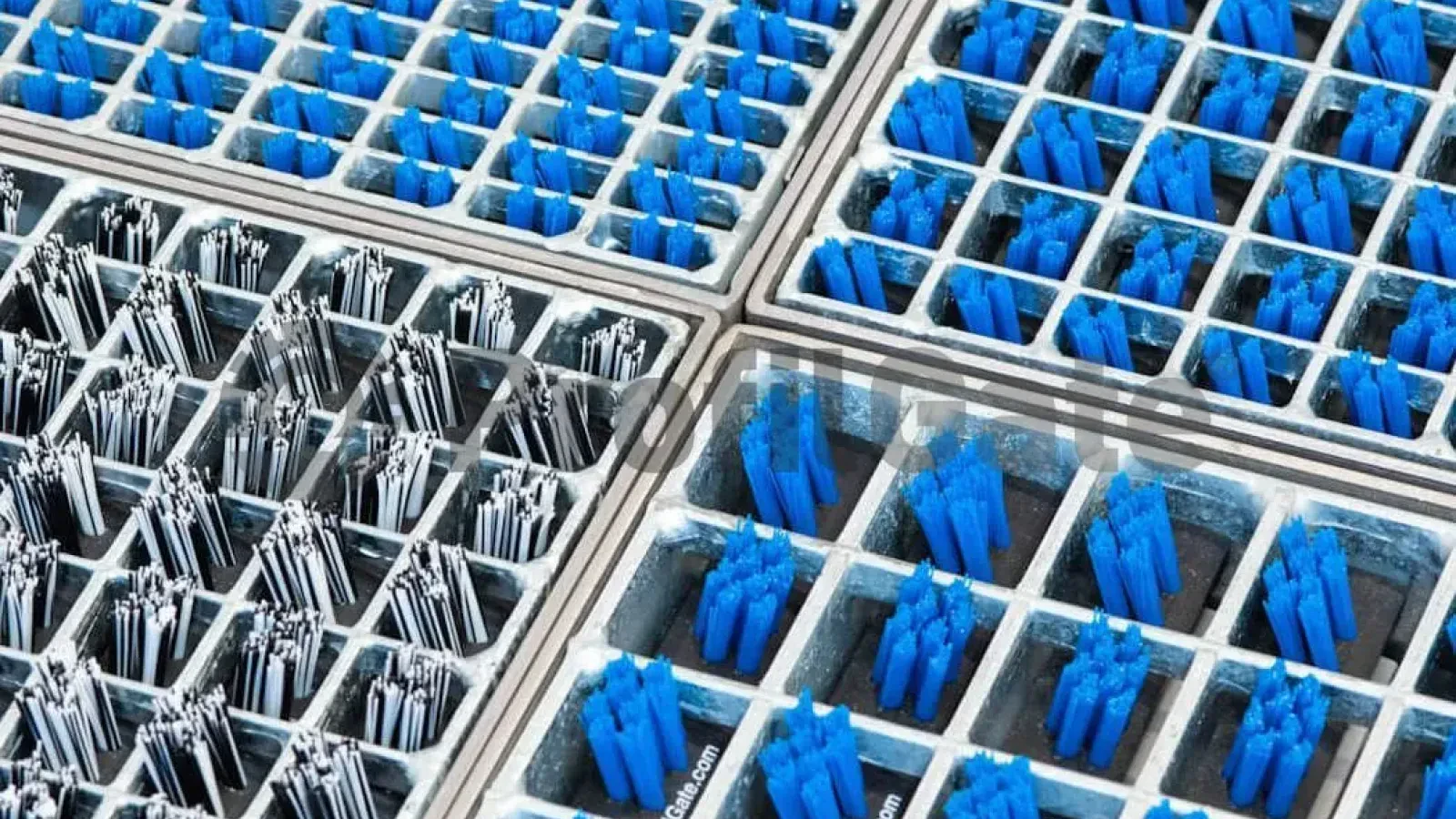
A ProfilGate point must handle the real rhythm of the facility and remain easy to maintain. Floor, ramp or tray preparation, grate access, segment removal, rotation and brush replacement belong in the project stage.
Liquid applications also need ownership for level checks, refilling, drainage and system cleaning. A good quote describes real use, not only field length and width.














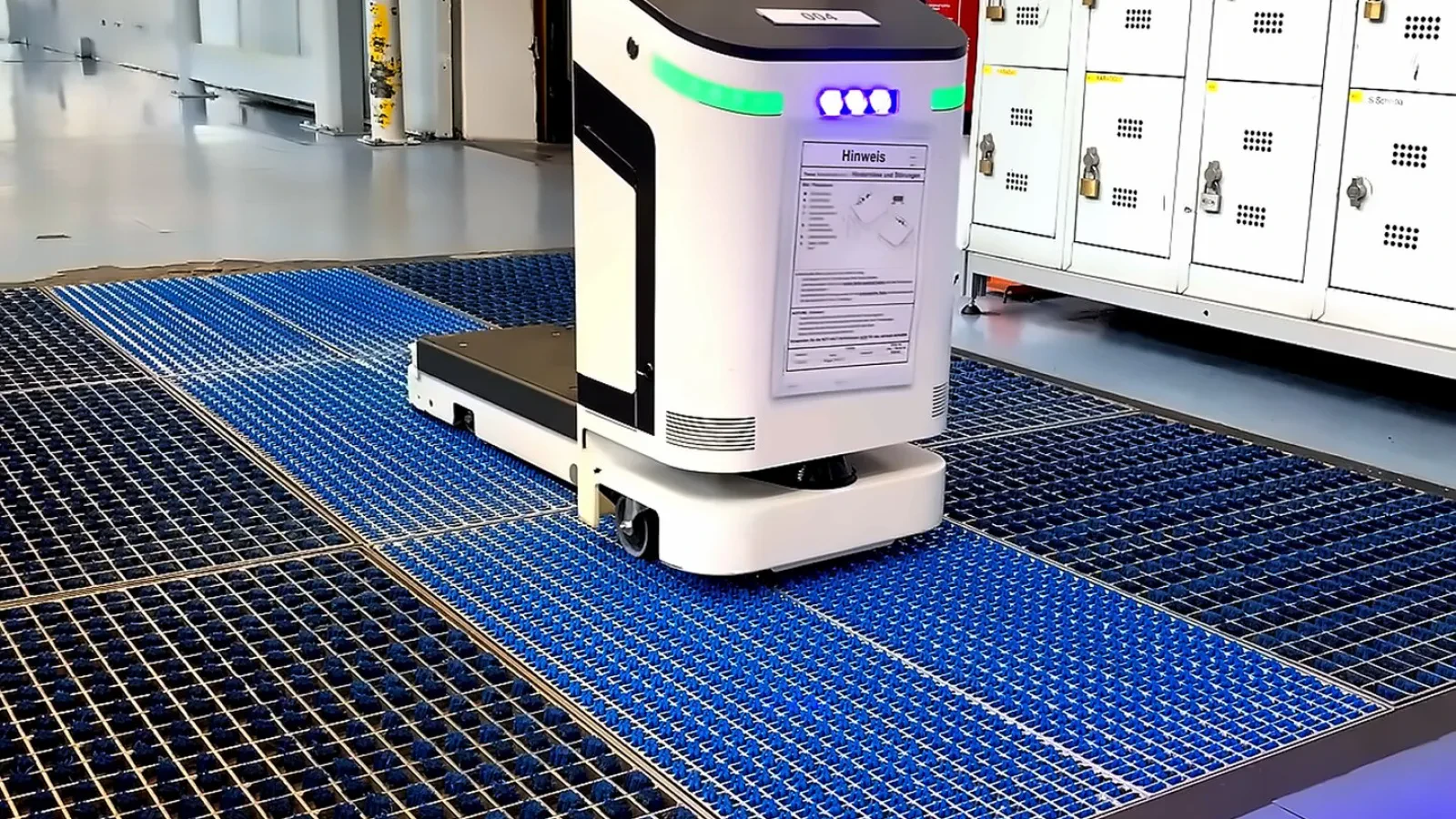
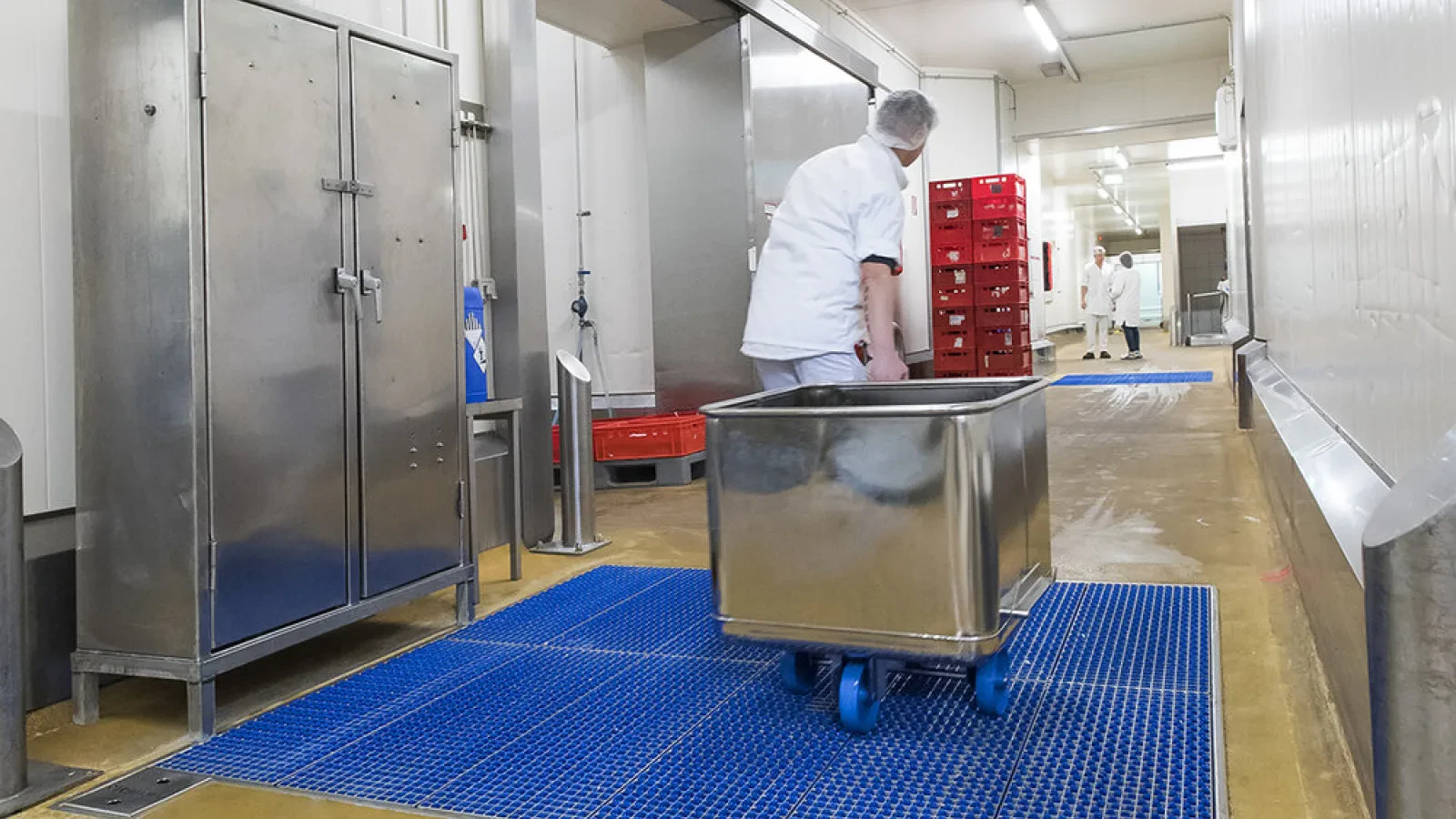
The same active-cleaning principle looks different across the facility: vehicle entrances, hygienic areas, pedestrian access, mixed routes and points that must remain easy to clean.
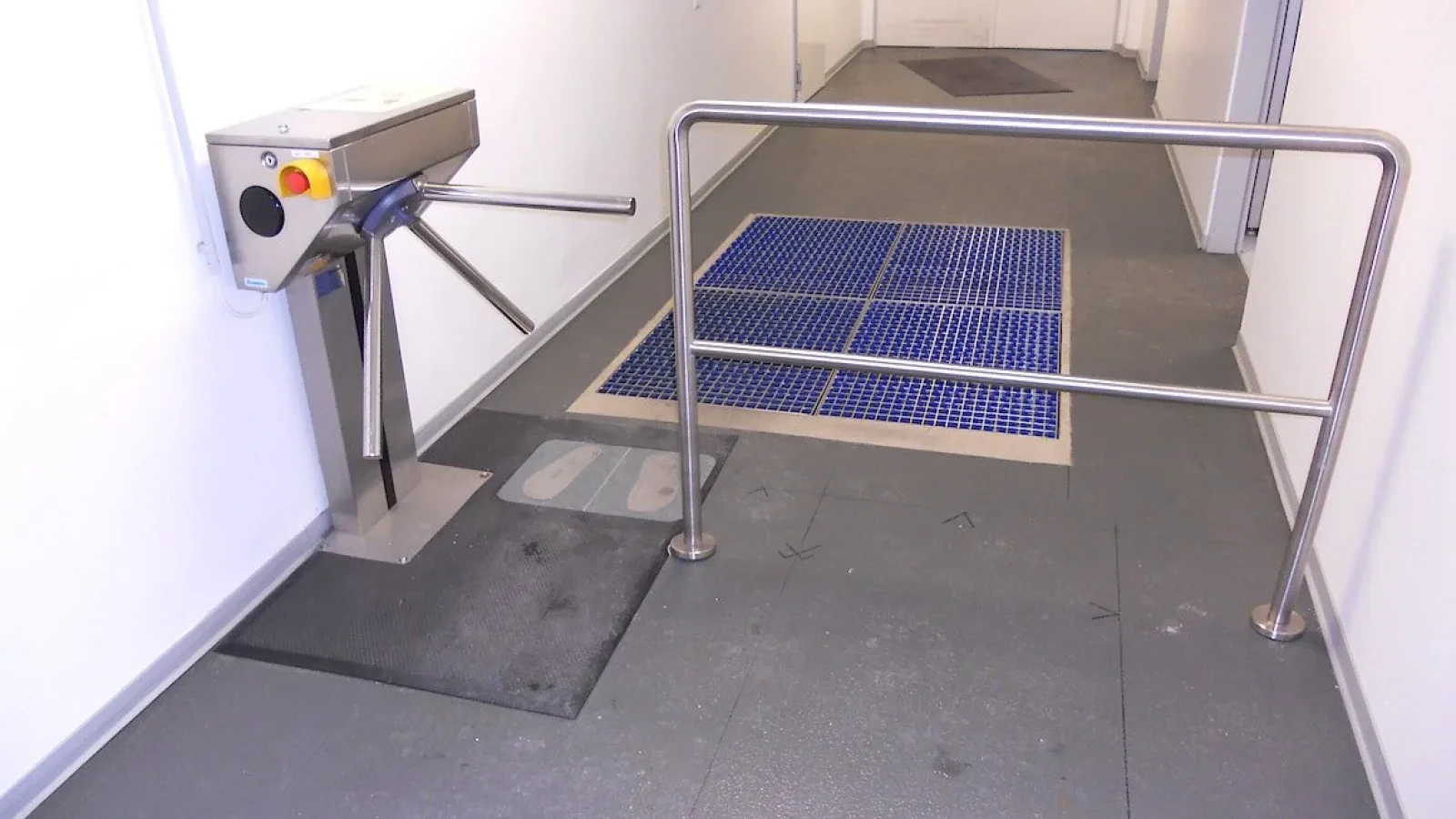
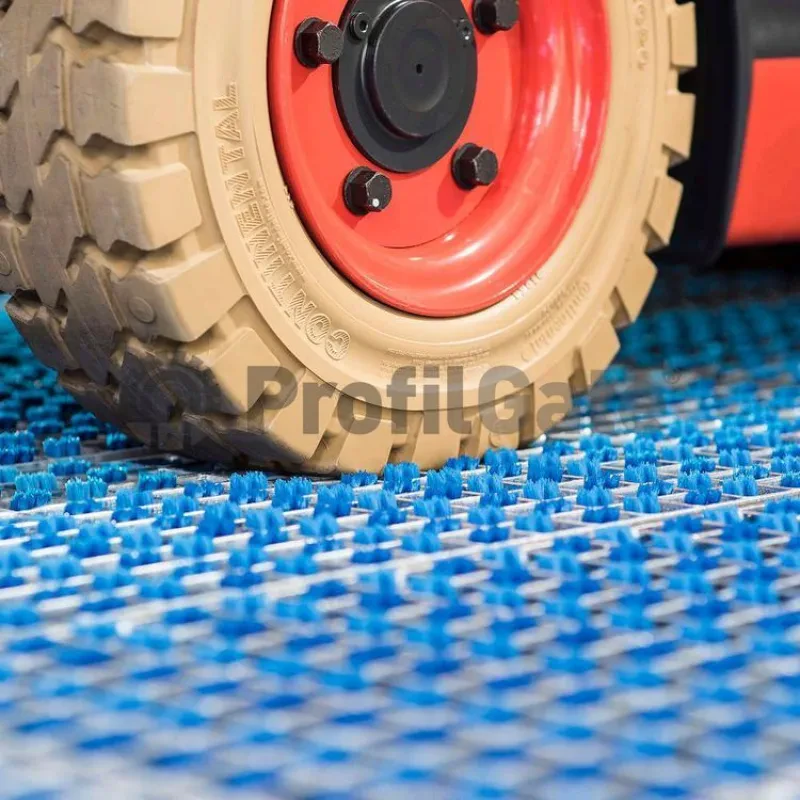
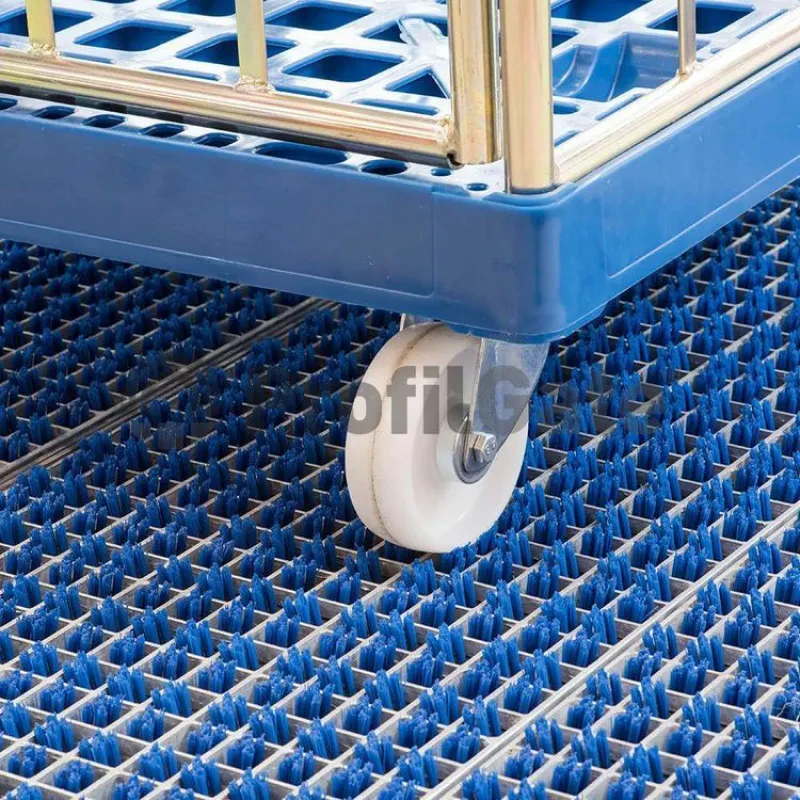
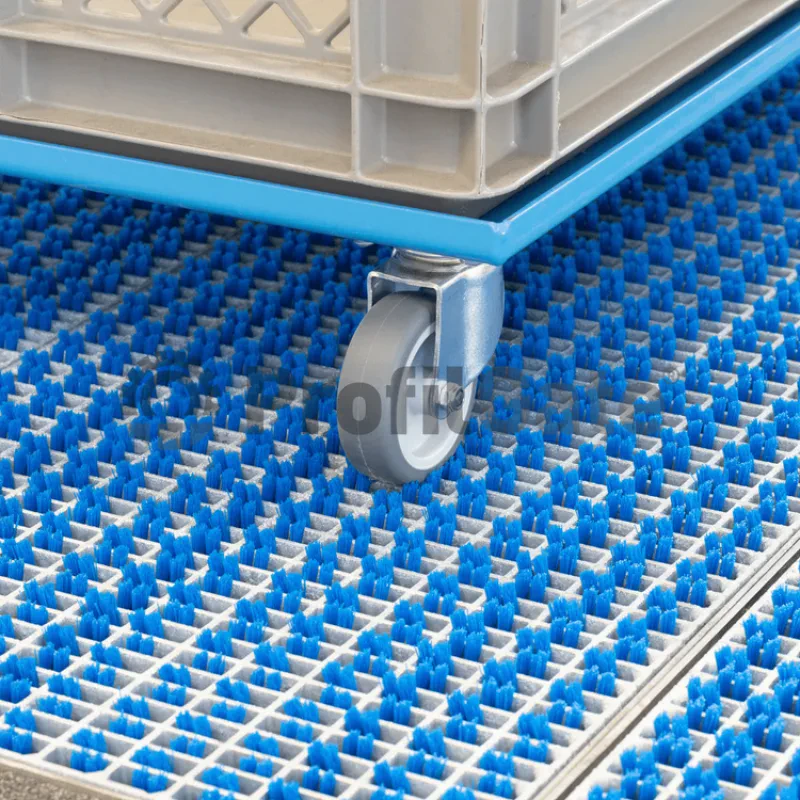
Do you have a crossing point where wheels, rollers or soles carry dirt towards a more sensitive area?

Signals usually appear after the crossing point: dust, grit, stones, water marks, debris on the floor, dirty wheels, repeated cleaning in the same place, visible floor wear or particles reaching production or packaging.
If traffic is carrying the dirt, another cleaning round at the end is not the whole answer. The full route matters: where dirt comes from, where it should not travel, which vehicles or people cross, how much space is available and whether the point can be crossed naturally.
Floor cleaning removes what has already reached the area. In flows with forklifts, pallet trucks, tuggers, AGVs or pedestrian traffic, dirt can be carried back immediately after cleaning.
ProfilGate moves the intervention closer to the source: wheels, rollers and soles are mechanically cleaned while traffic passes. Cleaning is still needed, but the right point can reduce how much dirt travels further.
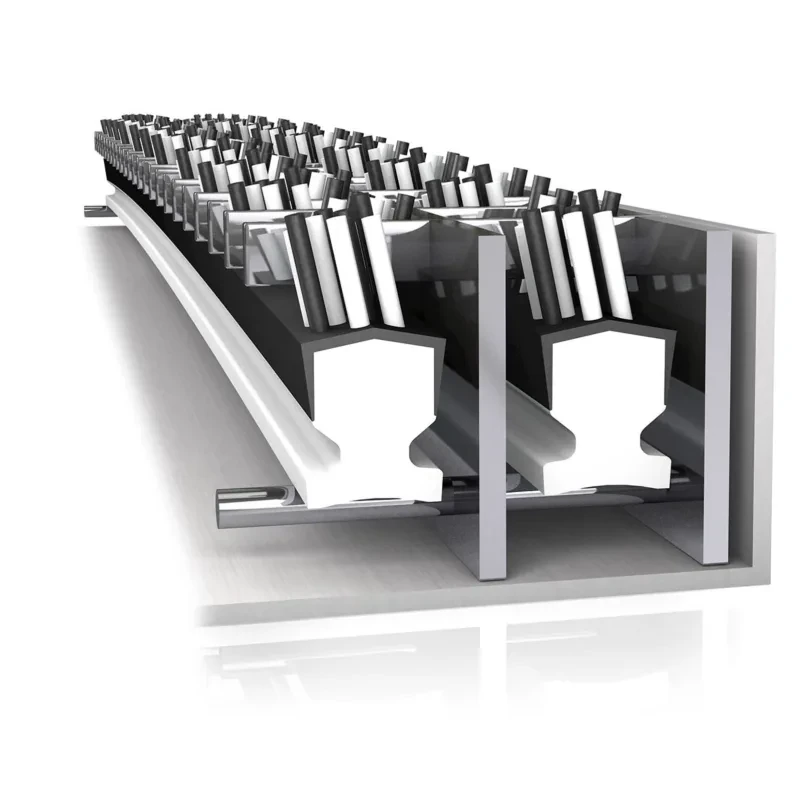
ProfilGate is an active cleaning zone: wheels, rollers, castors or soles cross a brush field and dirt is mechanically removed. The difference matters especially with industrial wheel traffic, tread profiles and particles that do not release easily on a passive surface.
An industrial mat can still be useful for drying, finishing or light particles. When the main source is dirty wheels or soles, ProfilGate becomes the active system to review.
Dry mechanical cleaning uses brushes without liquid in the system. It is the direction for dust, grit, debris, particles and physical dirt on wheels, rollers or soles.
Wet cleaning or liquid-disinfectant hygiene is chosen only when the process needs liquid. Then liquid type, concentration, level, drainage, refilling, chemical compatibility, system cleaning and operator monitoring all matter.
AGVs and AMRs repeat the same route, so particles carried on wheels can return to the same points again and again. Their wheels may be narrow, vibration-sensitive or guidance-dependent, so the field must keep the crossing stable.
For these applications, vehicle model, wheel data, speed, frequency, straight crossing, guidance, bypass risk and vehicle-supplier involvement should be reviewed where the project requires it.
The tests add technical confidence: they show how dry mechanical cleaning or liquid cleaning was measured under defined conditions. They help discuss brushes, liquid, contact count and measured result with the test conditions kept next to the figures.
In the real facility, field length, crossings, wheel type, actual dirt, traffic, liquid, maintenance and operator procedure all matter. The tests are the technical reference; the configuration still needs to fit the route.
These frameworks provide the working context: hygiene, audit, quality, technical cleanliness or internal traceability. ProfilGate can support a traffic control point, but it should be integrated into the operator procedure.
In practice, the protected zone, traffic, internal monitoring, cleaning routine and documentation owner matter as much as the product. That is how the system becomes useful in an audit, not only visible in the floor.
For a relevant quotation, the area where dirt comes from, the protected area, observed contamination, vehicles or people crossing, daily crossings, wheel dimensions, weight, available space, turning, braking and cleaning access should be visible.
For wet cleaning, add liquid, drainage, dosing, refilling and system cleaning. For AGV, add route, wheel, speed, guidance, vibration and supplier agreement where the application requires it.
CleanGate is the retail and commercial entrance branch, where customers, shopping carts, weather and small wheels influence public-area cleanliness.
ProfilGate remains for industrial routes: production, logistics, controlled areas, wheels, rollers, soles, dry mechanical cleaning and wet cleaning. Keeping them separate keeps the discussion connected to real traffic, not to an overly broad entrance category.