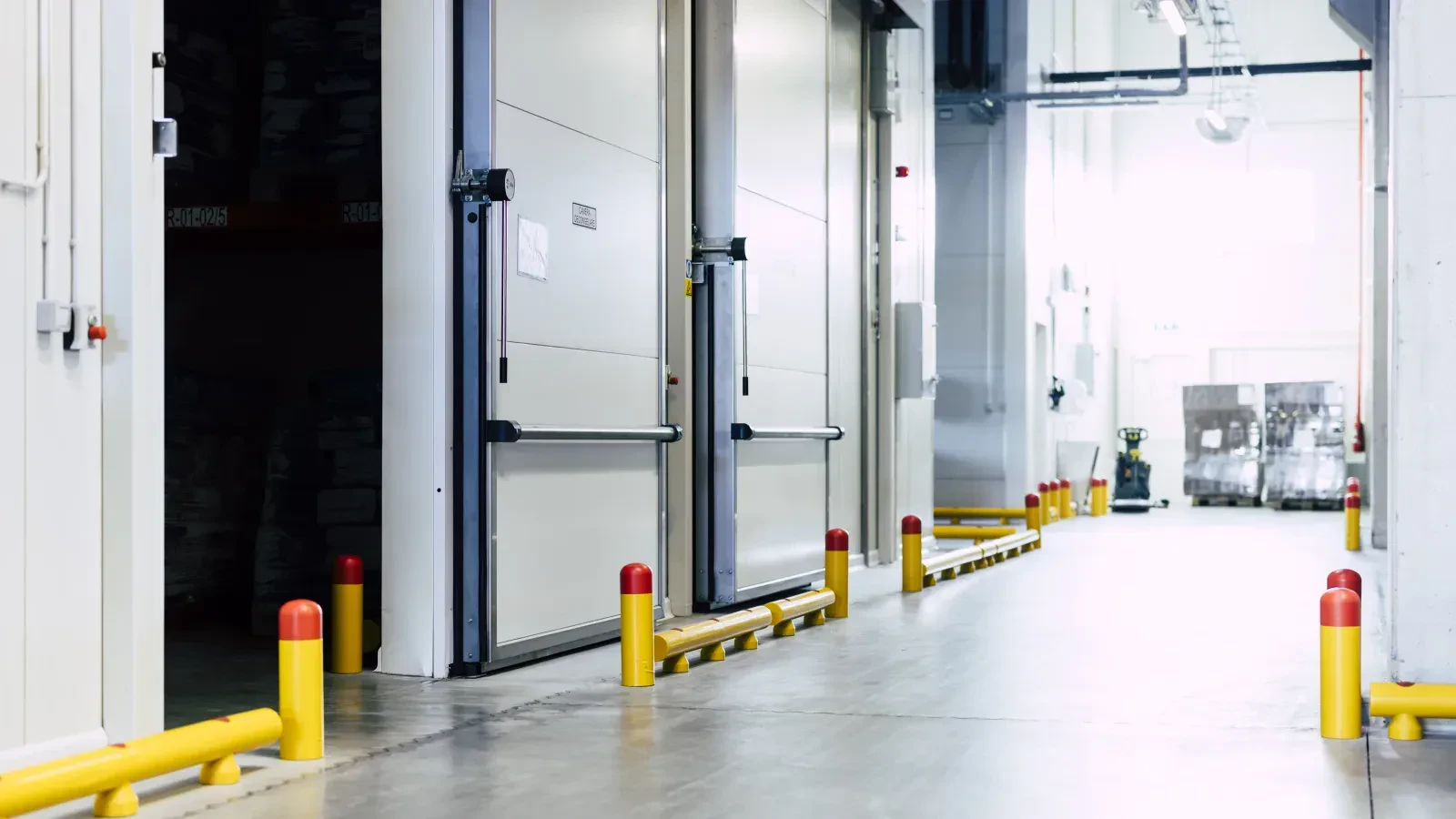
Loading-bay edge and vehicle guidance
Record approach direction, angle and the risk of striking or crossing the edge.
Coordinate protection with guides, gate equipment and the docking procedure.

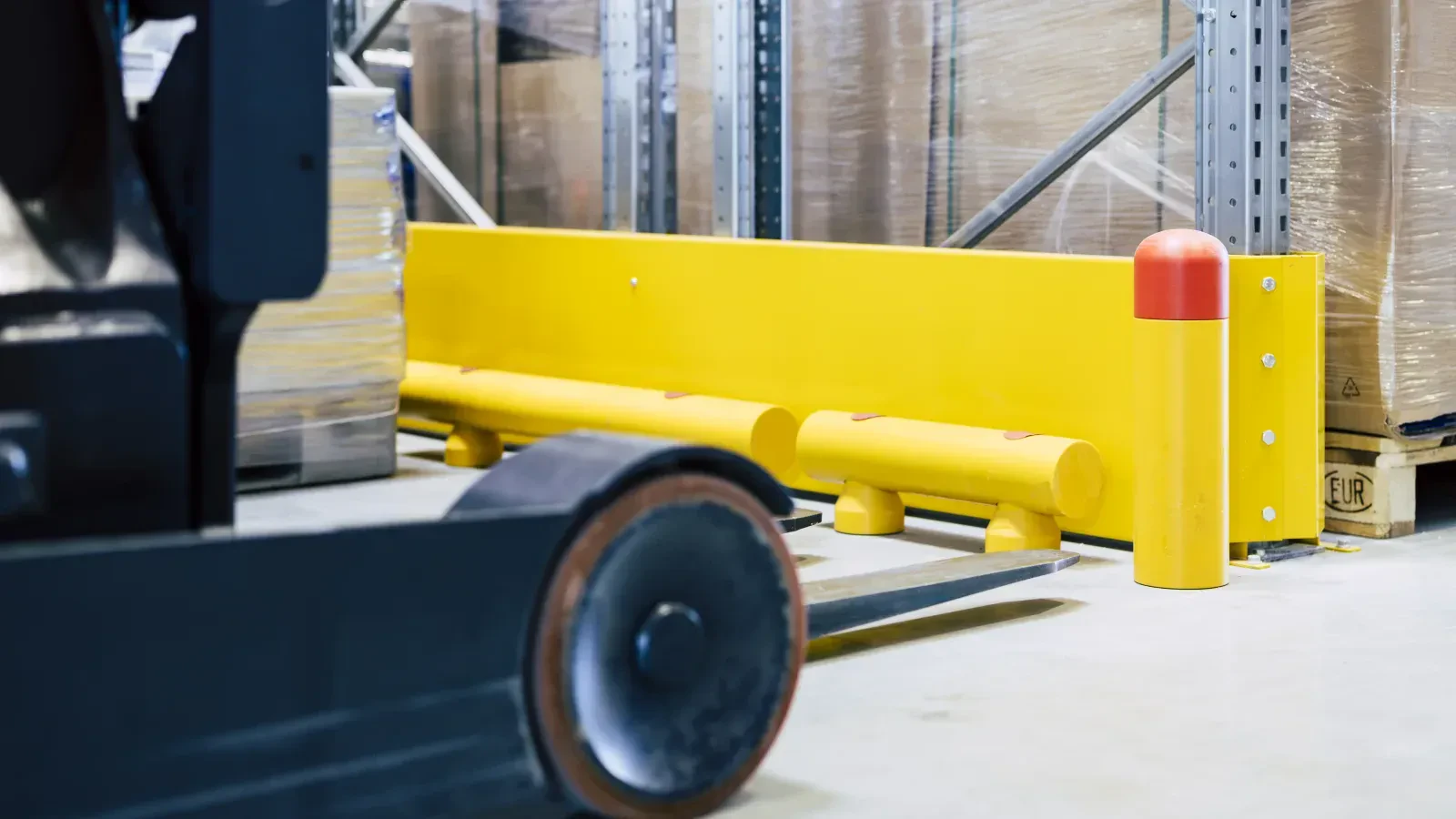
In loading areas, one impact can stop a door, damage a rack end or block access to a cold room.
At a loading bay, vehicles change direction close to doors, guides, columns and rack ends.
Useful protection preserves door and maintenance access without narrowing the manoeuvre into a new strike point.
Manoeuvre, impact energy and deformation space change the protection type and position.
Record approach direction, angle and the risk of striking or crossing the edge.
Coordinate protection with guides, gate equipment and the docking procedure.
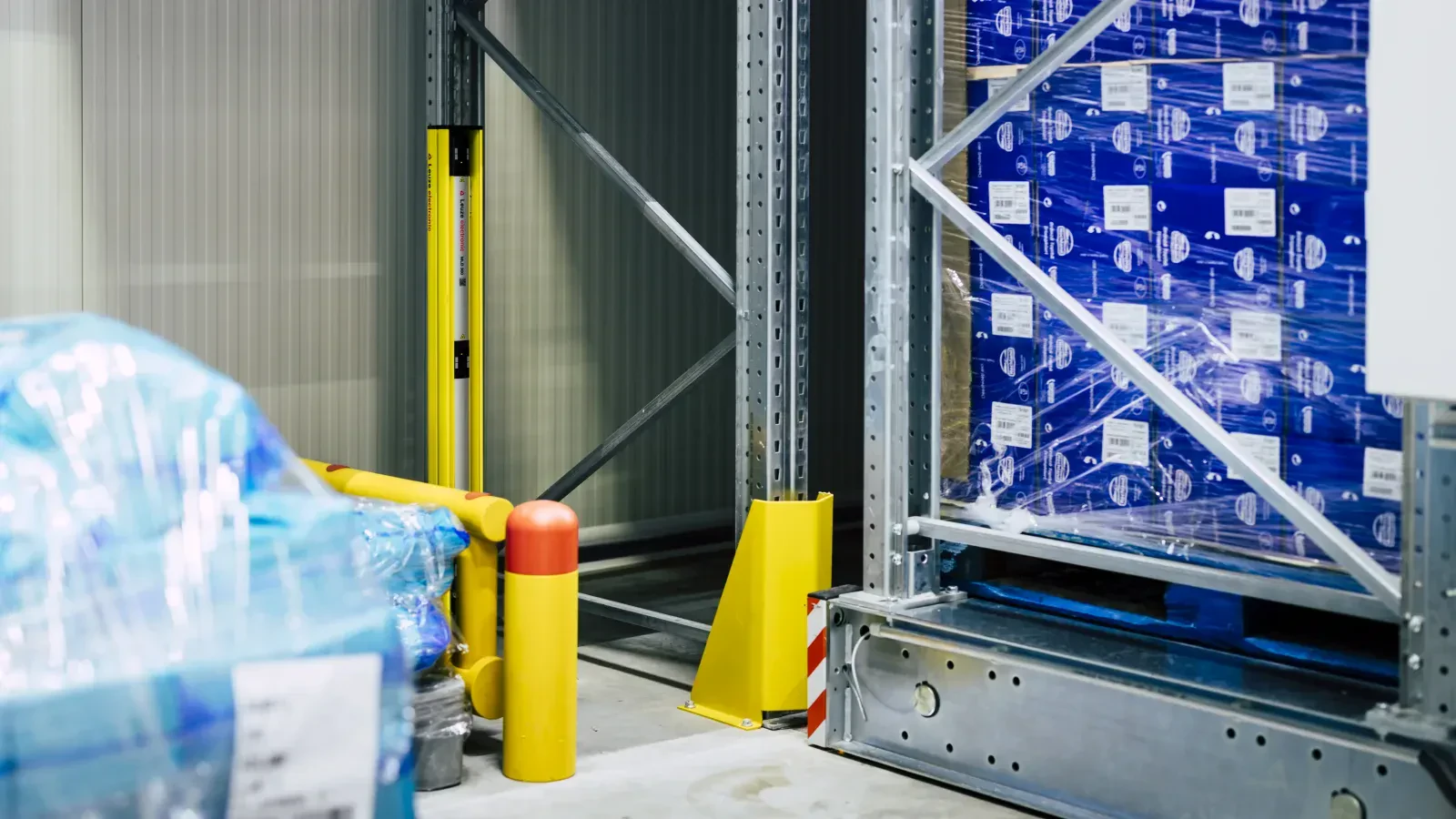
Marks on posts often reveal an unstable turning radius or alignment.
Sensors, seals, rails and technical access must remain clear.
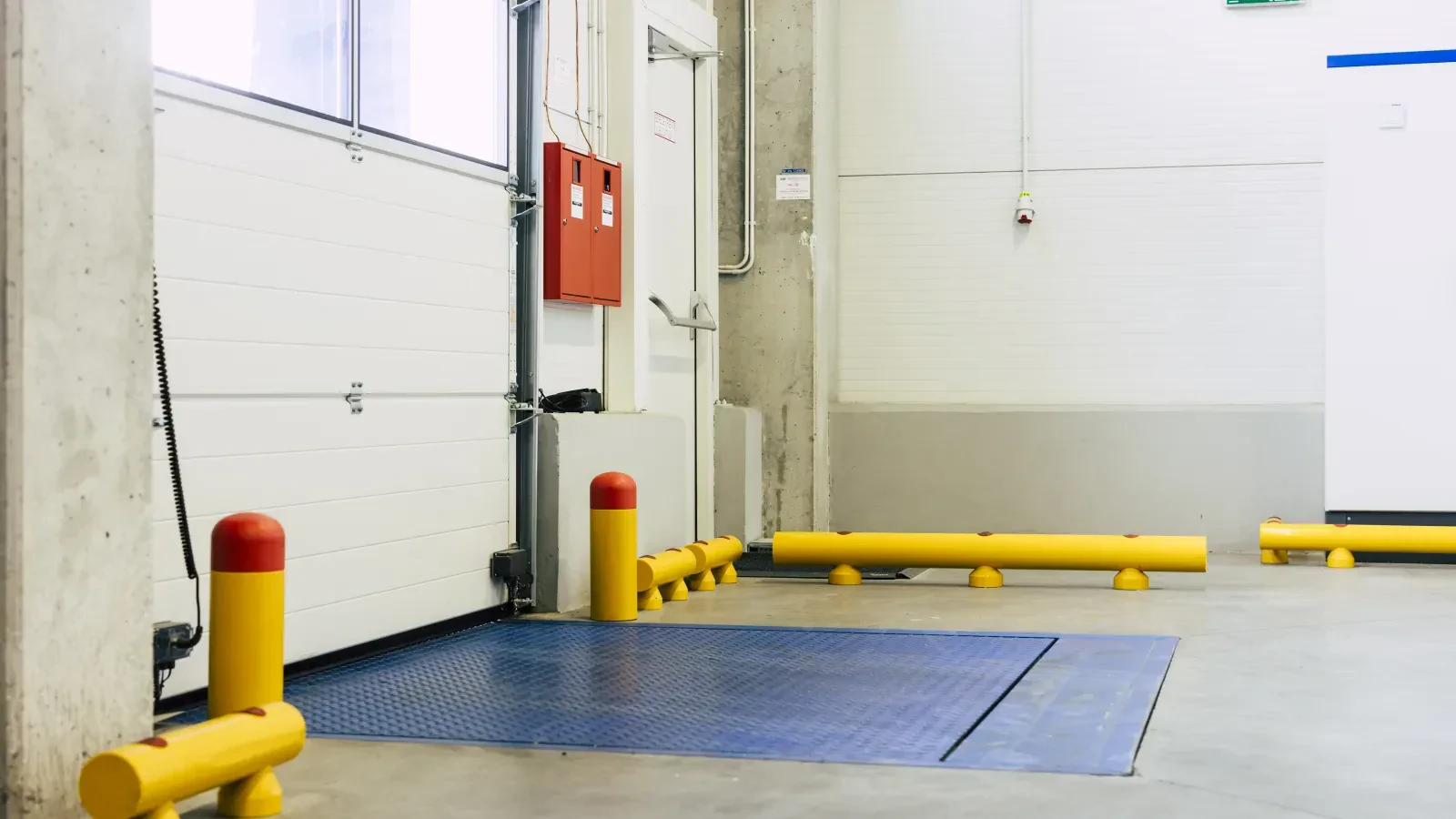
Temperature, condensation and floor construction affect material, fixing and grip.
At racks, check the available deformation distance before the protection reaches the structure.
Photos taken along the travel direction and existing marks show where the vehicle reaches.
The plan should include doors, racks, pedestrian routes and technical areas.
Fixing is checked against the actual floor build-up, including cold or wet areas.
Loading bays, industrial doors and cold rooms: where protection should be checked

Marks on floor, frame or rack show a trajectory, and the choice is confirmed with vehicle mass, speed and angle.
One photograph helps orientation; vehicle data defines the real load case.
Protection is positioned outside the travel of moving components, rails, sensors, seals and the areas a technician needs to reach. The aim is to protect the frame or infrastructure without turning maintenance into an extra dismantling step.
Deformation clearance should also be checked before fixing. If the protection can flex toward the door, rack or equipment, the distance must allow the impact to be absorbed without blocking access.
Floor build-up, joints, temperature, condensation and moisture influence material choice, anchoring and impact behaviour. In cold or wet zones, the same protection may need a different fixing approach than in a dry warehouse.
Floor data should be reviewed together with the impact load case: vehicle type, mass, speed, angle and incident frequency. That keeps the choice connected to the actual operating conditions.
Use a dimensioned plan, travel-direction photos and vehicle data.
Add incident frequency and the asset that must remain accessible.