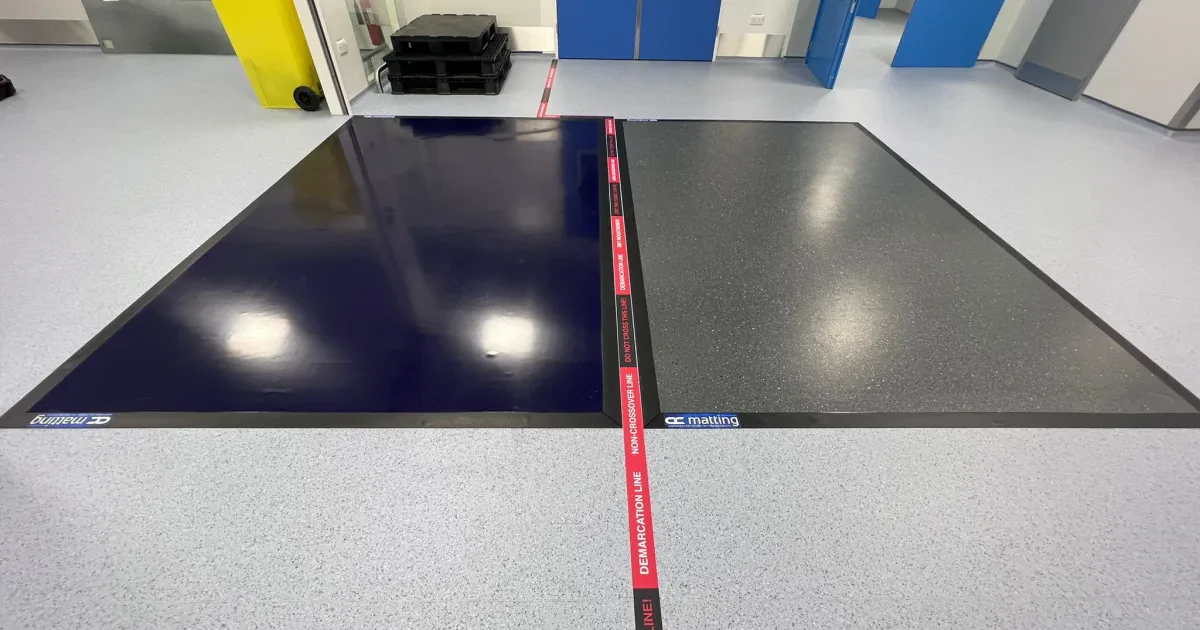
VDA 19.2 and ISO 16232: particles should also be reviewed on the route
Standards and verification

VDA 19.2 and ISO 16232: particles should also be reviewed on the route

In automotive production, technical cleanliness is not decided only in the laboratory. Particles may appear before component inspection: on the route between goods-in, warehouse, logistics, assembly and sensitive zones.

Technical cleanliness starts before the measuring point

In an automotive component, e-drive, battery or electronics plant, a sensitive area may be affected by what happens a few metres earlier: wheels coming from the warehouse, pallet trucks, carts, AGVs, packaging, soles or a heavily used access gate.

The route shows where to act: where traffic comes from, what it may carry, where transfer can be reduced, who verifies the result and how the measure connects to the site procedure.

Which routes should be read before choosing

In many automotive projects, the standard is the trigger, but the route is where practical control becomes visible.

Logistics, goods-in and entries into assembly

Logistics, goods-in and entries into assembly

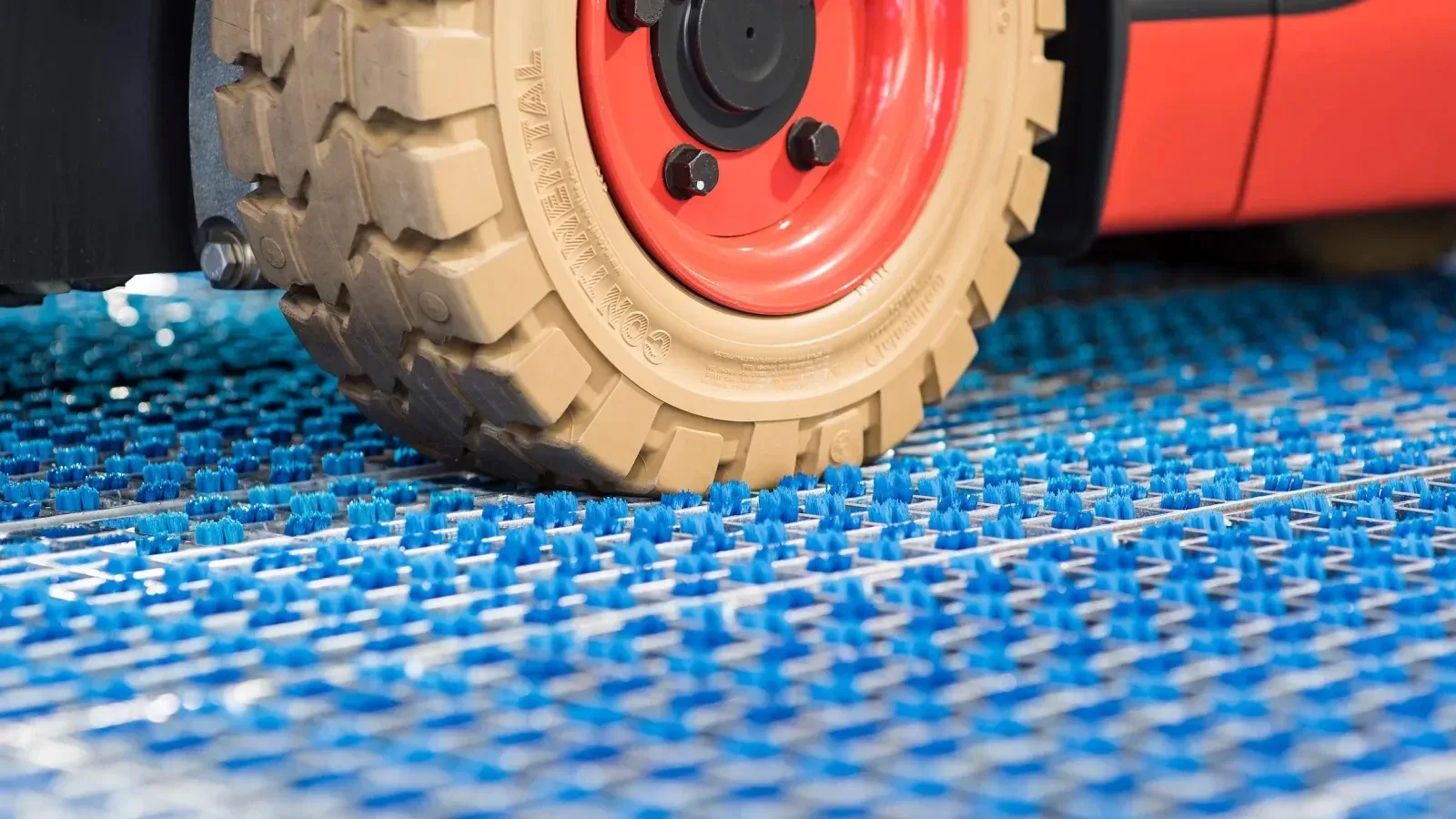
Forklifts, pallet trucks, tuggers, carts or AGVs can connect zones with different expectations. If the crossing is frequent and controllable enough, active wheel or caster cleaning can enter the technical review.

Straight crossing, bypass options, wheel type, carried load and whether the point sits before the quality-sensitive zone all matter.

Personnel, soles and access points

Personnel, soles and access points

Personnel access can bring dust or fine particles even when vehicle traffic is controlled. In some areas, access discipline, footwear, frequency and bypass potential matter as much as the selected equipment.

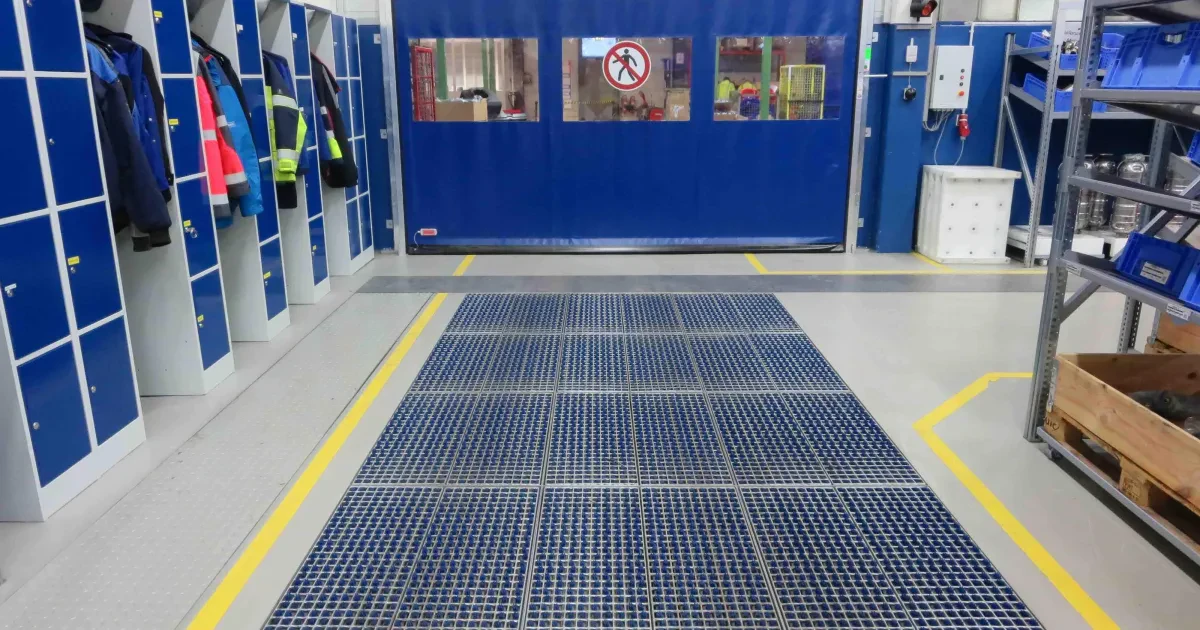
A sole-cleaning measure should connect to the cleaning routine, footwear policy, personnel route and internal verification of the area, not only to a well-installed point at the entrance.

How VDA 19.2 and ISO 16232 connect to routes

Standards help split the discussion: what is inspected on the component, what is controlled in the assembly environment and what the operator verifies.

VDA 19.2

VDA 19.2 is relevant when plants discuss technical cleanliness in assembly: environment, logistics, personnel, assembly equipment and flow. For routes, the useful question is where contamination can enter before the sensitive zone.

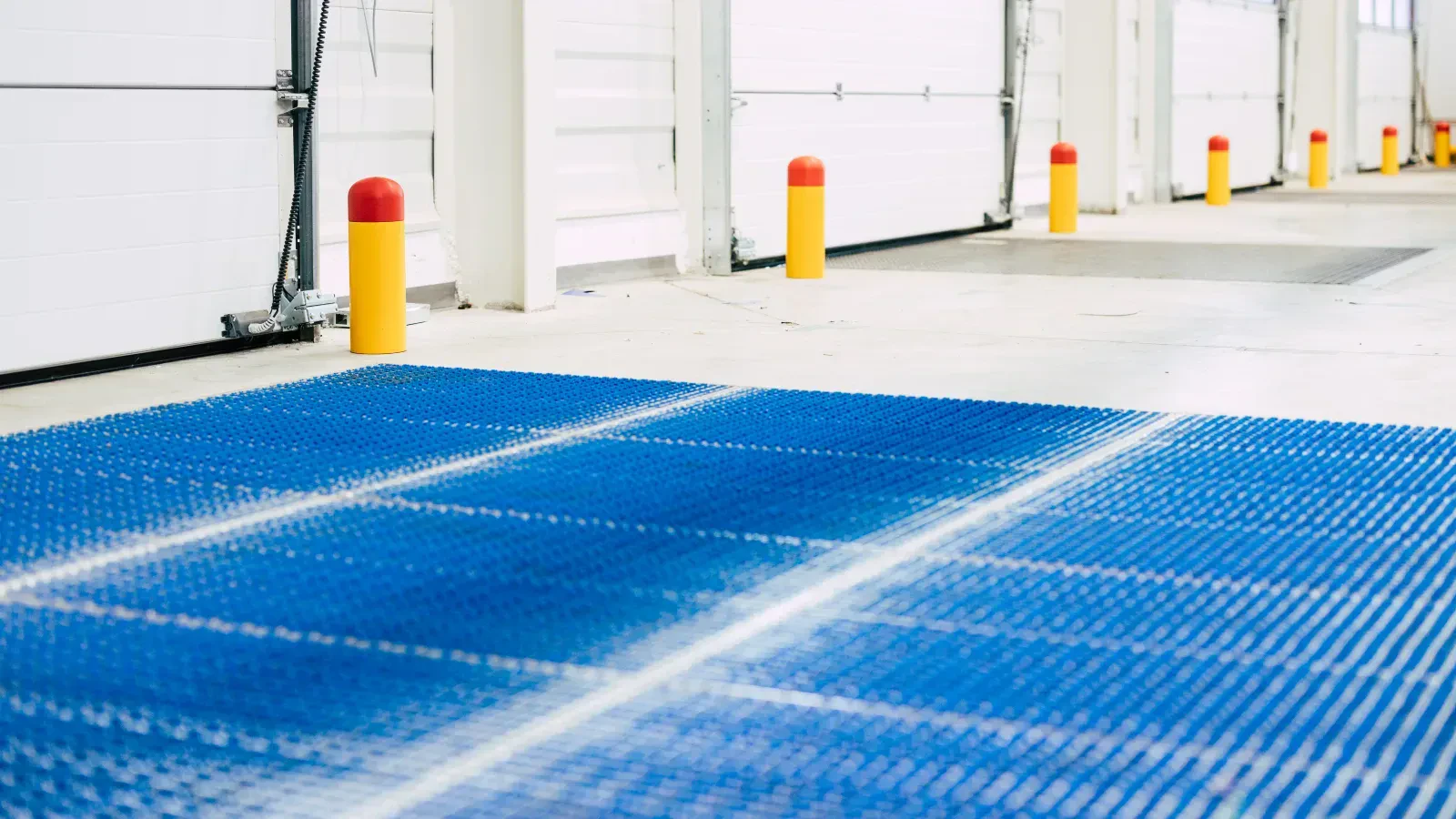
ProfilGate or a similar measure can be reviewed as a route control point, especially at warehouse-to-production, goods-in-to-assembly, e-drive zones or AGV/AMR routes. Selection remains tied to layout, traffic and internal validation.

ISO 16232

ISO 16232 is used for particulate cleanliness of road-vehicle components and systems. It does not turn a cleaning station into a particle-measurement method for the product.

Its value for the SEVENSEAS discussion is upstream: if a plant works with particle limits or cleanliness expectations, the route feeding the sensitive area should be understood before selecting a measure.

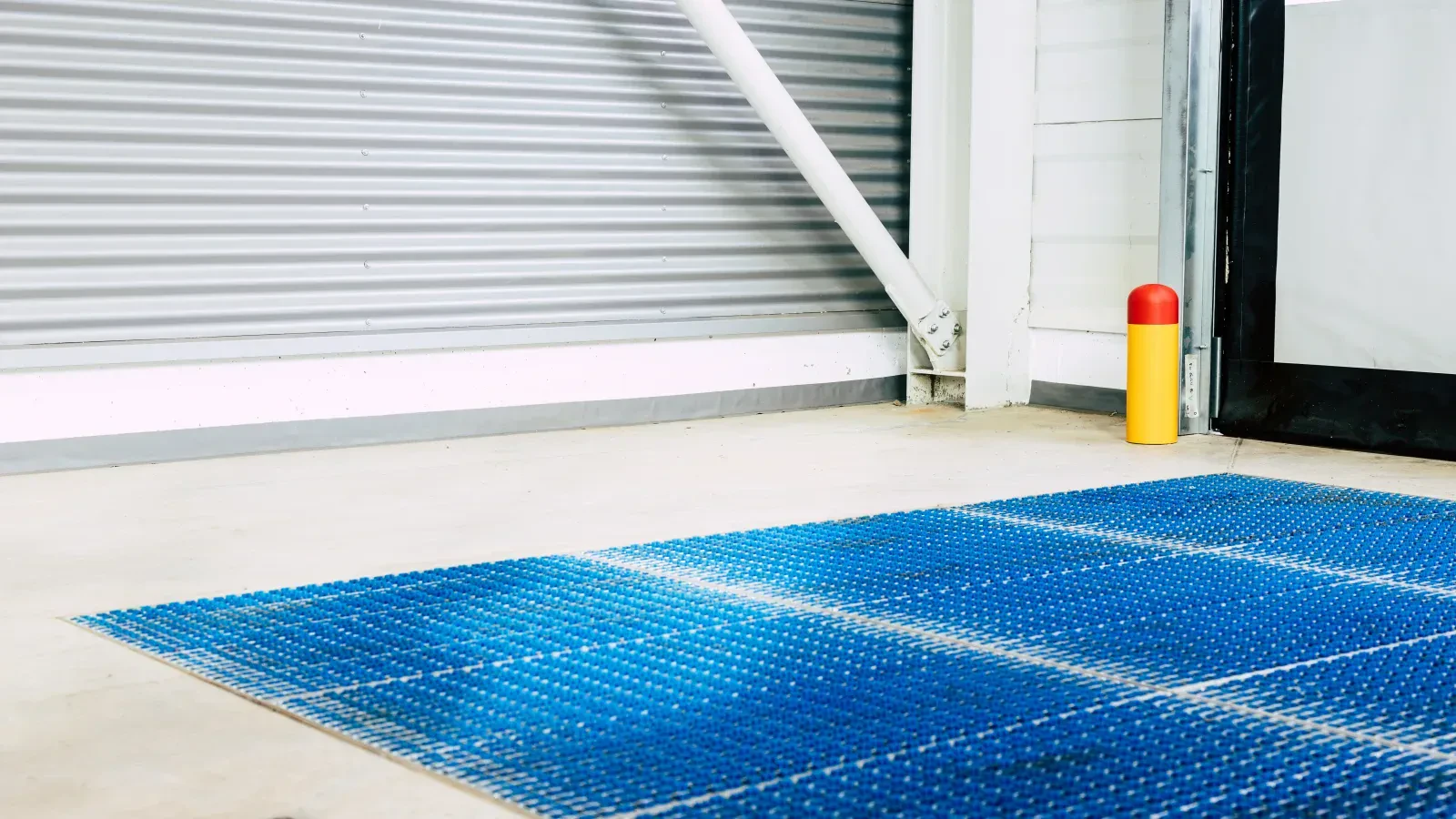
IATF, OEM requirements and site procedure

In many plants, the real trigger is not the standard name but an OEM requirement, audit, quality complaint, line extension or new project. That is why the internal owner should be identified: quality, engineering, logistics, facility or production.

A measure is easier to support when the site can explain why the point was chosen, which traffic crosses, what is observed after installation and how the cleaning routine is maintained.

  • the exact route and any bypass points;
  • wheel, caster, sole, load and traffic-frequency data;
  • whether vehicles cross straight or turn on the control point;
  • who validates observations: quality, production, facility or maintenance;
  • what internal data is followed: particles, cleaning, marks, complaints or audit observations.

What should be clear before a technical proposal

For technical cleanliness, one isolated photo is not enough. Review the route, zone sensitivity, traffic and how the site will interpret the result. Once those points are clear, it becomes possible to discuss whether active cleaning fits and where it should be positioned.

  • sensitive zone: assembly, e-drive, battery, electronics, inspection or clean area;
  • traffic source: outside, goods-in, warehouse, machining, press shop or internal logistics;
  • observed mechanism: dust, particles, wheel marks, floor dirt, cleaning burden or audit finding;
  • possible control point: straight distance, space, ramp/flush installation, bypasses, EHS and maintenance;
  • verification owner: what is checked, by whom and after which period.

Relevant directions for automotive routes

Do you have an automotive route where particles should be controlled earlier?

+40 368 883 026

Review the technical-cleanliness route

Send the route, sensitive zone, traffic types and the internal or customer requirement that should be supported.

Review the technical-cleanliness route

Send the route, sensitive zone, traffic types and the internal or customer requirement that should be supported.

Useful questions for technical cleanliness on routes

Reference points for automotive, e-mobility, electronics, assembly and internal logistics areas where VDA 19.2, ISO 16232 or customer requirements raise particle questions.

Start with points where traffic moves from a less controlled area toward a zone that is sensitive for assembly, inspection or quality. The transfer mechanism matters more than the department name.

  • goods-in or warehouse into production;
  • machining, press shop or maintenance into assembly;
  • fixed AGV/AMR routes close to sensitive areas;
  • personnel entries where soles can bring particles;
  • doors or gates where wheel marks, dust or extra cleaning appear.

VDA 19.2 helps structure the assembly environment and flow, but measure selection follows the real route. An active cleaning point can support transfer control when traffic, installation and internal verification justify it.

A serious review first clarifies the sensitive zone, incoming traffic, particles or dirt observed and how the plant will evaluate the change.

ISO 16232 is connected to particulate cleanliness inspection on components and systems. For routes, it helps indirectly: if the plant has particle limits or requirements, routes feeding the sensitive zone should be part of the control context.

Wheel or sole cleaning can work upstream: it reduces transfer before particles reach the sensitive process and before component-level checks.

Quality should be involved when particle limits, OEM requirements, audits, complaints or product-sensitive zones are part of the trigger. Facility or maintenance can install and maintain, but acceptance criteria usually come from quality, engineering or process owners.

  • which internal observation triggered the project;
  • which criteria are followed after installation;
  • which documentation or data helps in audits;
  • who confirms whether the measure supports the site procedure.

With AGV/AMR, the useful part is repeatability. That helps position a control point, but it also requires clearer data about wheels, load, speed, turning and vehicle sensitivity during crossing.

  • vehicle model and wheel/caster type;
  • loaded weight and crossing frequency;
  • straight crossing or turning on the point;
  • vibration, noise or surface requirements;
  • who validates compatibility after test or installation.

Images and a simple route sketch are more useful than a generic description. They show whether the point is before the sensitive area, whether bypasses exist and whether traffic can pass through the same controlled point.

  • photos from both directions of the route;
  • vehicle, wheel, caster, sole and load types;
  • traffic frequency and peak hours;
  • current observation: dust, particles, marks, extra cleaning;
  • standard, OEM requirement or internal procedure that triggered the review.
Sending…